In 2024, Maricopa County confirmed 608 heat-related deaths, and more than three-quarters of them happened outdoors. That number is the reason this Phoenix travel guide starts with water rather than restaurants. Phoenix is an easy, friendly, well-run city to visit, but it sits in the Sonoran Desert, and the desert has rules: the heat, the summer storms, the wildlife and even the dust deserve the same attention you’d give a mountain or an ocean. Most destination guides treat them as local color. This one treats them as what they are, then covers what a trip costs, the laws that surprise visitors, and how to travel here well if you’re older, disabled or on your own.
Short answer: Visit from October to April if you can; carry more water than you think you need (about a quart an hour when you’re active in the heat) and be outdoors only early and late from May to September. Respect the monsoon (June 15 to September 30) by never driving into a flooded wash, budget for Phoenix’s 13.07% hotel tax and any resort fees, and remember that Arizona never changes its clocks.
Prices, hours and rules in this guide were last checked on October 1, 2026.
Phoenix travel guide: the essentials at a glance
Here’s the short version of everything below, with the numbers worth remembering (checked October 2026).
| Topic | What to know (checked Oct 2026) |
|---|---|
| Time zone | Mountain Standard Time all year, no daylight saving: same as Los Angeles from March to early November, same as Denver the rest of the year |
| Weather | Normal highs 67.6°F in January, 106.5°F in July; 111 days a year at 100°F or more (1991-2020 normals) |
| Heat alerts | On National Weather Service Extreme Heat Warning days, Phoenix closes its busiest summit trails from 8 a.m. to 5 p.m. |
| Monsoon | June 15-September 30: storms, dust and flash floods |
| Water | About a quart (1 liter) per hour of activity in the heat, plus salty snacks |
| Hotel tax | 13.07% in Phoenix; about 14% in Scottsdale |
| Sales tax on meals and shopping | 9.1% in Phoenix; 8.0% in Scottsdale |
| Bars | No alcohol sales from 2 a.m. to 6 a.m., any day |
| Transit | Light rail $2 a ride, capped at $4 a day with tap-to-pay; free airport Sky Train |
| Driverless rides | Waymo, booked in the Waymo app (no longer through Uber in Phoenix) |
| Emergencies | 911; Poison Help 1-800-222-1222; heat relief and cooling centers 2-1-1 |
How dangerous is the heat in Phoenix?
Dangerous enough to plan around, and not just in July. Sky Harbor averages 111 days a year at 100°F or more, and the first one usually arrives around May 2 and the last around October 5 (1991-2020 normals). In 2024, the warmest year on record in Phoenix, the city logged 143 days at 100°F or more, including a record 113 in a row from May 27 to September 16. The all-time high is 122°F, set on June 26, 1990.
What catches visitors out isn’t just the daytime peak but the lack of relief. The normal low in July is 84.5°F, so the night doesn’t reset your body the way it does in drier, higher deserts, and a pavement-heavy city center holds heat after dark. Maricopa County’s analysis of its 608 confirmed heat-related deaths in 2024 found that more than three-quarters happened outdoors and nearly 60% involved people 50 or older, and its public health guidance warns that fans alone stop helping once temperatures pass 95°F (checked October 2026). The county counted far fewer heat deaths through the summer of 2025 than at the same point in 2024, but the risk hasn’t gone anywhere.
For a visitor, the practical rules are simple. Be outdoors early and late from May to September, and inside air conditioning through the middle of the day. Never leave a person or a pet in a parked car for any length of time. Know where the shade and water are before you set out, and if you’re hiking, follow the trail rules the city enforces; on Extreme Heat Warning days, Phoenix closes its busiest summit trails from 8 a.m. to 5 p.m. If you’re ever caught out, the region’s Heat Relief Network of cooling centers can be found by dialing 2-1-1.
What are the signs of heat illness?
Heat illness tends to arrive in stages. Heat exhaustion comes first: heavy sweating, cramps, headache, nausea, dizziness, weakness and a fast pulse. Treat it at once by getting into shade or air conditioning, loosening clothing, cooling the skin with water and sipping fluids with some salt in them. Heat stroke is a medical emergency: confusion, slurred speech, a very high body temperature, hot skin that may have stopped sweating, fainting or seizures. Call 911, move the person somewhere cool and cool them with water and ice while you wait. Maricopa County’s own list of warning signs includes muscle cramps, confusion and a rapid heart rate, and it says to seek care immediately.
How much water do you need in Phoenix?
More than you think, and not only water. For hot days, the National Park Service’s guidance at the Grand Canyon is about a quart, roughly a liter, for every hour of hiking, with salty snacks or an electrolyte mix, because sweat carries away salt as well as water. That makes the math easy: a three-hour outing on a warm morning means about three quarts per person, which is more than most people pack. The City of Phoenix’s hiking checklist adds the rest: drink before you go, wear proper shoes, a hat and sunscreen, carry a phone, go with someone or tell someone your plans, and hike when it’s cool.
Two refinements matter. Drinking only plain water for hours in the heat can dilute the salt in your blood, so alternate with electrolytes or eat salty food as you go. And thirst lags behind need in dry air, where sweat evaporates so fast you barely notice it, so drink on a schedule rather than waiting until you’re thirsty. A refillable insulated bottle is the most useful thing you can pack for Phoenix; fill it at your hotel every morning.
Cars, pavement and pets
A closed car in the Phoenix sun heats up fast enough to kill a child or a dog, even on a day that feels merely warm. Use a windshield sunshade, keep a towel for the steering wheel and seat belt buckles, and never leave anyone in the car “for a minute.” Sun-baked asphalt, concrete and metal playground equipment can burn bare skin in summer, which matters for toddlers, for anyone who falls, and for dogs’ paws. The City of Phoenix bans dogs from its trails whenever it’s over 100°F, and from Camelback’s trails and the Piestewa Peak Summit Trail all year.
How strong is the sun in Phoenix?
Strong enough to burn you in winter. Phoenix gets intense, mostly cloudless sun, and the UV index forecasts that the National Weather Service and the EPA publish commonly reach the very high to extreme range from late spring through summer. A sunburn on a 75-degree February afternoon is an easy way to spoil a trip, because the air feels mild while the sun doesn’t.
The fixes are boring and effective: broad-spectrum sunscreen reapplied every couple of hours and after swimming, a wide-brimmed hat rather than a cap, sunglasses, and lightweight long sleeves for long outdoor days. Shade is the other tool. Desert locals walk on the shady side of the street, plan patio meals for evening, and choose trails and tours that start at dawn. From May to September, schedule your sun rather than enduring it.
What should you know about the monsoon, dust storms and flash floods?
The National Weather Service treats June 15 to September 30 as monsoon season in Arizona. Phoenix gets about 7.2 inches of rain in a normal year, and 2.4 inches of it falls from July to September, often in short, violent storms with lightning, wind, blowing dust and street flooding. The storms usually build in the afternoon and evening, so a summer plan that’s outdoors at dawn and indoors later already dodges most of them.
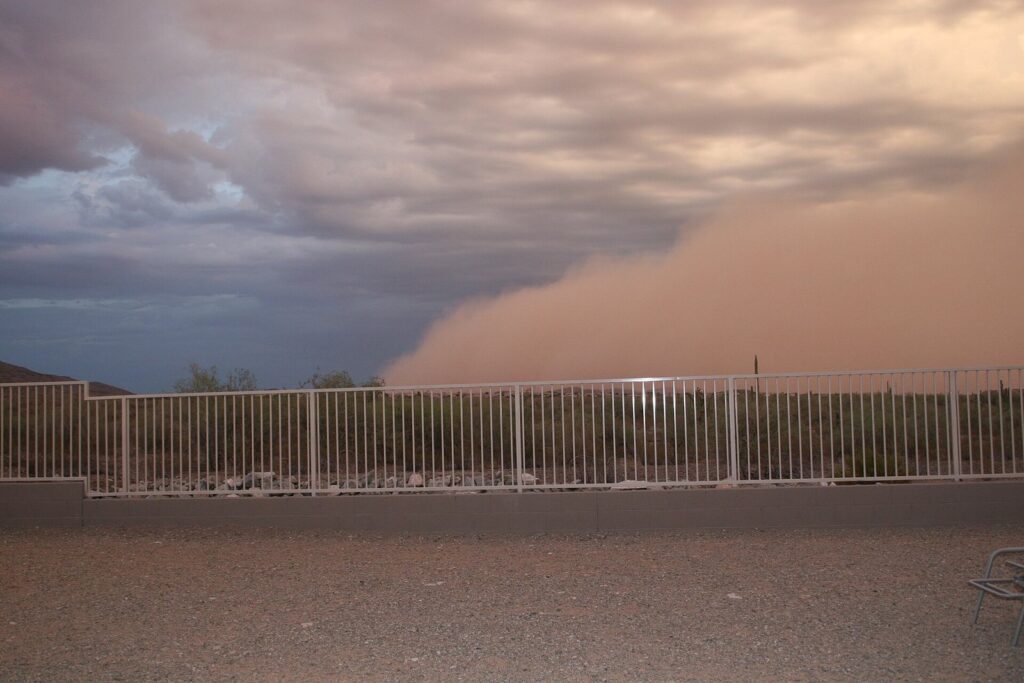
Dust storms, often called haboobs, are the hazard most likely to catch a driver. A wall of dust can cut visibility to almost nothing in seconds. The Arizona Department of Transportation’s advice is “Pull Aside, Stay Alive”: if you can, pull off the road as far as possible, turn off all your lights, set the parking brake, take your foot off the brake pedal so drivers behind you don’t follow your taillights, and stay buckled until it passes. Don’t stop in a travel lane, and don’t try to drive through it.
Flash floods are the other. Desert washes and dips that are dry most of the year can fill with fast, deep water after a storm miles away, and many local roads cross them at grade. Never drive or walk into moving water, however shallow it looks, and never drive around a barricade. Arizona’s so-called Stupid Motorist Law lets agencies bill drivers for the cost of a rescue when they go around barricades into flooded areas. If you hear thunder, go indoors; open trails and ridgelines are the worst places to be in a lightning storm.
Storms also knock out power, sometimes for hours. In summer that’s a health problem, not an inconvenience: if your hotel or rental loses air conditioning on a 110-degree evening, don’t sit it out with the windows open. Go to a hotel lobby, a mall, a 24-hour store or a cooling center (dial 2-1-1), keep drinking water, and check on anyone older or unwell in your group. A small battery pack for your phone is worth packing for the same reason.
Which desert animals and plants should you watch for?
Very few desert animals want anything to do with you, and serious encounters are rare. A little knowledge makes them rarer still.
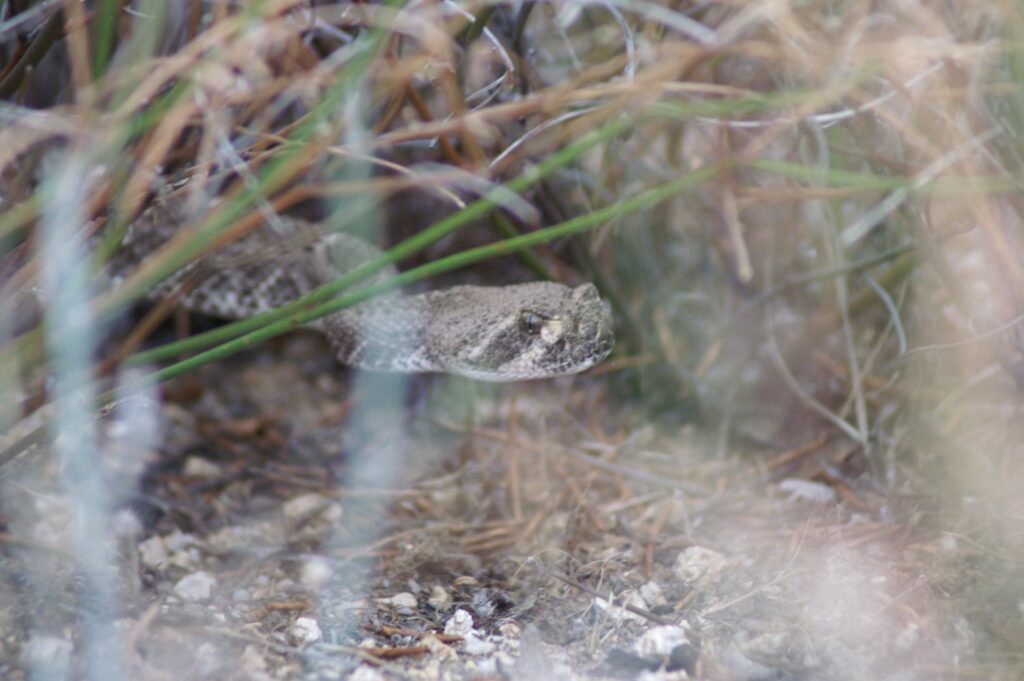
Rattlesnakes. Arizona has 13 rattlesnake species, more than any other state, according to the Arizona Game and Fish Department, and in the warm desert they’re most active from March through October. The western diamondback is the one you’re most likely to meet around Phoenix. Watch where you put your hands and feet, stay on the trail, and if you see or hear one, step back and let it move away; most bites happen when people try to corner, catch or kill a snake. If someone is bitten, keep them calm and still, remove rings and tight items, and call 911. Don’t cut, suck or ice the wound.
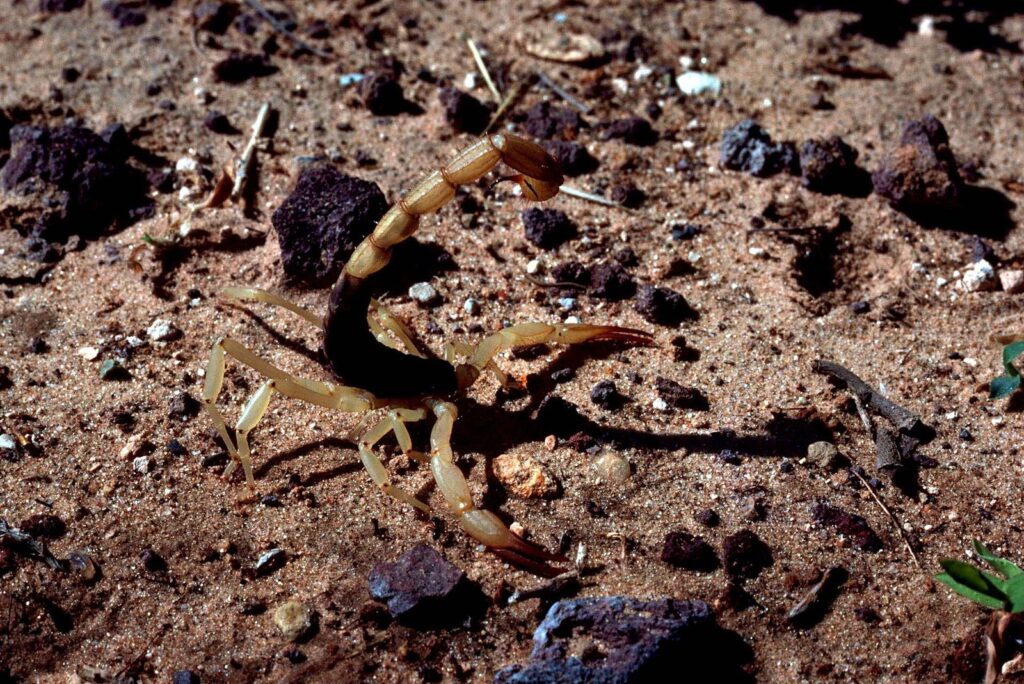
Scorpions. The Arizona bark scorpion, a small, pale-tan species, is considered the most venomous scorpion in North America. Its sting is very painful and is most dangerous for small children and older adults. Shake out shoes, clothes and towels left outdoors, don’t walk barefoot on patios at night, and for any sting to a child or anyone with severe symptoms, call Poison Help at 1-800-222-1222 or 911. Bark scorpions glow under ultraviolet light, which is why some locals hunt them with a blacklight.
Javelina. These pig-like peccaries roam the edges of the city in small groups, especially at dawn and dusk. Arizona Game and Fish is blunt: never feed them, because fed javelina lose their fear of people, cause problems and often end up dead. Give them space, keep dogs leashed and away, and don’t leave food or trash outside a rental.
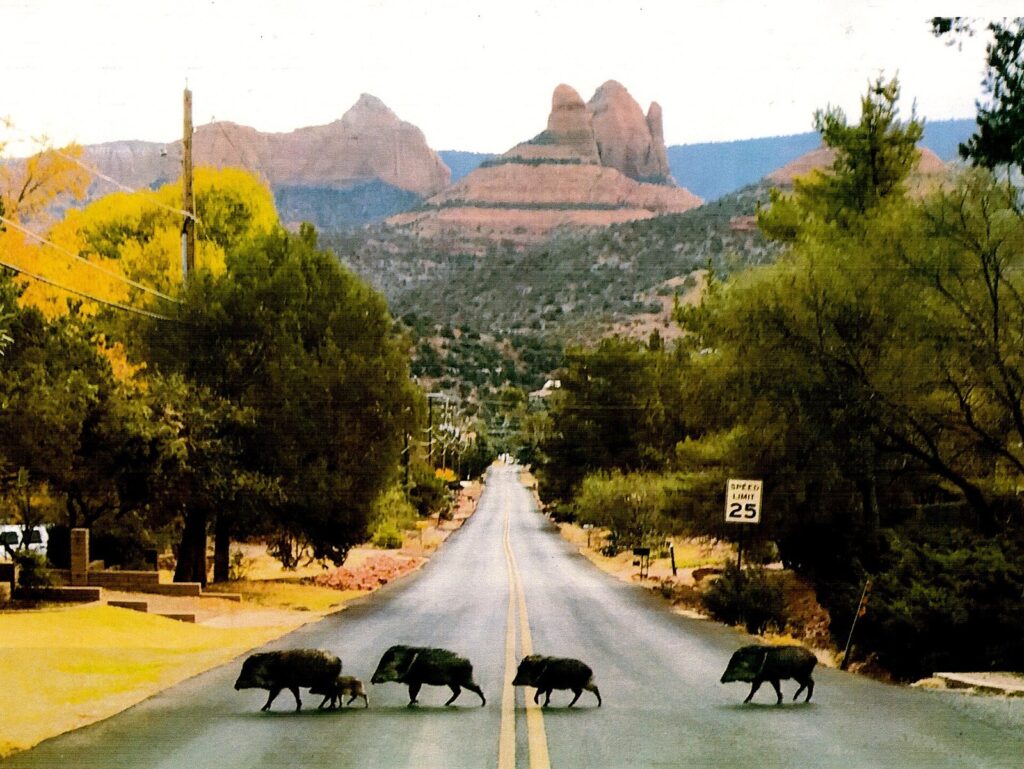
Bees, Gila monsters and cactus. Africanized honeybees live in the Valley; if a swarm comes after you, run, cover your face and get inside a building or car, and don’t stand swatting. Gila monsters are venomous but slow, shy and protected by state law, so admire one from a distance and move on. The plants do more damage than the animals: cholla segments detach at a touch and their barbed spines hook into skin, so carry a comb to flick them off, and wear closed-toe shoes on every trail.
What is Valley fever?
Valley fever, or coccidioidomycosis, is a fungal infection caught by breathing in spores from desert soil, and it’s specific to this part of the world. According to the Centers for Disease Control and Prevention, about 95% of U.S. cases are reported from Arizona and California, and most of Arizona’s cases come from Maricopa, Pima and Pinal counties. About 60% of infected people have mild symptoms or none at all. When symptoms appear, they look like a lingering flu: fever, cough, fatigue, chest pain, shortness of breath, aches and sometimes a rash.
For a short trip the risk is low, and there’s no vaccine to worry about. The sensible precautions are to avoid breathing dust where you can, especially during dust storms and around construction or off-road driving, and to mention your Arizona trip to a doctor if you develop a flu-like illness, cough or chest pain in the weeks after you get home, since it’s often missed outside the Southwest.
What should you wear and pack for Phoenix?
Pack for the month, not for “the desert.” Phoenix’s normal daily range is about 21 to 26 degrees, so a winter day can start in the 40s on a trail and end in sunshine at a pool.
| Months | Normal highs and lows (1991-2020) | What to pack |
|---|---|---|
| December-February | Highs 66-71°F, lows 45-49°F | Layers, a warm jacket for evenings and dawn hikes, sunscreen anyway |
| March-April | Highs 78-86°F, lows 55-61°F | Light layers, sun hat, swimsuit; evenings are mild |
| May and October | Highs 89-95°F, lows 66-70°F | Summer clothes with a light layer for October nights |
| June-September | Highs 100-107°F, lows 78-85°F | Loose, light-colored, breathable clothing; hat, sunglasses, electrolytes |
| November | High 77°F, low 54°F | Light layers and a jacket for nights |
Whatever the season, bring an insulated water bottle, closed-toe shoes with grip for trails, a wide-brimmed hat, sunglasses, sunscreen and lip balm with SPF, and a swimsuit, because nearly every hotel has a pool. Dress codes are relaxed; smart casual covers the best restaurants, and resort dining rooms rarely ask for more. Indoors, air conditioning runs cold all summer, so a light sweater for museums, theaters and flights earns its place in the bag.
How do you keep children safe in the desert?
Children heat up faster than adults and are worse at noticing it, so build the day around them. Keep outdoor time to early mornings and evenings from May to September, put a hat on every child, and hand out water before anyone asks for it. Strollers and car seats left in the sun get hot enough to burn, so drape them or keep them in the shade, and test the surface of slides and playground equipment with your hand before a child climbs on.
Water is the other risk. Phoenix is a city of backyard and hotel pools, and drowning happens fast and quietly, often in the minutes when adults assume someone else is watching. Name one adult as the designated watcher at every pool session, keep young children within arm’s reach, and use life jackets on lakes and the river. The City of Phoenix’s free splash pads and low-cost public pools are good options on summer days; the city listed its 2026 splash pad season as closing on October 4, with pool seasons running through early September, so check the city’s parks pages for next year’s dates.
Indoors at night, the scorpion advice matters more with small children: shake out shoes and clothes, keep beds away from walls in rental houses, and call Poison Help at 1-800-222-1222 for any sting to a child.
Can you bring your dog to Phoenix?
Yes, but the desert is hard on dogs, and the rules reflect that. The City of Phoenix bans dogs from all its trails whenever the temperature is over 100°F, and from every Camelback Mountain trail and the Piestewa Peak Summit Trail all year. In Scottsdale’s McDowell Sonoran Preserve, dogs must stay on a handheld leash no longer than six feet, and the city’s own rule of thumb is that if it will be over 90 degrees at any point during your hike, it’s too hot for your dog (checked October 2026).
Pavement is the hidden danger. Asphalt and concrete in full sun burn paw pads quickly in summer, so walk dogs at dawn and after dark, and use the five-second test: if the back of your hand can’t stay on the ground that long, neither can their feet. Carry water for them on every walk, keep them leashed around wildlife, and never leave them in a car, even with the engine running and the air conditioning on, because cars can stall and air conditioners fail.
What does a trip to Phoenix cost?
Less than many sunny destinations, as long as you account for the taxes and fees the advertised rates leave out. Here are the numbers that shape a budget (checked October 2026).
| Item | Cost (checked Oct 2026) | Notes |
|---|---|---|
| Hotel tax, Phoenix | 13.07% | City 5.8%, state 5.5%, Maricopa County 1.77%; stays of 29 nights or less |
| Hotel tax, Scottsdale | About 13.97% | City 1.7% plus a 5.0% bed tax, with the same state and county rates |
| Sales tax on restaurants and shopping | 9.1% Phoenix; 8.0% Scottsdale | Added at the register, not included in menu prices |
| Resort fees | $45 a night at the Arizona Biltmore; $55 at the JW Marriott Scottsdale Camelback Inn | Must be included in advertised totals under a 2025 federal rule |
| Sky Harbor parking | $33 a day in the terminal garages; $19 in the economy garages | $6 for the first hour |
| Light rail | $2 a ride; $4 a day, $20 a week, $64 a month with tap-to-pay | The PHX Sky Train is free |
| Major museums and gardens | $20-$45 per adult | MIM $20, Phoenix Art Museum $23, Heard $25 at the door, Desert Botanical Garden from $32.95, Phoenix Zoo $44.95 |
| Hiking, viewpoints, art walks | Free | City preserves charge nothing to enter |
Do the tax math before you compare hotels, using October 2026 rates. On a $250 room, Phoenix’s 13.07% adds $32.68 a night and Scottsdale’s rate about $34.93. Resort fees add more: three nights at a $300 rate with a $45 daily resort fee comes to $1,035 before tax, and the Phoenix lodging tax on the room alone adds another $117.63. Since May 12, 2025, the Federal Trade Commission’s rule on unfair or deceptive fees has required hotels and short-term rentals to show the total price including mandatory fees whenever they show a price (taxes may be shown separately), so compare those totals rather than the headline rate.
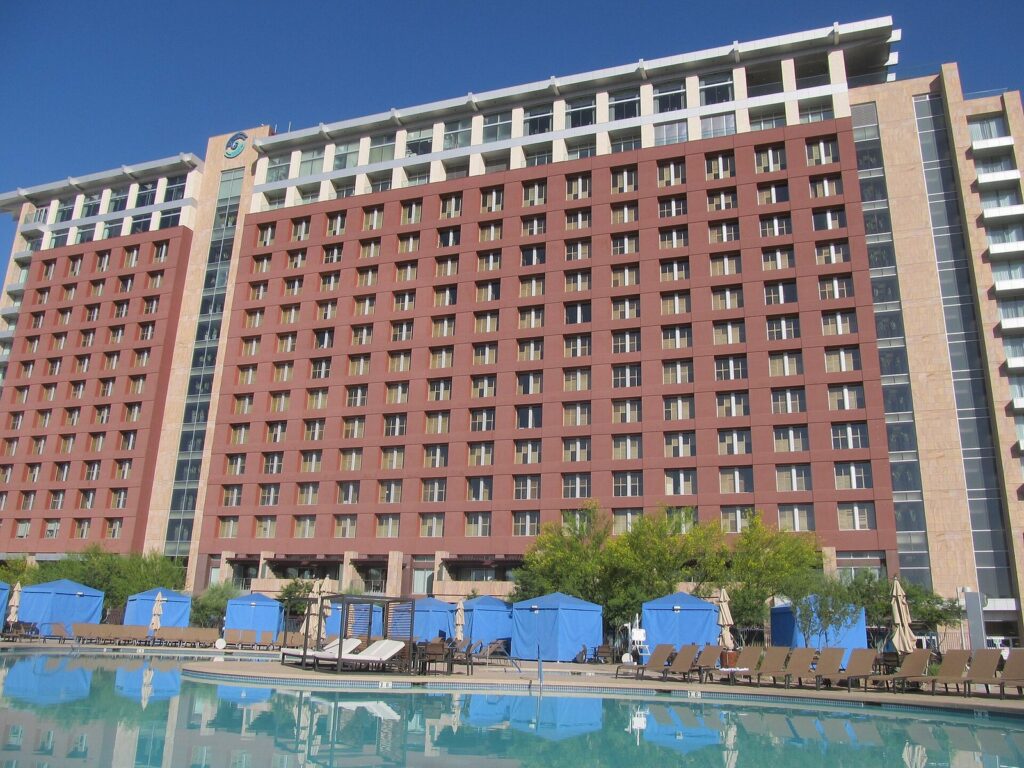
Season moves the price more than anything else. Scottsdale’s market-area hotels averaged $271.17 a night in 2024, according to the city’s lodging report (checked October 2026), but that average hides a big swing between peak spring weeks and summer, when the same resorts discount heavily. If your dates are flexible, our guide to the best time to visit Phoenix shows how weather, events and prices trade off month by month.
How can you save money on a Phoenix trip?
The Valley’s free tier is unusually good, and several paid attractions have discount days worth timing your visit around (checked October 2026).
- Free outdoors. The city’s mountain preserves, Hole-in-the-Rock, Dobbins Lookout and Scottsdale’s McDowell Sonoran Preserve cost nothing to enter.
- First Friday. The Heard Museum is free from 4 to 8 p.m. and the Phoenix Art Museum from 5 to 8 p.m. on the first Friday of each month, and the Roosevelt Row art walk is free.
- Pay-what-you-wish and pay-what-you-can. The Phoenix Art Museum is pay what you wish on Wednesdays from 3 to 8 p.m., and the Desert Botanical Garden holds a pay-what-you-can Community Day on the second Tuesday of every month.
- Cardholder and benefit programs. The Heard admits Bank of America cardholders free on the first full weekend of each month and offers $5 tickets through Museums for All with a SNAP EBT card; the Desert Botanical Garden charges EBT cardholders $9.95 Sunday through Thursday.
- Transit caps. Tap-to-pay light rail fares stop at $4 a day and $20 a week, which beats paying for downtown parking.
- Summer rates. Resort prices fall sharply in July and August. If you can handle a dawn-and-dusk schedule, the same pools and spas cost far less.
Which Arizona laws and customs surprise visitors?
The clock. Arizona stays on Mountain Standard Time all year. From March to early November, Phoenix matches Los Angeles; the rest of the year it matches Denver. The Navajo Nation in northeastern Arizona does observe daylight saving time, so on a summer drive north to Monument Valley your phone may jump an hour.
Alcohol. Under Arizona law, no bar, restaurant or store may sell or serve liquor between 2 a.m. and 6 a.m., any day of the week, and bars must stop drinks being consumed on the premises by 2:30 a.m. (checked October 2026). Arizona’s DUI laws are among the strictest in the country, with jail time possible even for a first offense and harsher tiers for higher blood-alcohol levels, so use the light rail, a rideshare or a Waymo after a night out.
Cannabis. Recreational marijuana has been legal in Arizona for adults 21 and over since voters approved Proposition 207 in 2020, with a possession limit of an ounce, bought from licensed dispensaries. Using it in public places is illegal, and federal law still applies on federal land, which includes national parks and forests like the Grand Canyon and the Tonto.
Tribal land. Several sovereign tribal nations hold land inside and around the Valley, including the Salt River Pima-Maricopa Indian Community east of Scottsdale and the Gila River Indian Community to the south. Their own laws and police apply there, and some areas, events and sites are not open to the public; follow posted signs and ask before photographing people.
Buying Native American art. The federal Indian Arts and Crafts Act makes it illegal to sell any art or craft in a way that falsely suggests it’s made by American Indians or by a particular tribe. Buy from museum shops, established galleries and the artists themselves, ask who made a piece and with what materials, and get that in writing for anything expensive.
Tipping. U.S. tipping norms apply: 18 to 20 percent at sit-down restaurants, a dollar or two a drink at bars, and 15 to 20 percent for guides and drivers.
What else should you know about driving, water and phone service?
Driving. Phoenix’s grid runs east-west and north-south, so at sunrise and sunset you’ll often be driving straight into the sun on the big east-west roads; keep sunglasses in the car and leave extra following distance. Freeways have carpool lanes with posted rules, speeds are high, and dust and monsoon storms can change conditions in minutes. Rental cars come from the Rental Car Center, a free Sky Train ride from both terminals.
Air quality. On still summer days, ozone builds up over the Valley, and in winter, smoke and fine dust can linger under temperature inversions. State and county air quality agencies issue High Pollution Advisories on those days; if you have asthma or a heart or lung condition, check the forecast and keep hard exercise to the cleaner hours.
Water and phone service. Phoenix tap water is treated and safe to drink, though it’s hard and many visitors prefer it filtered or chilled. Fill your bottle before every outing, because many trailheads have no water at all. Cell coverage is strong across the city but drops quickly in the mountains and the national forest, so download offline maps before you drive into the Tonto or up toward the Superstitions, and tell someone where you’re going.
Phoenix for older, disabled and solo travelers
Older travelers. Age is the biggest single factor in heat risk; nearly 60% of the county’s 2024 heat deaths involved people 50 or older. Some common medications, including diuretics, certain blood-pressure drugs and antihistamines, can reduce the body’s ability to handle heat, so ask your doctor or pharmacist before a warm-season trip. The simplest strategy is the calendar: from November to March, Phoenix is one of the most comfortable warm-weather destinations in the country, which is why so many winter visitors settle in for months.
Travelers with disabilities. Phoenix Sky Harbor has a Sensory Room inside the Compassion Corner on Level 3 of Terminal 4, a Compassion Cacti lanyard program that lets travelers with dementia or hidden disabilities use quiet areas, and Aira app guidance for blind and low-vision travelers, including through security (checked October 2026). The light rail’s low-floor trains and stations are built for wheelchair access, and the major museums and newer resorts are generally accessible, but call ahead about specific trails, garden paths and historic buildings. Heat is the hidden accessibility issue here: if you use a wheelchair or mobility aid, metal parts and dark seats left in the sun get hot enough to burn, so keep them shaded.
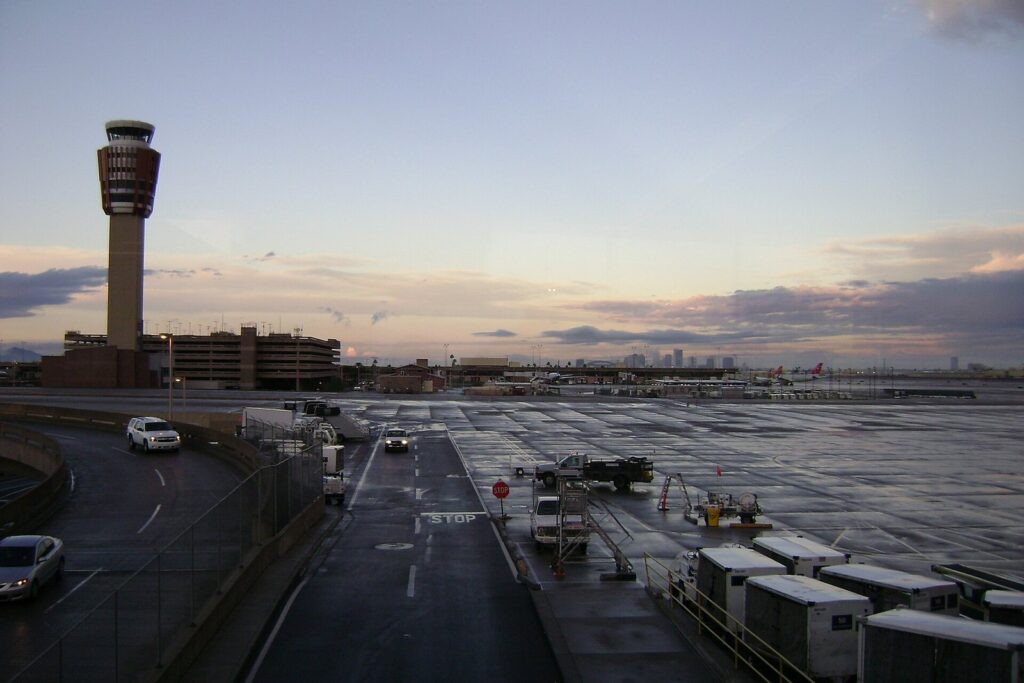
Solo travelers. Phoenix is easy to navigate alone, and the usual big-city precautions apply downtown and in nightlife districts late at night. The real risks for solo visitors are outdoors. Follow the City of Phoenix’s hiking checklist to the letter: hike with others, or tell someone your trailhead, route and expected return; carry a charged phone and more water than you need; and turn back early. The city has counted dozens of rescues a year on the summit trails it now closes in extreme heat; don’t add to the tally.
Phoenix tips for first-time visitors
- Rent a car unless you’re staying central. Downtown, Midtown, Tempe and the airport work by light rail, but most of the Valley’s best scenery needs a car.
- Book Camelback for dawn or not at all. The Echo Canyon lot fills by late morning on winter weekdays and stays full on weekends. Piestewa Peak is the easier alternative.
- Check closed days. The Phoenix Art Museum is closed Mondays and Tuesdays, and several other museums close one weekday.
- Use First Friday. On the first Friday of each month, the Heard Museum and the Phoenix Art Museum are free in the evening and Roosevelt Row fills with galleries and food.
- Download the Waymo app before you land. You can no longer book Waymo through Uber in Phoenix, and its cars pick up at Sky Harbor.
- Carry a sunshade and a towel in the car. Steering wheels and seat belt buckles get hot enough to hurt by mid-morning in summer.
- Expect huge distances. The metro area spreads over more than 20 cities and towns; plan each day on one side of the Valley.
- Don’t fear the summer, plan it. July brings the year’s lowest resort rates; just be outdoors only at the edges of the day.
What to skip in Phoenix
The mistakes that cause the most trouble for visitors, as of October 2026:
- A midday hike from May to September. Be off the trail by about 8 a.m. On Extreme Heat Warning days the city closes its busiest summit trails from 8 a.m. to 5 p.m. anyway.
- Counting on a fan. Maricopa County warns that fans alone stop protecting you above 95°F. If your rental’s air conditioning fails in summer, go to a cooling center (dial 2-1-1) or a hotel.
- Driving into a flooded wash. It’s the most dangerous thing a monsoon visitor can do, and going around a barricade can leave you with the bill for your rescue.
- Feeding javelina or any wildlife. It harms the animals and is the start of most bad encounters.
- Buying “Native” jewelry without asking who made it. Buy from galleries, museum shops and artists who’ll tell you, in writing.
- Comparing hotels on headline rates. Taxes run 13% to 14%, and resort fees can add $45 to $55 a night (checked October 2026).
Frequently Asked Questions
Is Phoenix safe for tourists?
Yes, with one big caveat: the heat is the greatest danger most visitors face. Maricopa County confirmed 608 heat-related deaths in 2024, more than three-quarters of them outdoors. Visit between October and April, be outdoors only early and late in summer, carry plenty of water and never drive into flooded washes. Otherwise, normal big-city precautions apply.
How much water should you drink in Phoenix?
When you’re active in the heat, plan on about a quart, roughly a liter, per hour, the National Park Service’s guidance for hot-weather hiking, plus salty snacks or electrolytes. A three-hour warm-weather outing means about three quarts per person. Drink on a schedule rather than waiting for thirst, because sweat evaporates so quickly in dry air that you barely notice losing it.
Does Phoenix observe daylight saving time?
No. Arizona stays on Mountain Standard Time all year, so Phoenix matches Los Angeles from March to early November and Denver for the rest of the year. The exception is the Navajo Nation in northeastern Arizona, which does observe daylight saving time, so clocks there run an hour ahead of Phoenix in summer.
What is the hotel tax in Phoenix?
The total tax on a Phoenix hotel stay of 29 nights or less is 13.07%: 5.8% for the city, 5.5% for the state and 1.77% for Maricopa County (checked October 2026). Scottsdale’s total works out to about 13.97% because of its 5.0% bed tax. Resort fees, where charged, come on top of the room rate.
When is monsoon season in Phoenix?
The National Weather Service treats June 15 to September 30 as monsoon season. Most of the summer rain falls in July and August, in short afternoon and evening storms that can bring lightning, strong winds, dust storms and flash floods. Plan outdoor activities for the morning and never drive through flooded roads or washes.
What is Valley fever, and should visitors worry?
Valley fever is a fungal infection caught by breathing spores in desert soil and dust; Arizona and California report about 95% of U.S. cases. The risk on a short trip is low, and about 60% of infected people have mild symptoms or none. If you develop a lingering cough, fever or chest pain after your trip, tell your doctor you were in Arizona.
What should you pack for a trip to Phoenix?
An insulated water bottle, sunscreen, a wide-brimmed hat, sunglasses, closed-toe shoes for trails and a swimsuit, in every season. From December to February add warm layers, because nights fall into the 40s. From June to September pack loose, light-colored, breathable clothing and electrolytes, plus a light sweater for cold air conditioning indoors.
Is Phoenix tap water safe to drink?
Yes. Phoenix’s tap water is treated and safe to drink, though it’s hard and some visitors don’t like the taste; a filter pitcher or a bottle with a built-in filter fixes that. Because you’ll need far more water than at home, refilling a bottle from the tap is cheaper and easier than buying bottled water all day.
Related Phoenix Guides
- When to visit Phoenix: month-by-month weather, events and prices, and how to pick your dates.
Sources and verification
This guide is built from research, not hosted visits, and it isn’t medical or legal advice. Figures, rules and prices were checked on October 1, 2026 (some on September 23-24) against the agencies and operators listed below.
- Maricopa County: heat-related deaths report and heat guidance; Maricopa Association of Governments: Heat Relief Network
- National Weather Service and NOAA: Phoenix extreme temperatures, 2024 year in review, 1991-2020 normals for Sky Harbor
- City of Phoenix: trail heat safety, Take a Hike. Do it Right., trail rules, combined tax rate chart
- City of Scottsdale: taxes, lodging statistics
- Wildlife and health: Arizona Game and Fish Department, rattlesnakes, living with javelina, CDC, Valley fever, CDC MMWR on Arizona Valley fever trends; National Park Service: Hike Smart
- Laws: A.R.S. 4-244 (liquor hours), A.R.S. 28-910 (flooded areas)
- Travel: PHX Sky Train, Phoenix Sky Harbor, Valley Metro, Waymo FAQ, Arizona Biltmore
Photo Credits
- Dust storm over Ahwatukee: photo by John Jurik (Junebug172 at en.wikipedia), Wikimedia Commons (public domain)
- Western diamondback rattlesnake, Fort McDowell: photo by Chris English, Wikimedia Commons (CC BY-SA 3.0)
- Arizona bark scorpion: photo by Stolz Gary M, U.S. Fish and Wildlife Service, Wikimedia Commons (public domain)
- Javelina crossing a road in Sedona: photo by TwinsofSedona, Wikimedia Commons (CC BY-SA 4.0)
- Talking Stick Resort pool: photo by Raquel Baranow, Wikimedia Commons (CC BY-SA 4.0)
- Phoenix Sky Harbor at dusk: photo by K50 Dude, Wikimedia Commons (CC BY 3.0)
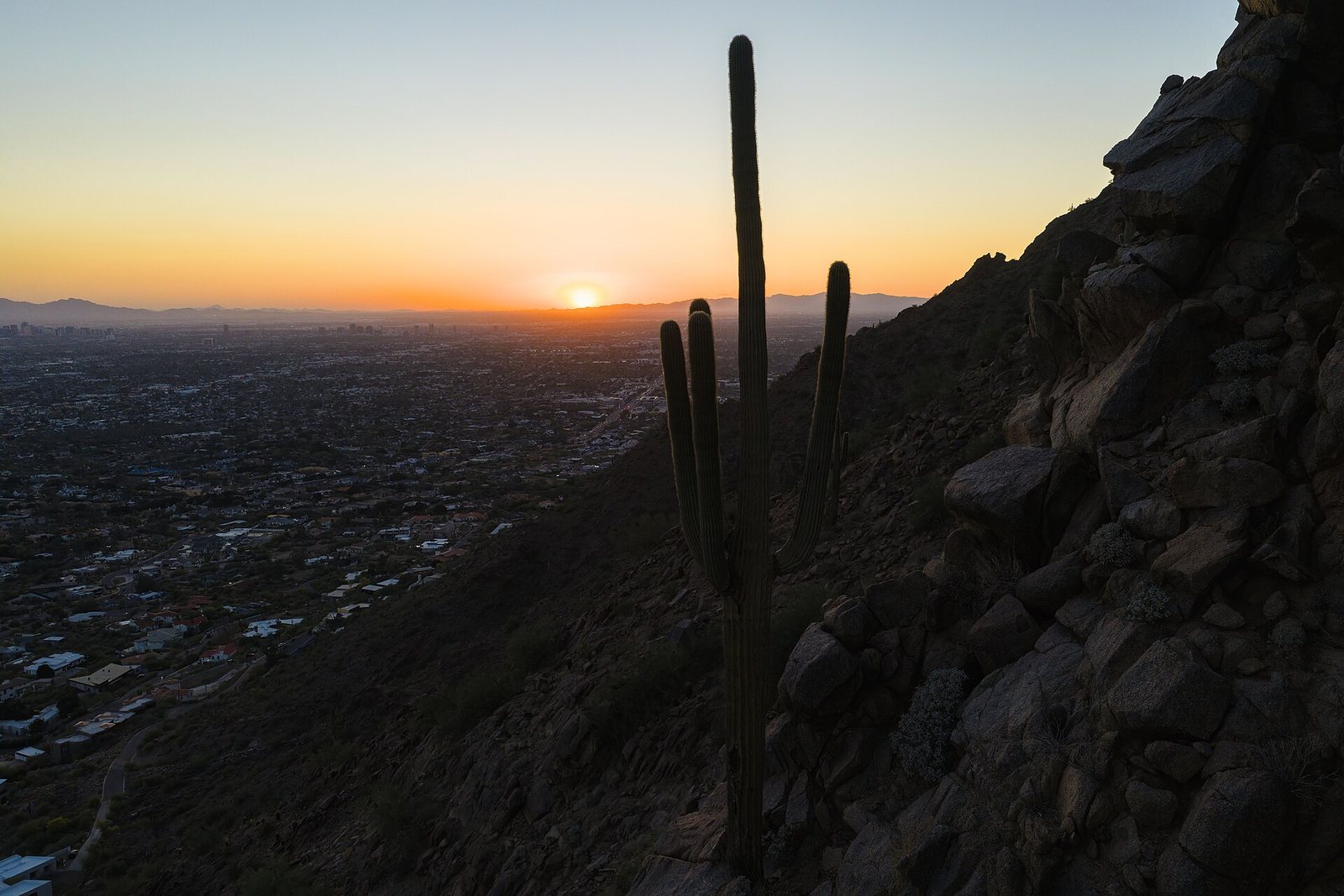
- Saguaro on Camelback Mountain at sunset (featured image): photo by Quintin Soloviev, Wikimedia Commons (CC BY 4.0)