
Book a Phoenix condo for 29 nights and you’ll pay 13.07% in lodging taxes on top of the rent. Book it for 30 nights and, since January 1, 2025, Arizona law says no city may tax it at all. That one-night difference is the most useful thing to know before you type monthly rentals Phoenix AZ into a search box, and almost no listing site explains it. This guide does, along with what a month costs, where winter visitors base themselves, when to book, and how to avoid the scams that follow every snowbird season. For the bigger picture of wintering in the Valley, start with our Arizona snowbird guide.
Short answer: For stays of a month or more, book at least 30 consecutive nights: residential rentals of 30 days or longer carry no city or state rental tax in Arizona, while stays of 29 nights or fewer pay 13.07% in Phoenix and about 14% in Scottsdale. Budget well above HUD’s 2026 baseline of $1,583 a month for an unfurnished one-bedroom, because furnished winter rentals price higher from January to March; 55+ RV resorts start around $900 to $999 a month for a site, and the best January-to-March rentals are booked months in advance.
Prices, hours and rules in this guide were last checked on October 1, 2026.
Monthly rentals Phoenix AZ: your options at a glance
| Option | Typical monthly cost (checked Oct 2026) | Tax on a 30-night-plus stay | Best for |
|---|---|---|---|
| Furnished house or condo (30+ nights) | Varies widely by area, size and month; highest January-March | None on residential rentals since January 2025 | Couples and families wintering for one to five months |
| Unfurnished apartment, 12-month lease | HUD FY2026 Fair Market Rent: $1,583 (1 bedroom), $1,839 (2 bedrooms) | None on residential rentals | A baseline, or a long stay with your own furniture |
| Extended-stay hotel (30+ nights) | Nightly rate times 30 | 2.8% Phoenix city tax on stays over 29 days | Short notice, work trips, no lease |
| 55+ RV resort site | From $900 a month in Mesa; $999 a month fall special in Apache Junction | Plus tax, as the resorts list it | RV owners who want a social, amenity-rich park |
| Any stay of 29 nights or fewer | Nightly or weekly rates | 13.07% in Phoenix; about 13.97% in Scottsdale | Trips shorter than a month |
How does the 30-night rule change what you pay?
Arizona splits rentals into two tax worlds at the 30-day line. Stays of 29 nights or fewer count as transient lodging. In Phoenix that means a combined 13.07% tax: 5.8% for the city, 5.5% for the state and 1.77% for Maricopa County, according to the city’s 2026 combined tax rate chart (checked October 2026). Scottsdale adds a 5% bed tax of its own on any lodging of 29 days or less, which brings its total to about 13.97%.
Stays of 30 or more consecutive days in a house, condo or apartment count as residential rentals, and those are treated very differently. The state has never taxed residential rent, and under a 2023 law, SB 1131, Arizona cities and towns have been barred since January 1, 2025 from levying any transaction privilege or sales tax on residential rentals, according to the Arizona Department of Revenue. Landlords were required to stop charging the repealed tax. The ban doesn’t cover hotels, motels and other transient lodging businesses, which is why a hotel stay is treated differently: Phoenix still charges its 2.8% city rate on hotel stays of more than 29 consecutive days.
Here’s what that means in dollars at October 2026 tax rates, using a $120-a-night condo in Phoenix:
| Booking | Rent | Tax (checked Oct 2026) | Total |
|---|---|---|---|
| 29 nights | $3,480 | $454.84 (13.07%) | $3,934.84 |
| 30 nights | $3,600 | $0 (residential rental) | $3,600 |
| Extended-stay hotel, 30 nights at $110 | $3,300 | $92.40 (2.8%) | $3,392.40 |
Adding the 30th night saves $334.84 in that example, which is why a 29-night booking is one of the most expensive mistakes a long-stay visitor can make. Three practical rules follow. Book the 30 or more nights as one continuous stay with one host, not as two shorter bookings back to back. Check the checkout screen or the lease for any tax line, and ask about it if one appears on a 30-night-plus stay. And remember that cleaning fees, platform service fees and deposits are separate from tax, so compare total costs, not just nightly rates.
What does a monthly rental in Phoenix cost?
The honest answer is that it depends heavily on location, size, furnishings and month, and the asking prices move every season. Two fixed points help. The first is HUD’s fiscal 2026 Fair Market Rent for the Phoenix-Mesa-Chandler metro area, which puts a one-bedroom at $1,583 a month and a two-bedroom at $1,839. Those are 40th-percentile gross rents, including utilities, for ordinary unfurnished apartments on long leases, so think of them as the floor rather than the price of a furnished winter rental.
The second is the seasonal curve. Scottsdale’s monthly bed-tax collections, a rough gauge of short-term lodging demand, show how sharply the Valley’s peak stands out: in 2024 the city collected $6.58 million in April, reflecting the March rush, against $2.86 million in November and $1.37 million in August, and those receipts trail actual stays by about a month (checked October 2026). Furnished monthly rentals follow the same pattern. January through March are the most expensive months to rent and the hardest to book, November, December and April are the shoulder months, and summer is cheap for good reason.
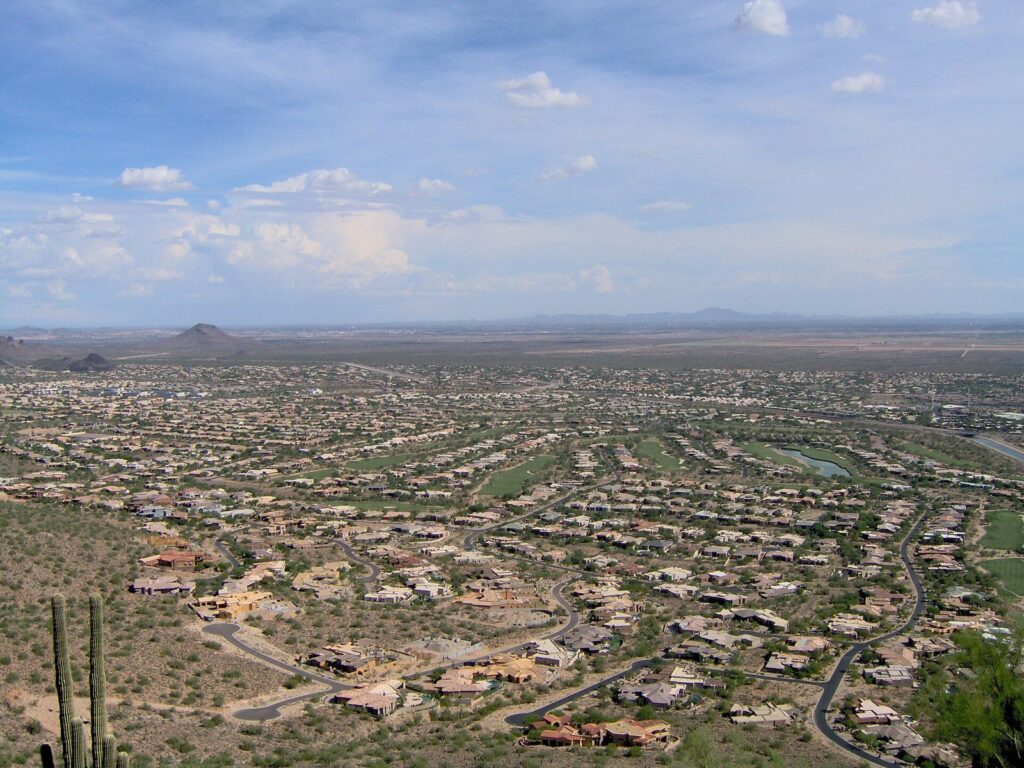
Within those ranges, the price drivers are predictable. A furnished home with a pool, in Scottsdale, Paradise Valley or the Arcadia area of Phoenix, sits at the top. Condos and smaller homes in Mesa, Gilbert, Chandler and the older parts of Phoenix sit in the middle. The age-restricted communities of the West Valley and the RV resorts of the far East Valley sit at the bottom, along with simple casitas. Inclusions matter too: ask whether electricity, water, internet, pool service, landscaping and pool heating are covered, because those can add hundreds of dollars a month if they aren’t.
What do RV resorts and 55+ parks charge?
RV resorts are the budget backbone of the snowbird season, especially in Mesa and Apache Junction, and their prices are published. Citrus Gardens, a 55+ RV park in Mesa, lists $400 a week or $900 a month plus tax, a four-month special from $1,899 plus tax for stays from January 1 to May 1, 2027, and annual stays at $830 a month if booked by December 31, 2026; electricity is extra, water, sewer and amenities are included, and RVs generally must be 10 years old or newer. Sunrise RV Resort in Apache Junction, a gated 55+ resort run by Roberts Resorts, advertises a fall 2026 special of $999 a month for a standard site in October, November or December, with limited sites, a $500 deposit and a requirement that at least one guest per RV be 55 or older (checked October 2026).

Before you commit, read the park rules carefully. Age requirements, RV age limits, pet rules, guest policies and what counts as a month vary from park to park, and the published price is usually for the site alone, with electricity metered separately. Seasonal specials come with limited sites, so if you want a January-to-March site, a fall booking is safer than a holiday one.
Where should you rent for a winter in the Valley?
Pick the area by how you’ll spend your days. If you’ll golf, hike and eat out in Scottsdale, renting in the far West Valley means a 47-to-60-minute drive each way; if you’ll mostly use the pool and the community clubhouse, the cheaper, quieter areas make sense. These are the off-peak drive times from the Valley’s main winter-visitor areas (checked October 2026).
| Area | Downtown Phoenix | Sky Harbor Terminal 4 | Mesa Gateway | Mayo Clinic Hospital Phoenix | Old Town Scottsdale |
|---|---|---|---|---|---|
| Old Town Scottsdale | 21 min | 15 min | 45 min | 26 min | – |
| Fountain Hills | 43 min | 35 min | 52 min | 34 min | 32 min |
| East Mesa RV corridor (Main St and Ellsworth) | 40 min | 33 min | 21 min | 49 min | 33 min |
| Apache Junction | 46 min | 41 min | 29 min | 58 min | 41 min |
| Gold Canyon | 56 min | 52 min | 39 min | 68 min | 52 min |
| Sun Lakes | 34 min | 31 min | 32 min | 52 min | 36 min |
| Sun City | 32 min | 41 min | 76 min | 34 min | 47 min |
| Sun City West | 46 min | 55 min | 90 min | 43 min | 60 min |
| PebbleCreek, Goodyear | 33 min | 42 min | 77 min | 53 min | 47 min |
Scottsdale and Paradise Valley are the choice for a winter rental near Scottsdale’s golf, restaurants and resorts, at the highest prices. Fountain Hills trades a longer drive for quiet streets, mountain views and the fountain in the middle of town. Mesa, Gilbert and Chandler offer mid-priced condos and homes, the Cubs’ and Athletics’ spring training parks, and the East Valley’s restaurants. Apache Junction and Gold Canyon are RV-resort country at the foot of the Superstitions, the cheapest base for a whole season and a long way from Scottsdale.
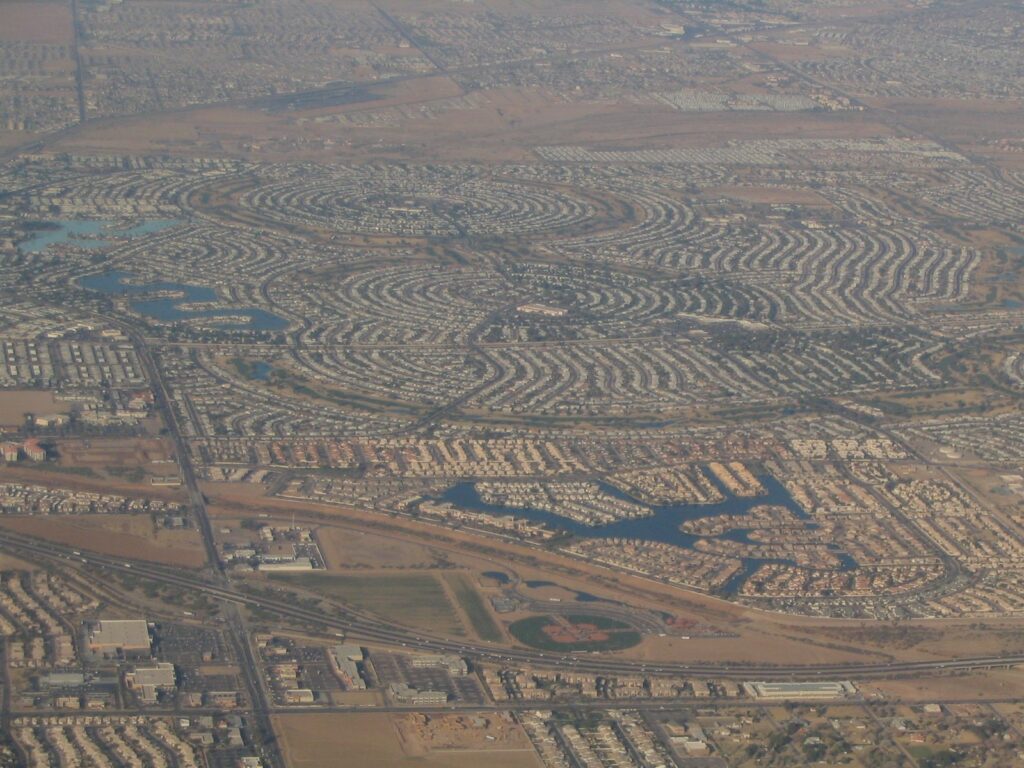
Sun City, Sun City West and PebbleCreek are the West Valley’s big age-restricted communities, built around golf, recreation centers and clubs. Most of their homes sit in 55+ areas, so expect rules requiring at least one occupant to be 55 or older, and check what the recreation centers charge visitors for access. Sun City is 32 minutes from downtown Phoenix but 47 from Old Town Scottsdale, which is fine if your winter revolves around the community itself.
If you’re staying for days rather than months, a hotel or vacation rental in a central area usually makes more sense; our guide to where to stay in Phoenix compares the areas for shorter trips.
When should you book a monthly rental in Phoenix?
For January to March, book as early as you can, ideally by late summer or early fall. That’s when the Valley is busiest: the 2027 calendar stacks the Barrett-Jackson collector car auction (January 23 to 31), the WM Phoenix Open (February 8 to 14), the NBA All-Star Game (February 19 to 21) and spring training (February 19 to March 23) on top of the winter visitor season (checked October 2026). Many repeat winter visitors rebook the same rental for the next season before they leave in spring, so the best furnished homes can be taken long before December.
The shoulder months are easier. November and December rentals are more available and often cheaper, the weather is excellent, and you can see the Valley before the peak. Our guide to November in Phoenix shows what the start of the season looks like. April is the other value month, warm but not yet hot. Avoid planning a long stay that runs through May: the Valley’s normal high reaches 94.5°F that month, and many snowbirds are gone by then for good reason.
Two booking tactics work for longer stays. Ask hosts and property managers about discounts for two, three or four months, which many offer because a full-season tenant saves them turnover. And read the cancellation policy before you pay, because long-stay bookings often have stricter terms than a weekend rental, especially for the peak months.
How do you avoid rental scams and surprises?
Every winter brings fake listings aimed at snowbirds booking from far away. The warning signs are consistent: a price well below comparable rentals, an owner who can’t show the property, pressure to pay quickly, and requests for wire transfers, gift cards or payment apps outside a booking platform. Protect yourself by paying through a reputable platform or by credit card, getting a written lease for any long stay, asking for a live video tour, and checking that the person renting to you actually owns or manages the property; the Maricopa County Assessor’s online records list property owners.
For stays under 30 nights, the City of Phoenix licenses short-term rentals through its Short-Term Rental Registry, so a legitimate host offering shorter stays inside the city should hold a permit; ask for the number. For longer stays, read the lease for the rules that matter in Arizona: who pays electricity, whether pool heating costs extra, how many guests and pets are allowed, parking and HOA rules, and, in 55+ communities, the age requirements for occupants and visitors.
Furnished rental, hotel or RV resort: which fits your stay?
Each long-stay option suits a different kind of winter, and the right one depends on how long you’ll stay, how you’ll travel and how much space you need.
| Option | Pros | Cons | Tax on 30+ nights (checked Oct 2026) |
|---|---|---|---|
| Furnished house or condo | A kitchen, space for visitors, a pool in many homes, and a neighborhood to live in | Books up early for January-March; cleaning fees and deposits; utilities may be extra | None on residential rentals |
| Extended-stay hotel | Flexible dates, housekeeping, no lease, easy to book at short notice | Less space; nightly pricing adds up; fewer homey touches | 2.8% Phoenix city tax on stays over 29 days |
| 55+ RV resort | The cheapest monthly base, with clubhouses, pools and a ready-made social life | You need an RV; age and RV-age rules; electricity metered separately | Plus tax, as the resorts list it |
| Long-term unfurnished lease | Lowest monthly rent for stays of a year | Furnishing and utility setup; 12-month commitments | None on residential rentals |
For most snowbirds coming for two to four months, a furnished home or condo booked for the whole stay is the sweet spot: it avoids the transient lodging tax and gives you a kitchen and room for visiting family. An extended-stay hotel makes sense for shorter or less certain stays, such as a work assignment or the first month of a relocation, and an RV resort is the obvious choice if you’re bringing your home with you.
Which winter months are best for a long stay?
The winter visitor season runs from about mid-November to April, with the crowds peaking in January and February. Here’s how the months compare for a long stay, using Sky Harbor’s 1991-2020 normals and the 2026-27 event calendar (checked October 2026).
| Month | Normal high / low | What’s happening | Rental demand |
|---|---|---|---|
| November | 76.5°F / 53.7°F | Golf courses reopen after overseeding; snowbirds start arriving | Moderate |
| December | 66.2°F / 45.3°F | Holiday lights, the Fiesta Bowl on December 30 | Rising |
| January | 67.6°F / 46.0°F | Barrett-Jackson, January 23-31 | Peak |
| February | 70.8°F / 49.0°F | WM Phoenix Open, NBA All-Star, spring training from February 19 | Peak |
| March | 78.1°F / 54.5°F | Spring training through March 23; wildflowers in wet years | Peak |
| April | 85.5°F / 60.8°F | Warm days; snowbirds start leaving | Falling |
A November-to-March stay catches the whole season, but it costs the most and needs the earliest booking. A December-to-February stay gives you the coolest weather and the holidays. If price matters most, consider November and early December, or March and April at the edges of the peak, and pair them with a shorter visit in the middle of winter.
What should you ask before you sign a monthly lease?
A month or more in someone else’s home goes better when the details are settled in writing. Before you pay, ask:
- Is the stay at least 30 consecutive nights on one contract, and does the total include any tax line?
- Which utilities are included, including electricity, water, trash, internet and streaming services, and is there a cap?
- Is the pool heated, and does heating cost extra? Unheated pools are cold in December and January.
- What are the deposit, cleaning fee and cancellation terms, and what happens if you need to leave early?
- What do the HOA or community rules say about parking, guests, pets and, in 55+ communities, the ages of occupants and visitors?
- How do mail and packages work, and who handles repairs, pest control and landscaping during your stay?
- How fast is the internet, if you’ll work remotely?
Get the answers in the listing or the lease, not just in a message, and keep copies. For a stay that runs into late spring, also ask how the air conditioning is maintained and who pays for electricity, because April and May bills rise as the heat arrives.
Monthly rentals for work, medical stays or a trial move
Not every long stay is a snowbird winter. Travelers on work assignments, families staying near a hospital during treatment and people testing a move to the Valley all look for the same thing: a furnished place for 30 days or more. The same tax rule applies to all of them, so a 30-night-plus residential rental avoids the transient lodging tax whatever the reason for the stay.
For medical stays, look at the drive times first. Mayo Clinic Hospital in north Phoenix is 26 minutes from Old Town Scottsdale, 34 from Sun City and Fountain Hills, and 49 from the east Mesa RV corridor (checked October 2026). For a trial move, rent in the area you’re considering, in the season you’d actually live there: a month in January tells you about winter, but a month in July tells you whether you can live with the heat.
What else should you budget for a month in Phoenix?
Rent is the big number, but not the only one (checked October 2026). A rental car for a month is often cheaper than repeated weekly rentals, and most winter visitors need a car outside central Phoenix and Tempe. Golf is a major line item for many: the City of Phoenix’s winter and spring 2026 rates for public walking rounds ran from $60 to $74 for 18 holes, depending on the course and day. Utilities in winter are modest, since you’re not running the air conditioning, but confirm what’s included. And if you’ll take short trips around Arizona, budget for hotel taxes again on those nights, because the 30-night exemption applies only to the long-stay rental itself.
A few practical details help a long stay run smoothly. Arizona doesn’t observe daylight saving time, so your phone and your family back home will drift by an hour in March. Mail and package delivery to a rental is usually fine, but ask the host first. And for health care, the Valley’s major hospital systems, including Mayo Clinic Hospital in north Phoenix, are within about 25 to 70 minutes of most winter-visitor areas, as the drive-time table shows. For everything else about a season in the Valley, from clubs to costs, see our guide to wintering in Arizona.
How do you get around during a long stay?
Most winter visitors want a car, because golf courses, trailheads, RV resorts and the 55+ communities are spread across the Valley. If you’re staying near the light rail in downtown Phoenix, Tempe or Mesa, though, Valley Metro’s tap-to-pay fares cap at $64 for a calendar month, and at $4 a day on shorter visits (checked October 2026), which makes a car-light month realistic. Scottsdale’s free trolleys cover Old Town and nearby neighborhoods, and Waymo’s driverless cars serve downtown Phoenix, Scottsdale and parts of Tempe, Mesa and Chandler, booked through the Waymo app. Many long-stay visitors split the difference: no car for the first weeks, then a rental for the days of golf, hiking and day trips.
What to skip
- A 29-night booking. It triggers 13.07% in Phoenix lodging tax that a 30-night stay avoids. Add the night.
- Two back-to-back short bookings. Splitting a month into two stays can turn a tax-free residential rental into two taxed transient ones.
- Waiting until December to book January to March. The best furnished rentals and RV specials go months earlier.
- Paying by wire, gift card or an off-platform app. It’s the classic snowbird rental scam.
- A far West Valley rental if your winter is in Scottsdale. Sun City West to Old Town Scottsdale is an hour each way off-peak.
- A lease that runs into late May. By then the heat arrives, and much of the snowbird community has gone home.
Frequently Asked Questions
How much is a monthly rental in Phoenix, AZ?
It varies widely with location, size, furnishings and month. As a baseline, HUD’s fiscal 2026 Fair Market Rent for the Phoenix metro is $1,583 for an unfurnished one-bedroom and $1,839 for a two-bedroom. Furnished winter rentals cost more, especially from January to March, while 55+ RV resort sites start around $900 to $999 a month plus utilities (checked October 2026).
Do you pay tax on a 30-day rental in Arizona?
Not on a residential rental of 30 or more consecutive days. Since January 1, 2025, Arizona cities can’t tax residential rentals, and the state doesn’t tax them either. Stays of 29 nights or fewer pay transient lodging tax, 13.07% in Phoenix and about 13.97% in Scottsdale. Hotels are different: Phoenix taxes hotel stays of more than 29 days at its 2.8% city rate.
When should snowbirds book a winter rental in Phoenix?
For January to March, by late summer or early fall, because the peak months combine the winter visitor season with spring training, the WM Phoenix Open and other big events. Many repeat visitors rebook the same rental before leaving in spring. November, December and April are easier to book and usually cheaper.
Where do snowbirds stay in Phoenix?
The most popular bases are Scottsdale and Fountain Hills for golf and dining, Mesa, Gilbert and Chandler for mid-priced condos and homes, Apache Junction and Gold Canyon for RV resorts, and the age-restricted communities of Sun City, Sun City West and PebbleCreek in the West Valley. Choose by where you’ll spend your days, since some of these areas are an hour apart.
Are RV resorts in Phoenix cheaper than renting a home?
For RV owners, usually much cheaper. Published examples include $900 a month plus tax at Citrus Gardens in Mesa and a $999-a-month fall special at Sunrise RV Resort in Apache Junction, both 55+ parks (checked October 2026). Electricity is usually extra, and parks set rules on guest ages, RV age and pets, so read them before booking.
How do I avoid a rental scam in Arizona?
Pay through a reputable platform or by credit card, never by wire transfer or gift card. Ask for a live video tour, get a written lease, and confirm that the person renting to you owns or manages the property using county records. Be wary of prices far below similar listings and of hosts pressuring you to pay quickly. In Phoenix, short stays should come with a city permit.
Is it cheaper to rent monthly than to stay in a hotel in Phoenix?
Usually, for stays of a month or more. A furnished rental of 30 or more consecutive nights carries no city or state rental tax, while a hotel stay of 29 nights or fewer pays 13.07% in Phoenix. Hotels charge only Phoenix’s 2.8% city tax on stays over 29 days, but nightly rates and limited space still make a home or condo better value for most long stays.
What counts as a short-term rental in Arizona?
For tax purposes, a stay of 29 nights or fewer is transient lodging and pays lodging taxes, 13.07% in Phoenix. A rental of 30 or more consecutive days for residential purposes is a residential rental, which Arizona cities have been barred from taxing since January 1, 2025. Phoenix also licenses short-term rentals through its Short-Term Rental Registry.
Related Phoenix Guides
- Wintering in Arizona as a snowbird: the season, the communities and what a winter in the Valley costs.
- Where to Stay in Phoenix: the best areas and hotels for shorter trips.
- November in Phoenix: weather and events in the month most winter visitors arrive.
- Phoenix weather month by month: how the seasons compare.
Sources and verification
This guide is built from research, not hosted stays. Tax rules, rates and drive times were checked on October 1, 2026 (some on September 24) against the agencies and operators listed below. Drive times are off-peak estimates from OSRM routing on OpenStreetMap data.
- Arizona Department of Revenue: residential rental tax changes, residential rental guidelines; Arizona Legislature: SB 1131
- City of Phoenix: combined tax rate chart, Short-Term Rental Registry; City of Scottsdale: taxes, lodging statistics
- U.S. Department of Housing and Urban Development: FY2026 Fair Market Rent schedule
- RV resorts: Citrus Gardens, Sunrise RV Resort
- Events: Cactus League, WM Phoenix Open; weather: NOAA 1991-2020 normals
Photo Credits
- North Scottsdale golf communities: photo by No machine-readable author provided. Dominic assumed (based on copyright claims)., Wikimedia Commons (public domain)
- Apache Junction welcome sign: photo by Marine 69-71, Wikimedia Commons (CC BY-SA 4.0)
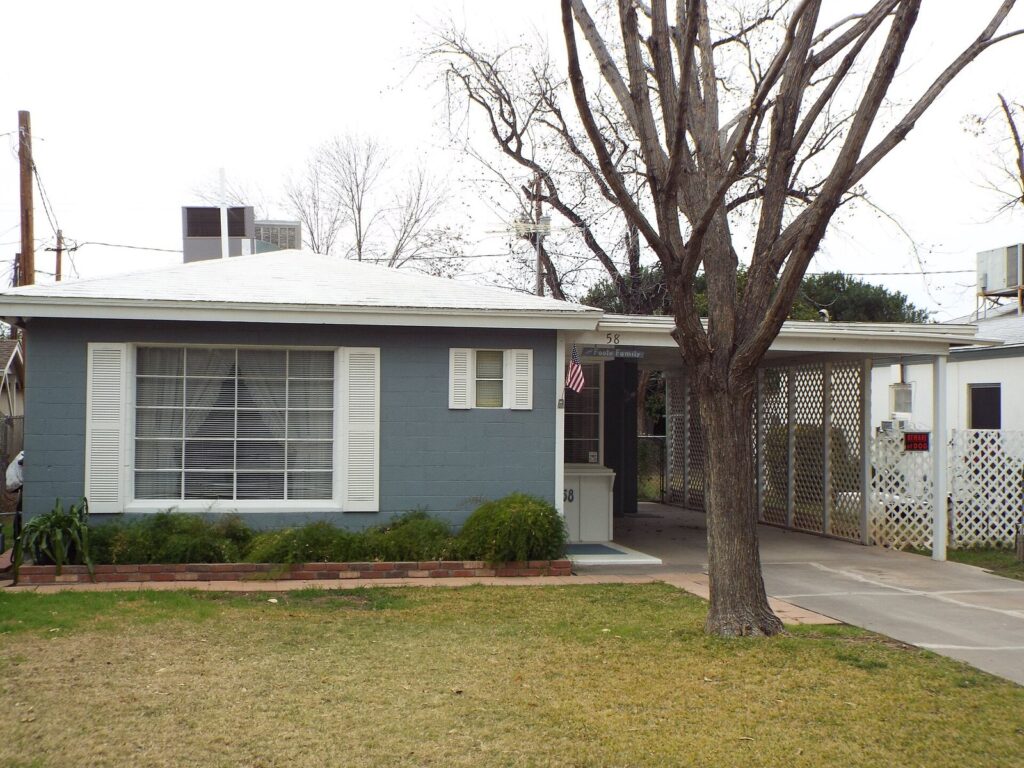
- 1950s house in Mesa: photo by Marine 69-71, Wikimedia Commons (CC BY-SA 4.0)
- Sun City from the air: photo by Ken Lund from Reno, Nevada, USA, Wikimedia Commons (CC BY-SA 2.0)
- Sunset over Apache Junction (featured image): photo by Chad Johnson, Wikimedia Commons (CC BY 2.0)