A seat in a hot air balloon over the north Valley at sunrise costs $239 to $275 before discounts. A two-to-three-hour Jeep ride into the desert northeast of Scottsdale starts at $169, a golden-hour hike at Taliesin West costs $65, and a docent-led tour of Tovrea Castle costs $22 if you win the lottery (prices checked October 2026). That’s a huge spread in price, effort and payoff, and the booking sites that rank for Phoenix desert tours sell all of it with the same five-star enthusiasm. This guide compares the Valley’s bookable desert experiences side by side and says which ones are worth your money and your morning.
Short answer: The three guided desert experiences most worth booking around Phoenix are a sunrise balloon flight (from $239 a seat with Hot Air Expeditions, or $275 retail with Rainbow Ryders), a Jeep tour into the desert northeast of Scottsdale (from $169 a seat with Wild West Jeep Tours), and one of Taliesin West’s guided desert hikes ($65), all checked in October 2026. Skip same-day Grand Canyon bus tours, and from May through September book anything outdoors for sunrise or after sunset.
Prices, hours and rules in this guide were last checked on October 1, 2026. Prices are per person before taxes unless stated; drive times are off-peak estimates from downtown Phoenix.
Phoenix desert tours at a glance
These are the guided and bookable experiences this guide covers, with what they cost, how long they take and who they suit. Every price is the operator’s own published figure as of October 2026; where an operator prices only in its booking calendar, the table says so.
| Experience | Operator | Price (checked Oct 2026) | Length | Best time | Best for |
|---|---|---|---|---|---|
| Sunrise balloon flight | Hot Air Expeditions | $239 adult, $189 ages 5-12, plus 9% taxes and fees | Most of a morning | Year-round at sunrise | A once-a-trip splurge |
| Sunrise balloon flight | Rainbow Ryders | $275 retail; $185 with AAA, $175 military | Most of a morning | Year-round at sunrise; sunset flights November-March | Splurgers with a discount card |
| Jeep tour | Wild West Jeep Tours | From $169 (2-3 hours) or $199 with a Rio Verde stop; private Jeep from $899 | 2-4 hours | October-April; sunset tours | Families and anyone who’d rather ride than hike |
| Hummer, UTV, ATV and night-vision stargazing tours | Stellar Adventures | Priced in the booking calendar only | Varies by tour | October-April | Thrill-seekers |
| Guided desert hike or bike ride | Cliff Creek Outfitters | Priced in the booking calendar only | Varies by tour | October-April mornings | Visitors who want a guide on the trail |
| Taliesin West hikes and tours | Frank Lloyd Wright Foundation | $44 audio tour; $65 guided hikes; $110 Behind-the-Scenes | 1-2.5 hours | October-April | Architecture fans; no guided tours for kids under 6 |
| Tovrea Castle tour | Tovrea Carraro Society | $22 by lottery, $25 last-minute | Guided tram and castle tour | Fridays-Sundays; closed July-August | History buffs who plan ahead |
| Cosanti guided tour | Cosanti | $30 adults, $10 ages 18 and under | 9:15-10:30 a.m. weekdays | Any season | Design fans |
| Goldfield railroad, mine tour and zipline | Goldfield Ghost Town | $12 each tour; zipline $15 | Under an hour each | October-April | Kids |
| Same-day Grand Canyon tour | Various | Varies | 13-15 hours | Not recommended | Nobody with a choice |
How do you choose a desert tour in Phoenix?
Four questions sort the Valley’s adventure activities faster than any star rating. Answer them in order.
What month is it? From October to April, the desert is pleasant at almost any hour, and every option in this guide runs. From May through September the Valley’s normal highs run from 94.5°F in May to 106.5°F in July, so outdoor tours move to sunrise or after dark, and some products, such as afternoon and sunset balloon flights, simply stop. In summer, the question isn’t which tour but which hour.
How much effort do you want? A balloon flight, a Jeep tour and a Hummer ride ask nothing of your legs. A guided hike asks a little, and a mountain bike tour asks a lot more. If someone in your group can’t walk far on uneven ground, the Jeep is the safest bet for showing them the backcountry.
Who’s coming? Ages matter more than most listings admit. Wild West Jeep Tours takes all ages. Hot Air Expeditions prices children from 5 to 12, Taliesin West says its guided tours are not intended for children under 6, and Goldfield lets children 4 and under ride its train free. Teenagers bored by architecture will usually perk up in a Hummer.
How far will you drive? The tours aren’t downtown. Hot Air Expeditions checks in at Deer Valley Airport in north Phoenix and Rainbow Ryders lists a Glendale address, with flights over the desert beyond the city’s edge; the Jeep and off-road tours run on public land north and east of Scottsdale; Taliesin West is 43 minutes from downtown in north Scottsdale, and Goldfield is 54 minutes east in Apache Junction (checked October 2026). Hot Air Expeditions offers hotel transfers for $39 a person, which is worth it at a 5 a.m. check-in.
What will you see on a Sonoran Desert tour?
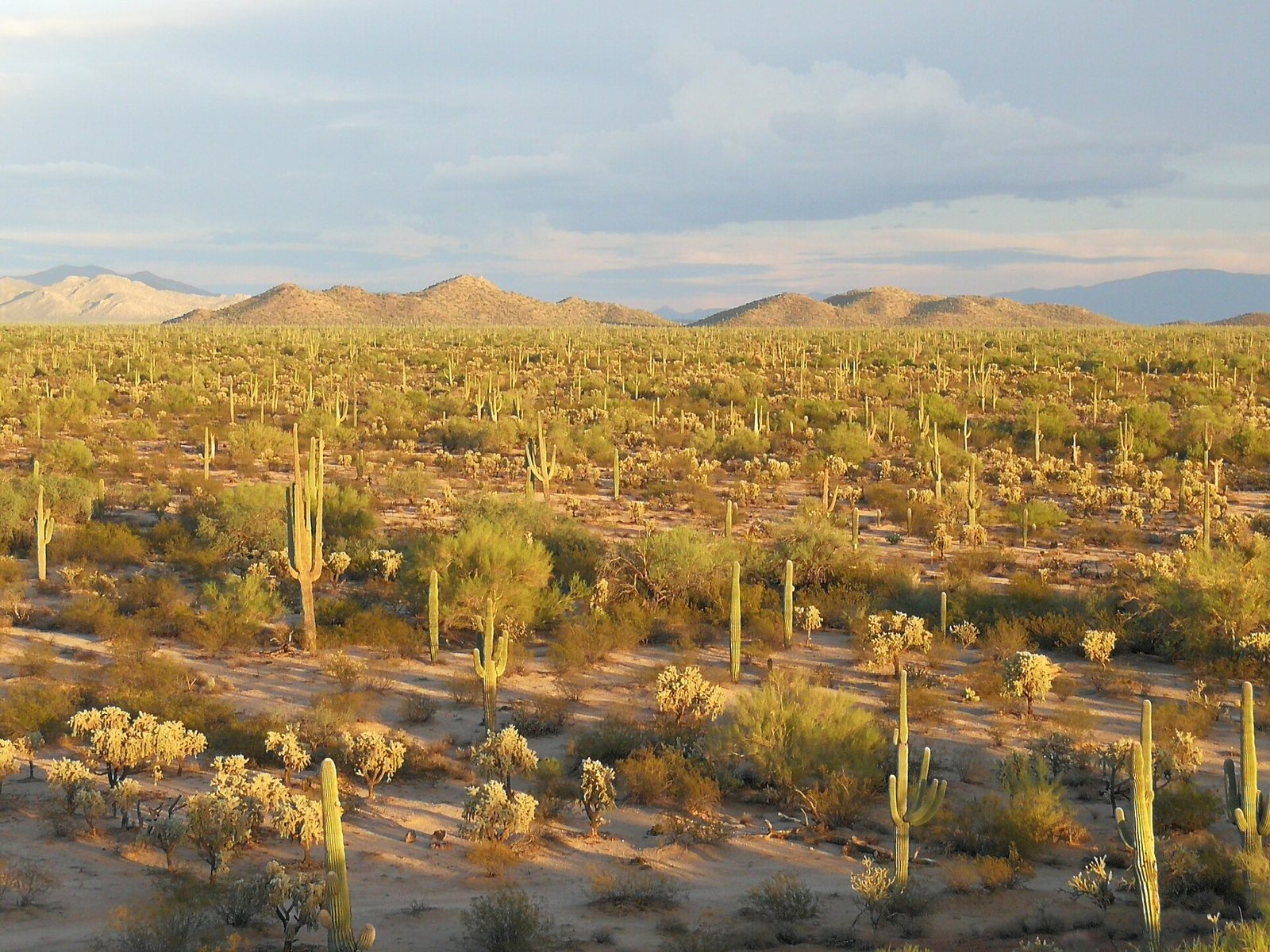
More than most first-timers expect. The Sonoran Desert gets two rainy seasons, winter storms and the summer monsoon, so it’s greener and more crowded with plants than the bare sand many people picture. Its signature is the saguaro, the tall, many-armed cactus that grows wild only in this desert, mostly in southern Arizona and the Mexican state of Sonora. Saguaros bloom with white flowers in May and June, and the blossom is Arizona’s state flower.
Around them you’ll see palo verde trees with green bark that turn yellow with blossoms in spring, spindly ocotillo that leaf out within days of a rain, and several kinds of cholla. Teddy bear cholla looks soft and is the opposite; its segments detach at a touch, which is why guides carry a comb to flick them off shoes and sleeves. After a storm, the creosote bushes give the desert a sharp, rain-on-asphalt smell that locals love.
Wildlife is a matter of luck and timing. Gambel’s quail, roadrunners, jackrabbits and javelina are the likeliest sightings, mostly early and late in the day. Rattlesnakes are active in the warm months and usually keep to themselves, and desert tortoises and Gila monsters are rare treats rather than something to expect. If wildflowers are the goal, aim for late February to April after a wet winter, when poppies, lupine and brittlebush can carpet the slopes; in a dry year the show is thin, whatever a tour listing promises.
Are hot air balloon rides in Phoenix worth the money?
For one splurge on a Phoenix trip, yes. A sunrise flight drifts over saguaros and desert washes at the edge of the city while the light turns everything gold, and nothing else here shows you the scale of the Sonoran Desert, or how abruptly the subdivisions end, quite the same way. Two established operators fly here and both publish their prices, so you can compare like for like (checked October 2026).

| Operator | Shared sunrise flight (checked Oct 2026) | Other options | Fine print |
|---|---|---|---|
| Hot Air Expeditions | $239 adults, $189 ages 5-12 | Private flight $649 per person; afternoon flights November 1-March 15 at $259 and $209 | Add 9% taxes and fees; hotel transfers $39 per person; check-in at Deer Valley Airport; $20 off through December 20, 2026 |
| Rainbow Ryders | $275 retail | $185 with AAA, $175 military; sunset flights November-March only | Meet about 30 minutes before sunrise; summer check-in around 4:30-5 a.m.; Glendale office |
Do the math before you pick, using October 2026 prices. At Hot Air Expeditions, two adults on a shared sunrise flight pay $478, or $521.02 once the 9% taxes and fees go on, plus $78 more if you want hotel transfers. The $20-off offer the company runs through December 20, 2026 brings an adult seat to $238.71 with taxes. A family of four with two children between 5 and 12 pays $856 before taxes and $933.04 after. At Rainbow Ryders, the retail fare is higher at $275, but a AAA card drops it to $185 and military ID to $175, which makes it the cheaper flight by a wide margin if you qualify.
Timing is the other decision. Both companies fly at sunrise every day of the year, which in Phoenix means a check-in somewhere between about 4:30 a.m. in June and 7 a.m. in January; Arizona doesn’t change its clocks, so sunrise ranges from 5:18 a.m. in mid-June to 7:32 a.m. in mid-January. Afternoon and sunset flights only run in the cool months: Hot Air Expeditions flies them November 1 to March 15, and Rainbow Ryders November through March. Those later flights are kinder to anyone who hates alarms, though the morning air is usually calmer.
Weather decides whether you go up at all. Balloons need light, steady wind, so flights can be called off for wind or storms, and the summer monsoon makes cancellations more likely from June to September. Book your flight for the first or second morning of your trip, not the last, so a weather cancellation leaves room to rebook. Wear layers in winter, since desert dawns can be chilly even when the afternoon reaches 70°F, and closed-toe shoes for walking through brush at the landing site.
Who shouldn’t go? Anyone with a serious fear of heights, a medical condition affecting balance or an aversion to 4:30 a.m. alarms. Hot Air Expeditions sells a child fare for ages 5 to 12, but a pre-dawn start and a long morning are a lot to ask of a 5-year-old.
Are Jeep tours in the Sonoran Desert a good idea?
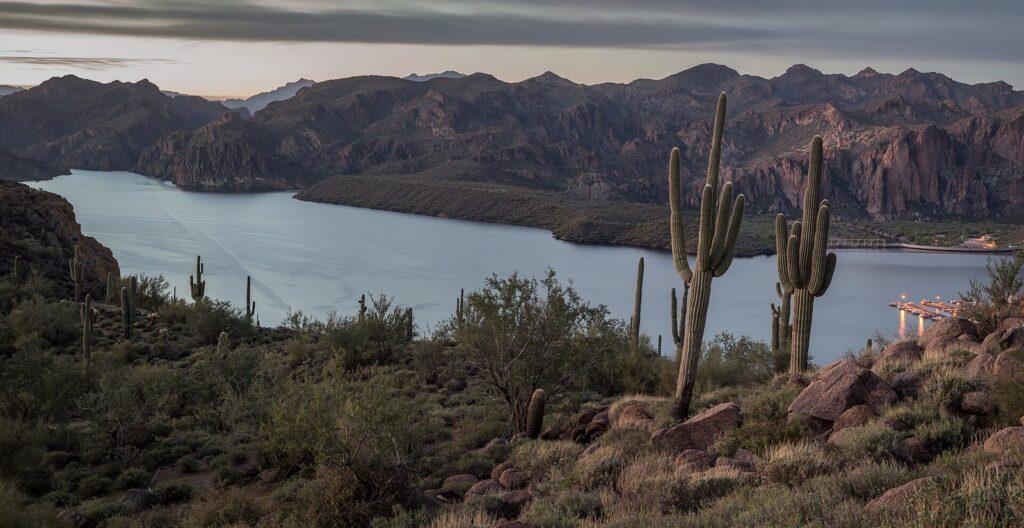
They’re the easiest way to get into the backcountry without hiking, and the best fit for mixed groups. Wild West Jeep Tours runs its Great Western Trail tour in 2 to 3 hours from $169 an adult, with a sunset version at the same price, and a longer 3-to-4-hour version with a stop in Rio Verde, the ranch community northeast of Scottsdale, from $199 (checked October 2026). Each Jeep holds up to seven passengers, and the company takes all ages. Its homepage doesn’t list child prices, taxes or the meeting point, so confirm those when you book.
Groups should look at the private price (checked October 2026). A private Jeep costs from $899 for the 2-to-3-hour tour and from $1,099 for the Rio Verde version. Five adults on the public tour pay $845, so for five it’s cheaper to share; six adults pay $1,014, so from six people up, the private Jeep wins on price as well as privacy. The same break point applies on the Rio Verde tour, where six public seats cost $1,194.
What you get is a guide who drives, talks about the plants, animals and history around you, and stops for photos: saguaros, chollas that look soft and aren’t, palo verde, ocotillo and, in spring, wildflowers. Wildlife sightings are a bonus rather than a promise. The sunset tours are the best-looking, and from October through March, when sunset comes between 5:22 and 6:35 p.m., they finish in time for dinner.
Hummer, UTV and ATV tours: thrills, not scenery
If the Jeep sounds too gentle, the Valley’s off-road operators will happily rattle your fillings. Stellar Adventures, which says it operates with permission from the Bureau of Land Management and the Tonto National Forest, runs H1 Hummer tours at beginner and advanced levels, an M1009 Blazer tour, and UTV and ATV tours where you drive (checked October 2026). It also sells combination tours that pair a backroads ride with barbecue or tastings of beer, wine, tequila or whiskey, and night-vision stargazing tours.
Stellar doesn’t publish prices, durations or driver rules on its tour pages; you see them in the booking calendar, and they vary by date and vehicle. Before you book a self-drive UTV or ATV tour, check the minimum driver age, whether a license is required and what the damage deposit is, then compare the total for your whole party with a Jeep tour. Wear closed-toe shoes and clothes you don’t mind coating in dust, bring sunglasses, and expect a loud ride.
The verdict: these tours are about the vehicle, not the desert. You’ll see saguaros and big views, but engine noise and speed crowd out the quieter parts of the experience, and you’re unlikely to hear much about the plants around you. Book one for the adrenaline, and pick a Jeep or a guided hike if what you want is to understand the place.
Guided desert hikes and bike tours
Most of the Valley’s hiking is free and self-guided, and our guide to hiking in Phoenix covers the trails, the heat rules and which summits are worth the climb. A guided hike makes sense in three situations: you’re unsure of route-finding in desert terrain, you want someone to explain what you’re looking at, or you want gear and logistics handled.
The most distinctive guided walks are at Taliesin West, Frank Lloyd Wright’s winter home and studio in north Scottsdale. The Frank Lloyd Wright Foundation runs a Golden Hour Sunset Hike on Saturday and Sunday evenings from October 3 to December 27, 2026, and an Apprentice Shelter Hike on weekend mornings at 10 a.m. from January 2 to March 28, 2027, each for $65. Its Sonoran Desert Plant Hike and Tasting costs $85 and runs on six Fridays at 9 a.m. between January 15 and March 26, 2027, with just 16 places each (checked October 2026). That an architecture site runs its own desert walks tells you how good the setting is.
For a conventional guided hike or bike ride, Cliff Creek Outfitters, formerly the REI Adventure Center (older guides may still send you to Arizona Outback Adventures, whose old web address now redirects there), runs desert hiking tours and road, mountain, gravel and e-bike tours around Scottsdale, as well as rafting and paddling trips on the Salt River and Saguaro Lake. Its prices also live in the booking calendar. One rule to know: the City of Scottsdale prohibits electric bikes in the McDowell Sonoran Preserve, its 30,500-acre network of more than 230 miles of trails, so e-bike tours ride elsewhere.
Heat changes guided hiking more than any other tour. On days the National Weather Service issues an Extreme Heat Warning, the City of Phoenix closes its busiest summit trails, including Camelback’s Echo Canyon and Cholla, Piestewa Peak’s Summit Trail and several South Mountain trails, from 8 a.m. to 5 p.m. In 2024 that happened on 45 days (checked October 2026). Reputable guides start summer hikes at first light and cancel when it’s too hot, and if one doesn’t, find another guide.
Stargazing and sunset tours
The desert at dusk is the Valley’s best free show, and a guided version adds context and, after dark, a telescope or night-vision gear. Stellar Adventures runs Arizona stargazing tours with night vision, booked through the same calendar as its off-road tours. City lights wash out much of the sky over the Valley itself, so any stargazing tour worth booking drives you out to darker desert, and the moon matters as much as the operator: a full moon can hide all but the brightest stars, so check the moon phase before you choose a night.
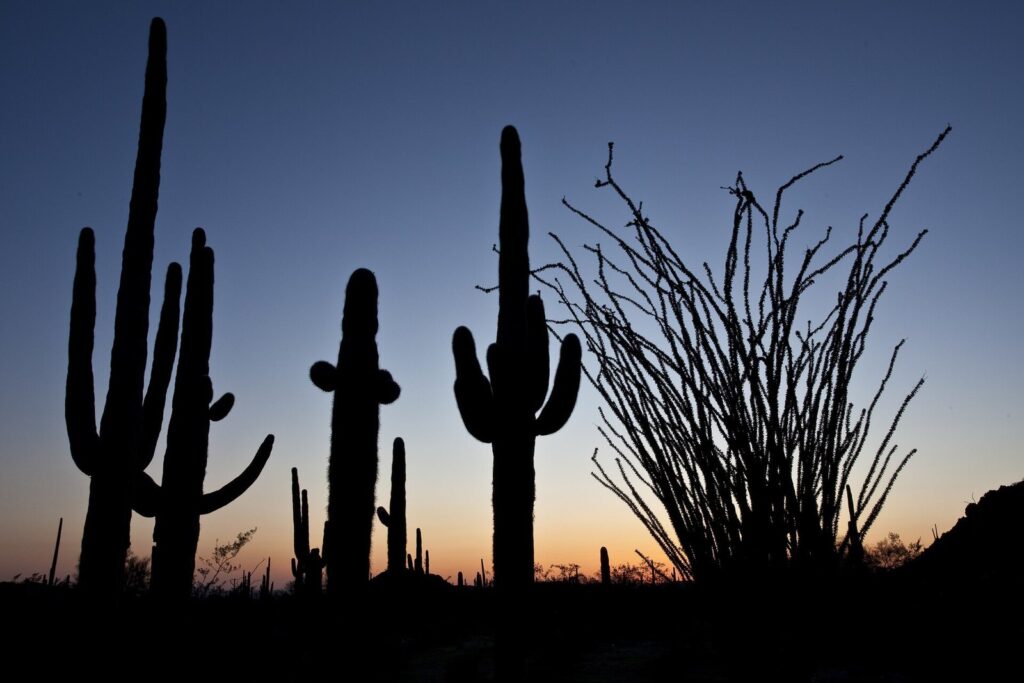
Sunset times make the planning easy because Arizona stays on Mountain Standard Time all year. The sun sets at about 5:56 p.m. in mid-October, 5:22 p.m. in mid-December and 7:39 p.m. in mid-June (checked October 2026). A winter sunset tour therefore ends in darkness by 6:30 p.m., and a summer one doesn’t begin until it’s cooled from scorching to merely hot. For serious astronomy, Lowell Observatory in Flagstaff includes stargazing in its general admission, which makes it a better overnight trip than a day tour; see our guide to day trips from Phoenix for the drive.
Scottsdale tours with a guide: architecture and history
Not every desert tour involves dust. A handful of the Valley’s best guided experiences are about what people built in the desert, and three of them are in or near Scottsdale.
Taliesin West
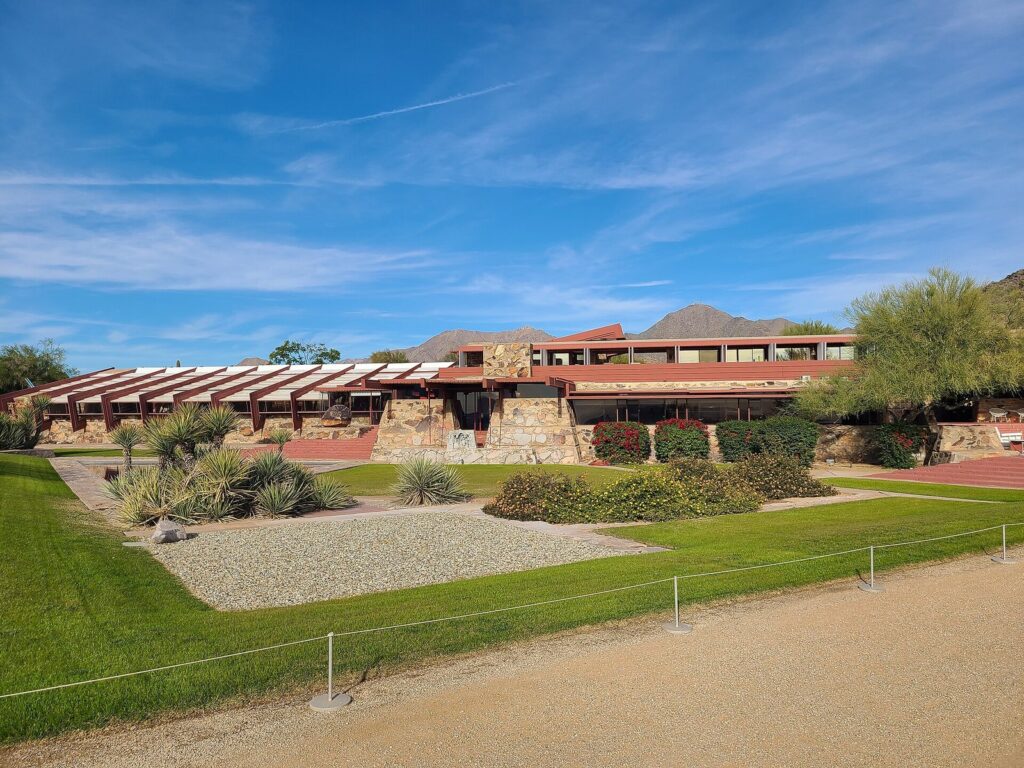
Taliesin West is the one to prioritize. The self-guided audio tour costs $44 for adults and $22 for ages 6 to 17 from October to May, takes 60 to 75 minutes, and is the cheapest way in. The guided Behind-the-Scenes Tour costs $110 for adults and $55 for youths, lasts about 2 to 2.5 hours, and runs at 10 a.m. on set weekdays from November 3, 2026 to April 30, 2027. In October 2026 the site opens Wednesday through Monday and closes Tuesdays; from November 1 to April 30 it opens daily (checked October 2026). It’s 43 minutes from downtown Phoenix, the foundation strongly recommends reserving, and the site is part of the 2019 UNESCO World Heritage listing for Frank Lloyd Wright’s 20th-century architecture.
Cosanti
Cosanti, the Paradise Valley studio of architect Paolo Soleri and the place where his bronze and ceramic windbells are still made, runs guided tours on weekdays from 9:15 to 10:30 a.m. for $30 for adults, $15 for students and $10 for anyone 18 and under (checked October 2026). It’s 27 minutes from downtown and 13 from Old Town Scottsdale, and its earth-cast concrete structures make a short, inexpensive companion to Taliesin West on the same morning.
Tovrea Castle
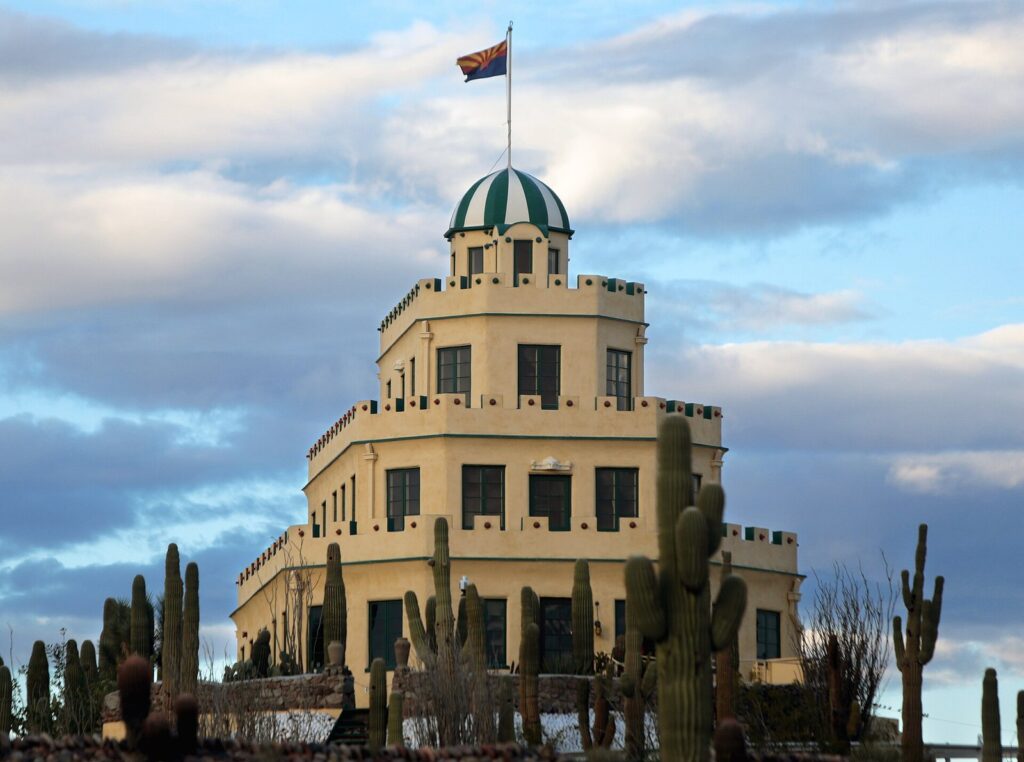
Tovrea Castle, the wedding-cake building on a hill beside Loop 202 in east Phoenix, can only be seen inside on docent-led tram-and-castle tours run by the Tovrea Carraro Society, and tickets are sold by lottery for $22 per person, with children 2 and under free. Regular tours run Friday through Sunday, with group tours on Thursdays, and the castle closes Mondays, Tuesdays and all of July and August. The fall 2026 tours sold out in a lottery that closed in June, and the lottery for January to May 2027 ran from October 1 to 15, 2026, with winners notified two to three weeks later (checked October 2026). If you missed it, watch the society’s tour page for $25 last-minute tickets. It’s 13 minutes from downtown, and worth the planning.
Downtown’s free and low-cost tours
Two downtown options cost little or nothing. The Arizona Capitol Museum, inside the 1901 capitol building, runs free walk-in tours on Mondays, Wednesdays and Fridays at 2 p.m., and The Square PHX, long known as Heritage Square, runs Rosson House Museum tours Thursday through Sunday (checked October 2026). Neither is a desert experience, but both fill a hot afternoon with air conditioning and history.
Ghost towns, gold mines and the Superstitions
Goldfield Ghost Town, a rebuilt 1890s mining town at the foot of the Superstition Mountains in Apache Junction, is touristy and knows it, and children tend to love it. Its narrow-gauge railroad and its mine tour each cost $12 for adults, $10 for seniors and $8 for ages 5 to 12, with children 4 and under free, and the zipline costs $15. Shops and tours run from 10 a.m. to 5 p.m. daily (checked October 2026). It’s 54 minutes from downtown Phoenix.
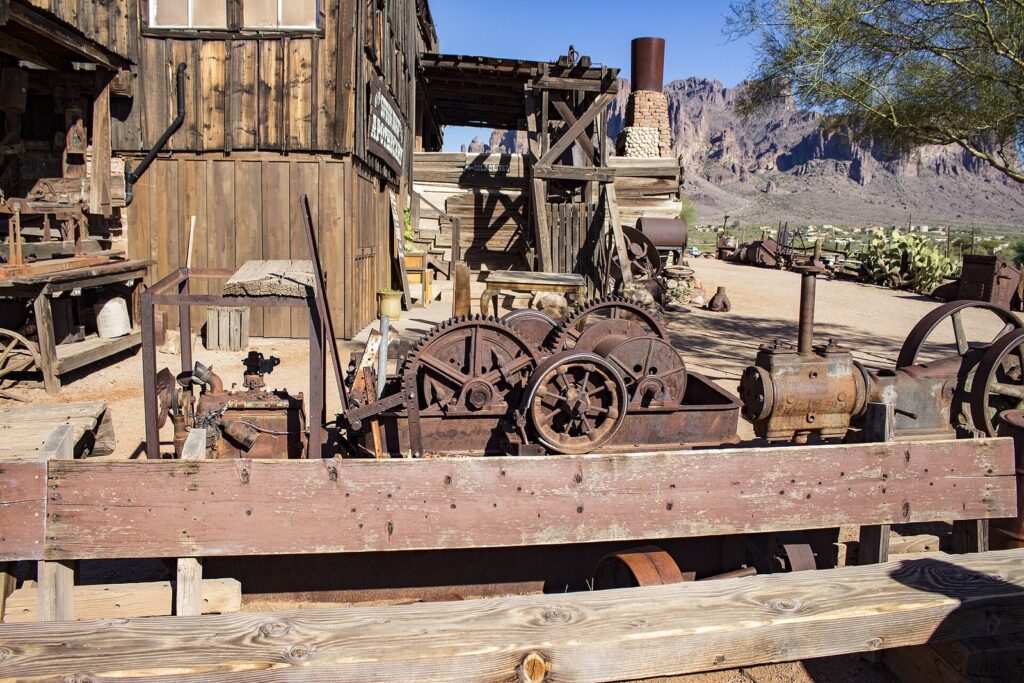
Don’t let Goldfield be the whole day. Lost Dutchman State Park is a few minutes up the road, at the base of the Superstitions, and charges $10 per vehicle with one person or $20 with two to four (checked October 2026). A morning walk there, then the train and mine tour at Goldfield, then lunch, is a better East Valley day than any packaged tour that covers the same ground. If you’re out that way at dawn or dusk, the Salt River’s wild horses graze along the river north of Mesa; the Salt River Wild Horse Management Group asks visitors to stay at least 50 feet away and never feed them.
Should you book a Grand Canyon or Sedona tour from Phoenix?
Probably not as a day trip. Operators’ listings for South Rim day tours from Phoenix and Scottsdale describe 13- to 15-hour days with about three to four hours at the canyon. That makes sense when you look at the drive: the Grand Canyon Visitor Center is 257 minutes from downtown Phoenix each way with no traffic (checked October 2026). You’d spend more than eight hours in a vehicle for three or four at the rim, and most of that rim time comes in the middle of the day, when the light is flattest.
The better plan is to stay a night near the park, or in Flagstaff or Williams, and see the canyon at sunset and sunrise. If you won’t drive, a two-day tour beats a one-day tour. Sedona is closer, at 135 minutes from downtown Phoenix, and a long day there works, but you’ll get more out of driving yourself and booking a local Jeep or hiking tour in Sedona than out of a bus from Phoenix. Our guide to the best day trips from Phoenix covers both routes, with drive times and where to stop.
What about water tours and horseback rides?
Those belong to other guides on this site, but here’s what’s open as of October 2026. Salt River Tubing scheduled the end of its 2026 season for the end of September. The Dolly Steamboat on Canyon Lake is temporarily closed from August 30, 2026 through about January 2027 while the lake is drawn down for dam work, so don’t plan around it this winter. The Desert Belle runs narrated cruises of about 80 minutes on Saguaro Lake, and Cliff Creek Outfitters guides rafting and kayaking on the Lower Salt River and paddling on Saguaro Lake. Horseback riding is a trail activity, and our guide to Phoenix hiking covers it with the trails it uses.
If you drive yourself to the lakes or the river rather than taking a tour, remember the parking pass: the Tonto National Forest charges $8 per vehicle per day when you buy a Tonto Pass ahead from a Forest office or Valley retailer, and $12 at the on-site fee machines (checked October 2026).
When is the best time for desert tours around Phoenix?
October through April, with November through March the sweet spot for afternoon and sunset options. Here’s how each month looks, using Sky Harbor’s 1991-2020 normal highs and computed sunrise and sunset times for the 15th of each month (Arizona stays on standard time all year).
| Month | Normal high | Sunrise | Sunset | Desert tour verdict |
|---|---|---|---|---|
| January | 67.6°F | 7:32 a.m. | 5:42 p.m. | Excellent all day; layers for dawn flights |
| February | 70.8°F | 7:13 a.m. | 6:12 p.m. | Excellent; book ahead around spring training |
| March | 78.1°F | 6:40 a.m. | 6:35 p.m. | Excellent; wildflowers in wet years; spring training crowds |
| April | 85.5°F | 5:59 a.m. | 6:58 p.m. | Good; mornings best by month’s end |
| May | 94.5°F | 5:28 a.m. | 7:20 p.m. | Sunrise and evening only |
| June | 104.2°F | 5:18 a.m. | 7:39 p.m. | Dawn only; balloon check-in around 4:30 a.m. |
| July | 106.5°F | 5:29 a.m. | 7:39 p.m. | Dawn only; monsoon storms cancel tours |
| August | 105.1°F | 5:50 a.m. | 7:16 p.m. | Dawn only; monsoon storms cancel tours |
| September | 100.4°F | 6:11 a.m. | 6:36 p.m. | Mornings; still hot by 10 a.m. |
| October | 89.2°F | 6:32 a.m. | 5:56 p.m. | Good, improving through the month |
| November | 76.5°F | 6:59 a.m. | 5:27 p.m. | Excellent; sunset balloon flights resume |
| December | 66.2°F | 7:25 a.m. | 5:22 p.m. | Excellent; early sunsets, cold dawns |
Summer isn’t off-limits, but it inverts the day. The National Weather Service treats June 15 through September 30 as monsoon season, when afternoon storms bring wind, dust and flash floods that can cancel a tour on short notice. Book summer tours for the first slot of the morning, carry more water than you think you need, and assume an afternoon outdoors is a mistake.
What does a desert tour day cost?
Here’s what the main options cost for two adults and for a family of four with two children aged 5 to 12, using the operators’ published prices as of October 2026. Taxes are included only where the operator states them.
| Experience | Two adults (checked Oct 2026) | Family of four |
|---|---|---|
| Hot Air Expeditions shared sunrise flight | $521.02 with 9% taxes and fees | $933.04 with taxes and fees |
| Rainbow Ryders shared sunrise flight | $550 retail; $370 with AAA | Child rate not published |
| Wild West Jeep Tours, 2-3 hours | $338 | $676 if children pay the adult rate |
| Private Jeep, up to 7 people | From $899 | From $899 |
| Taliesin West audio tour (October-May) | $88 | $132 |
| Taliesin West Golden Hour Sunset Hike | $130 | Check age rules first |
| Cosanti guided tour | $60 | $80 |
| Tovrea Castle tour | $44 | $88 |
| Goldfield railroad and mine tour | $48 | $80 |
Two costs hide outside those numbers. Tipping guides is customary in the U.S., and 15 to 20 percent of the tour price is the usual range for a good guide. Getting there costs money too: hotel transfers on the Hot Air Expeditions flight add $39 per person. If you have a car, a 5 a.m. drive on empty freeways is the cheapest part of the day.
Which desert tour suits you?
Match the tour to the people in your group rather than to the star ratings. These picks use the prices and rules checked in October 2026.
| Who’s going | Best pick | Why | Watch out for |
|---|---|---|---|
| A couple on a special trip | Sunrise balloon flight | The most memorable morning the Valley sells | Book it early in the trip in case of a weather cancellation |
| Families with children under 6 | Jeep tour or Goldfield Ghost Town | All ages ride the Jeep; Goldfield’s train is free at 4 and under | Taliesin West’s guided tours aren’t meant for under-6s |
| Teenagers | Hummer or UTV tour | Speed and steep terrain hold their attention | Driver age and license rules on self-drive vehicles |
| Travelers who can’t walk far | Jeep tour | The desert without hiking | Ask the operator about climbing in and out of the vehicle |
| Architecture and history fans | Taliesin West, Cosanti, Tovrea Castle | Three very different visions of building in the desert | Tovrea is lottery-only; Cosanti tours are weekday mornings |
| Travelers on a budget | Taliesin West audio tour, Cosanti, Tovrea, Capitol Museum | $44, $30, $22 and free | Taliesin’s audio tour drops to $39 from June to September |
| Photographers | Sunset Jeep tour or a sunrise balloon | Low light on saguaros and mountains | Dust on lenses in open vehicles |
How do you book a desert tour without overpaying?
Start with the operator’s own website. Every price in this guide comes from the operator, and booking direct means you see the real terms: what’s included, where you meet, and what happens if the weather turns. Resellers list the same experiences, sometimes under different names, and their prices and cancellation rules don’t always match the operator’s.
Then compare totals, not headline prices. Hot Air Expeditions adds 9% in taxes and fees and $39 a person for hotel transfers, so a $239 seat becomes $260.51 before transfers (checked October 2026). Some operators only show a price once you pick a date in their booking calendar, so price the same morning at two companies before you decide. Read the weather policy for anything airborne or open-air, and the minimum age for anything with children. Finally, book early for February and March, when spring training, festivals and the best weather of the year send demand up across the Valley.
How should you prepare for a desert tour?
Even a short guided outing is a desert outing. The City of Phoenix’s hiking checklist covers the basics: go when it’s cool, wear proper shoes, a hat and sunscreen, hydrate before you start, carry more water than you think you need, take a phone, and don’t go alone without telling someone your plans. For hot days, the National Park Service’s guidance at the Grand Canyon is about a quart of water per hour of activity, plus salty snacks or electrolytes, because sweat carries off salt as well as water.
Dress for the vehicle as well as the weather. Open Jeeps, UTVs and ATVs throw dust, so bring sunglasses and a buff or bandana, and wear clothes you don’t mind ruining. A dawn balloon flight in winter can start near 45°F and end in sunshine, so wear layers you can shed. Closed-toe shoes matter everywhere, because cholla segments and other spines are underfoot on every trail. Don’t put your hands where you can’t see, under rocks or ledges, where snakes and scorpions shelter.
Know the signs of heat illness before you go: headache, dizziness, nausea, cramps and heavy sweating that suddenly stops are all reasons to get into shade, cool down and tell your guide. In summer, if a tour still runs when the National Weather Service has issued an Extreme Heat Warning, think twice about joining it.
What to skip
Here’s where your money or your morning goes further somewhere else, as of October 2026.
- A same-day Grand Canyon tour. Thirteen to fifteen hours for three or four at the rim, most of it in midday light. Stay overnight instead.
- Any outdoor tour after 8 a.m. from June to September. Normal highs run from 104.2°F in June to 106.5°F in July, and on Extreme Heat Warning days the city closes its busiest summit trails from 8 a.m. to 5 p.m. A tour that runs anyway isn’t doing you a favor.
- A balloon flight on your last morning. Wind and storms cancel flights. Book early in the trip so you have a morning to rebook.
- Full retail on a balloon if you qualify for less. Rainbow Ryders takes $90 off its $275 fare for AAA members and $100 off for military, and Hot Air Expeditions runs $20 off through December 20, 2026 (checked October 2026).
- The Dolly Steamboat this winter. It’s closed from August 30, 2026 through about January 2027 for the Canyon Lake drawdown.
- A Hummer tour if you came for the desert itself. It’s a fun ride, but the engine drowns out the quiet that makes the desert special. Book a Jeep tour or a guided hike instead.
- Turning up at Tovrea Castle. There are no walk-ups; tickets go by lottery months ahead, with occasional $25 last-minute seats online (checked October 2026).
Frequently Asked Questions
How much does a hot air balloon ride cost in Phoenix?
A shared sunrise flight costs $239 per adult and $189 for ages 5 to 12 at Hot Air Expeditions, plus 9% taxes and fees, or $275 retail at Rainbow Ryders, which charges $185 with AAA and $175 with military ID (checked October 2026). Private flights at Hot Air Expeditions cost $649 per person, and hotel transfers add $39 per person.
What is the best desert tour in Phoenix for a first visit?
A sunrise balloon flight if the budget allows, because nothing else shows the scale of the Sonoran Desert so well. For less money, a Jeep tour from $169 a seat (checked October 2026) suits mixed groups and families, and Taliesin West’s $65 Golden Hour Sunset Hike combines architecture with a desert walk. Book all three for October through April, when the weather cooperates.
Are Jeep tours in Scottsdale worth it?
Yes, for people who want the backcountry without hiking. Wild West Jeep Tours charges from $169 per adult for 2 to 3 hours and takes all ages, with up to seven people per Jeep (checked October 2026). Groups of six or more should book the private Jeep from $899, which costs less than six public seats.
Can you take desert tours in Phoenix in the summer?
Yes, but only early. From June through August normal highs top 104°F, so balloon flights and outdoor tours run at sunrise, with check-ins as early as 4:30 a.m., and afternoon or sunset balloon flights don’t operate. Monsoon storms between June 15 and September 30 can cancel tours on short notice, so leave a spare morning.
Is a Grand Canyon day tour from Phoenix worth it?
Rarely. Day tours from Phoenix and Scottsdale run 13 to 15 hours with about three to four hours at the canyon, because the Grand Canyon Visitor Center is 257 minutes from downtown each way. Spend a night near the park, or in Flagstaff or Williams, and you’ll see the canyon at sunset and sunrise instead of at noon.
Which desert tours are good for kids?
Jeep tours with Wild West Jeep Tours take all ages, and Goldfield Ghost Town’s train and mine tour cost $8 each for ages 5 to 12, with children 4 and under free (checked October 2026). Hot Air Expeditions has a child fare for ages 5 to 12, but the pre-dawn start is hard on young children. Taliesin West’s guided tours aren’t intended for children under 6.
Do you tip desert tour guides in Arizona?
Yes. Tipping guides is customary across the U.S., and 15 to 20 percent of the tour price is the usual range for good service. On a private Jeep or a balloon flight, base the tip on what your group paid in total, and bring some cash in case paying a tip by card isn’t offered.
Related Phoenix Guides
- Hiking in Phoenix: the self-guided trails, heat restrictions and summit hikes worth your morning.
- Day Trips from Phoenix: the Grand Canyon, Sedona, Tucson and closer drives, with times and where to stop.
Sources and verification
This guide is built from research, not hosted tours or visits. Prices, schedules and rules were checked on October 1, 2026 (some on September 23-24) against the operators and agencies listed below. Drive times are off-peak estimates from OSRM routing on OpenStreetMap data, and sunrise and sunset times are computed for downtown Phoenix.
- Balloon operators: Hot Air Expeditions pricing, Rainbow Ryders FAQ
- Off-road and guided tours: Wild West Jeep Tours, Stellar Adventures, Cliff Creek Outfitters
- Architecture and history: Frank Lloyd Wright Foundation, Taliesin West tours, Cosanti, Tovrea Castle tours, Arizona Capitol Museum, The Square PHX, Goldfield Ghost Town
- Parks and public land: Arizona State Parks, Lost Dutchman, City of Scottsdale, McDowell Sonoran Preserve, City of Phoenix trail heat safety, Tonto National Forest passes
- Water: Salt River Tubing, Dolly Steamboat, Desert Belle
- Beyond the Valley: Lowell Observatory, Grand Canyon tour listings
- Weather: NOAA 1991-2020 normals for Sky Harbor; Salt River Wild Horse Management Group viewing guidelines
Photo Credits
- Hot air balloon over Phoenix: photo by Kyler Nixon knixon, Wikimedia Commons (CC0)
- Saguaro Lake, Tonto National Forest: photo by Z Glyph, Wikimedia Commons (CC BY 3.0)
- Saguaros at dusk, Sonoran Desert National Monument: photo by mypubliclands, Wikimedia Commons (public domain)
- Taliesin West: photo by Bigmacthealmanac, Wikimedia Commons (CC0)
- Tovrea Castle: photo by Gage Skidmore, Wikimedia Commons (CC BY-SA 3.0)
- Goldfield Ghost Town: photo by J Etzel from Surprise, AZ, USA, Wikimedia Commons (CC BY 2.0)
- Sonoran Desert at sunset near Florence (featured image): photo by ΙΣΧΣΝΙΚΑ-888, Wikimedia Commons (CC BY-SA 4.0)