A 55-and-over RV park in Mesa is charging $900 a month plus tax for a site this winter, with electricity extra, and a gated RV resort in Apache Junction is offering $999 a month for October, November or December 2026. A hotel room booked for more than 29 nights in Phoenix drops from 13.07% tax to the city’s 2.8%. Numbers like those are what the snowbirds in Arizona actually live on, and they’re almost entirely missing from the websites that rank for the topic, which are selling houses, rentals or services. This guide is written from the other side: what a winter in the Phoenix Valley costs, when to book, which communities suit which people, and what to do with five months instead of five days.
Short answer: Snowbird season in the Phoenix Valley runs from about mid-November to April, peaking in January and February. RVers and budget-minded visitors cluster in east Mesa and Apache Junction, where RV sites run roughly $900 to $1,000 a month in 2026-27 before electricity; active retirees who want golf and recreation centers look at Sun City, Sun City West, Sun Lakes and similar 55-plus communities; and those who want restaurants and culture rent in Scottsdale or central Phoenix. Book the previous spring or summer for January to March, and plan to leave by early May, when the average first 100-degree day arrives.
Rates, taxes, schedules and drive times in this guide were last checked on September 24, 2026. RV and rental rates change by season and by site; confirm directly before you commit.
Snowbirds in Arizona at a glance
The Valley’s winter visitors spread across a metro area 90 minutes wide, and where you base yourself decides your drive to the airport, to a hospital and to everything else. These are the main snowbird areas, with off-peak drive times measured in September 2026.
| Area | Typical winter stay | Drive to downtown Phoenix / Sky Harbor / Mesa Gateway (min) | Drive to Mayo Clinic Hospital (min) | Suits |
|---|---|---|---|---|
| East Mesa RV corridor | RV resorts, park models, 55+ parks | 40 / 33 / 21 | 49 | RVers, budgets, a busy social calendar |
| Apache Junction | RV resorts, manufactured-home parks | 46 / 41 / 29 | 58 | RVers, Superstition views, hiking |
| Gold Canyon | Homes, golf, some RV | 56 / 52 / 39 | 68 | Quiet, golf, mountain scenery |
| Sun City | 55+ homes and recreation centers | 32 / 41 / 76 | 34 | Active retirees, golfers, the west side |
| Sun City West | 55+ homes and recreation centers | 46 / 55 / 90 | 43 | Active retirees who want space |
| Sun Lakes | 55+ golf community | 34 / 31 / 32 | 52 | Golfers in the southeast Valley |
| PebbleCreek, Goodyear | 55+ golf community | 33 / 42 / 77 | 53 | West Valley golfers |
| Fountain Hills | Homes and condos | 43 / 35 / 52 | 34 | Scenery and quiet, near Scottsdale |
| Old Town Scottsdale | Condos and apartments | 21 / 15 / 45 | 26 | Dining, culture, walking; higher prices |
If you’re coming for a week or two rather than a season, our guide to where to stay in Phoenix compares the hotel areas; this guide is about staying for months.
When is snowbird season in Arizona?
Roughly from mid-November to April, with the crowds peaking in January and February. That’s when the weather is at its best for the reasons people come: the normal high at Sky Harbor is 66.2°F in December, 67.6°F in January and 70.8°F in February, with lows in the mid-40s and frost rare enough that Sky Harbor averages less than one freezing night a year. March warms to 78.1°F and April to 85.5°F, which are glorious months for golf and hiking but bring spring training and spring-break crowds with them.
The end of the season is set by heat, not the calendar. The average first 100-degree day at Sky Harbor is May 2, and May averages nine of them, so most snowbirds are gone by early May. The start is more flexible. Early arrivals come in October, when highs average 89.2°F and the RV resorts are still in their shoulder season; the fall specials on offer in 2026, such as $999 a month at one Apache Junction resort for October to December, tell you that demand doesn’t really build until the holidays. For a month-by-month look at the weather, see our guide to the best time to visit Phoenix.
How many snowbirds come to Arizona?
A lot, though nobody counts them precisely. The figure most often quoted for metro Phoenix is 300,000 to 400,000 winter visitors a year. An Arizona State University study of the 2003-04 season, one of the few attempts to measure the population directly, found the Valley grew by about 300,000 people staying five to six months, with about 84,000 of them living in the area’s mobile-home and RV parks. The numbers are old, and the counting problems are real, since snowbirds don’t register anywhere, but the scale is clear: in January, the Valley has the population of a sizable extra city.
You’ll feel it. Restaurants are busier, golf tee times are harder to get, and traffic on the East Valley’s freeways thickens. The Cactus League offers another clue: it says about six in ten spring-training fans come from out of state, and roughly a third have attended for five or more years, which describes a lot of the Valley’s winter regulars.
Where should snowbirds stay in the Phoenix Valley?
Each snowbird area has a distinct character. Choose by how you want to spend the winter, then check the drive times to the places you’ll use most: the airport, your doctors and the things you’ll do every week.
East Mesa and Apache Junction: the RV and park-model heartland
East Valley, 40 to 46 minutes from downtown Phoenix and 21 to 29 minutes from Mesa Gateway Airport. The stretch of east Mesa along Main Street and the neighboring city of Apache Junction have the Valley’s biggest concentration of RV resorts, park-model communities and 55-plus manufactured-home parks, many of them built for winter visitors. The resorts run activity calendars that would exhaust a cruise director: pickleball leagues, card games, dances, crafts, potlucks and trips. It’s the most social way to winter in Arizona, and usually the least expensive.
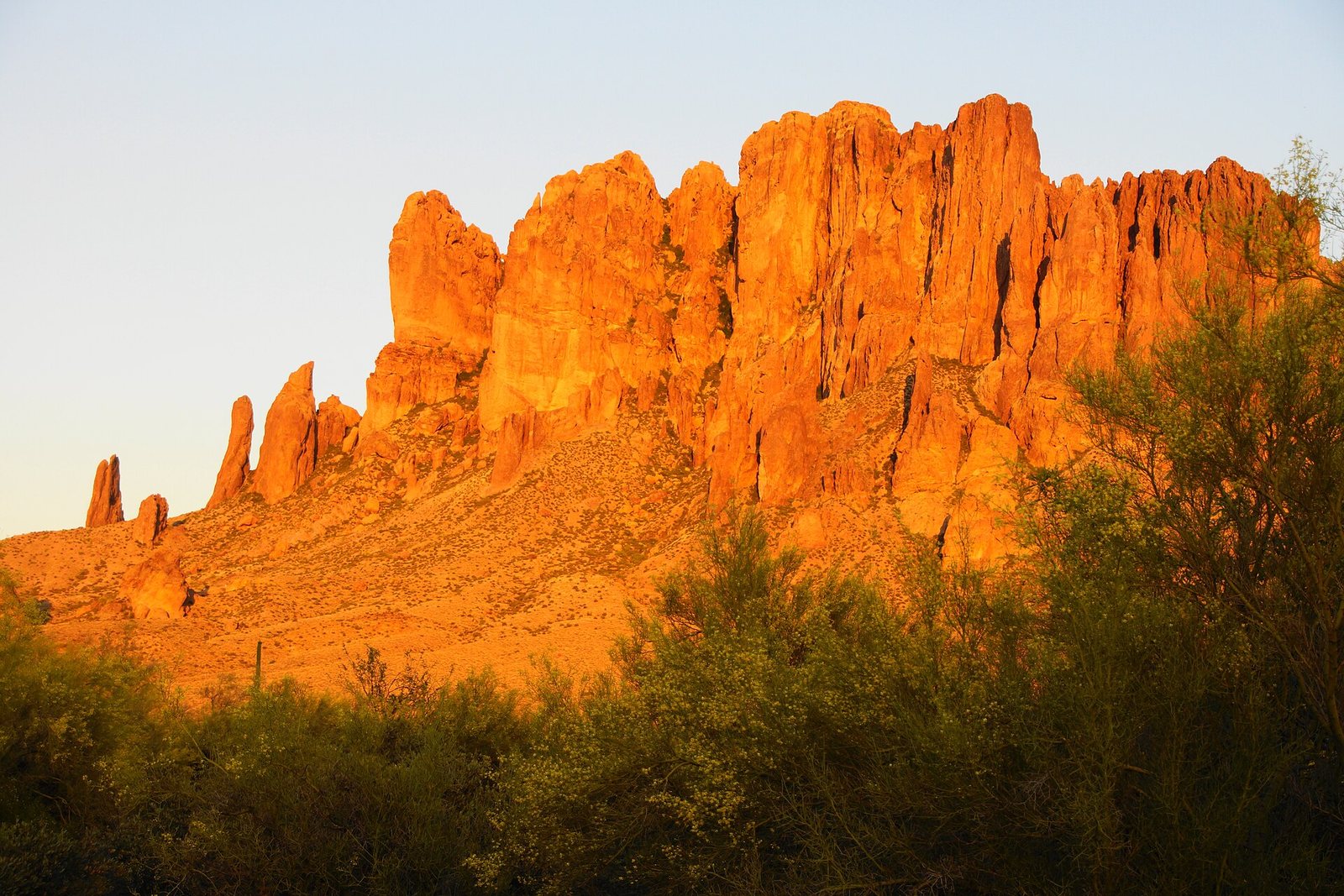
The setting helps. The Superstition Mountains fill the eastern horizon, Lost Dutchman State Park and Usery Mountain Regional Park are close, and the Salt River’s lakes and wild horses are a short drive north. The trade-off is distance from Phoenix’s museums, downtown and the West Valley: Mayo Clinic Hospital is 49 to 58 minutes away, and Old Town Scottsdale 33 to 41. If you fly Allegiant or another airline into Mesa Gateway, the East Valley is also the most convenient side of the Valley for the airport.
Gold Canyon
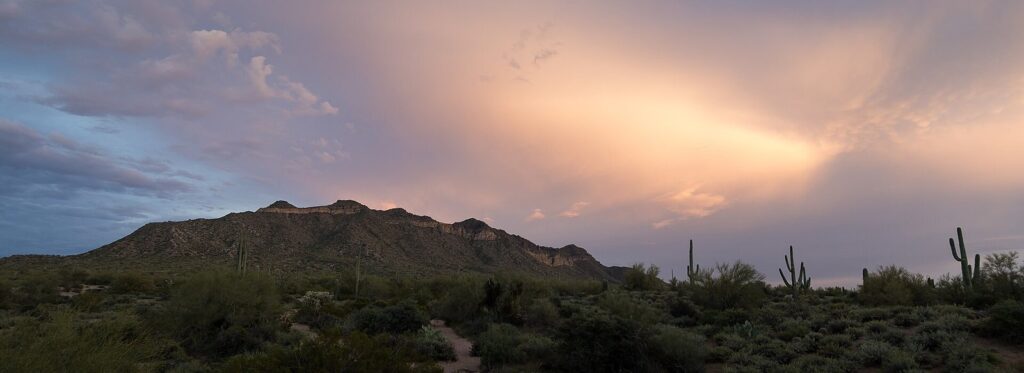
Southeast of Apache Junction, 56 minutes from downtown Phoenix. Gold Canyon sits right under the Superstitions, with golf courses, a quieter pace than Mesa and some of the Valley’s best mountain views from your patio. It’s for snowbirds who want to be out of the city rather than near it; plan on a drive for most shopping and appointments, and on 68 minutes to Mayo Clinic.
Sun City and Sun City West
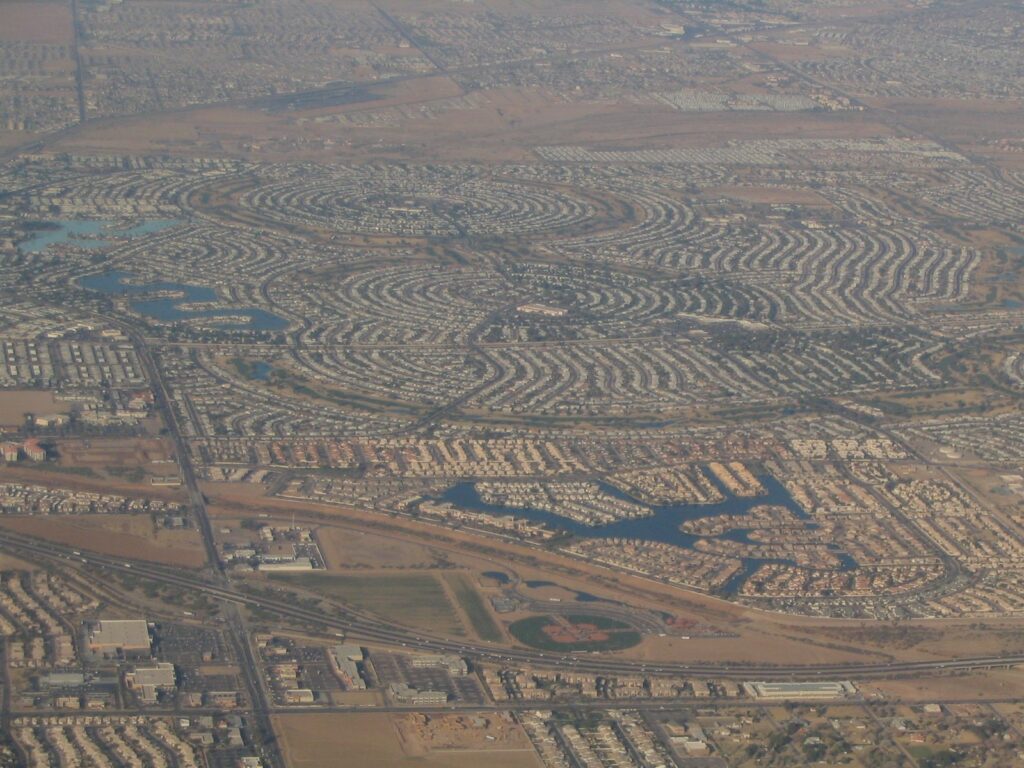
Northwest Valley, 32 to 46 minutes from downtown Phoenix. Sun City, which Del Webb opened in 1960, was one of the first large active-adult retirement communities in the United States, and Sun City West followed in 1978. Both are built around recreation centers with golf courses, pools, fitness centers and hundreds of clubs, from woodworking to lapidary. Sun City’s circular street pattern, visible from the air, wraps its neighborhoods around golf courses and recreation centers, and golf carts are a normal way to get around.
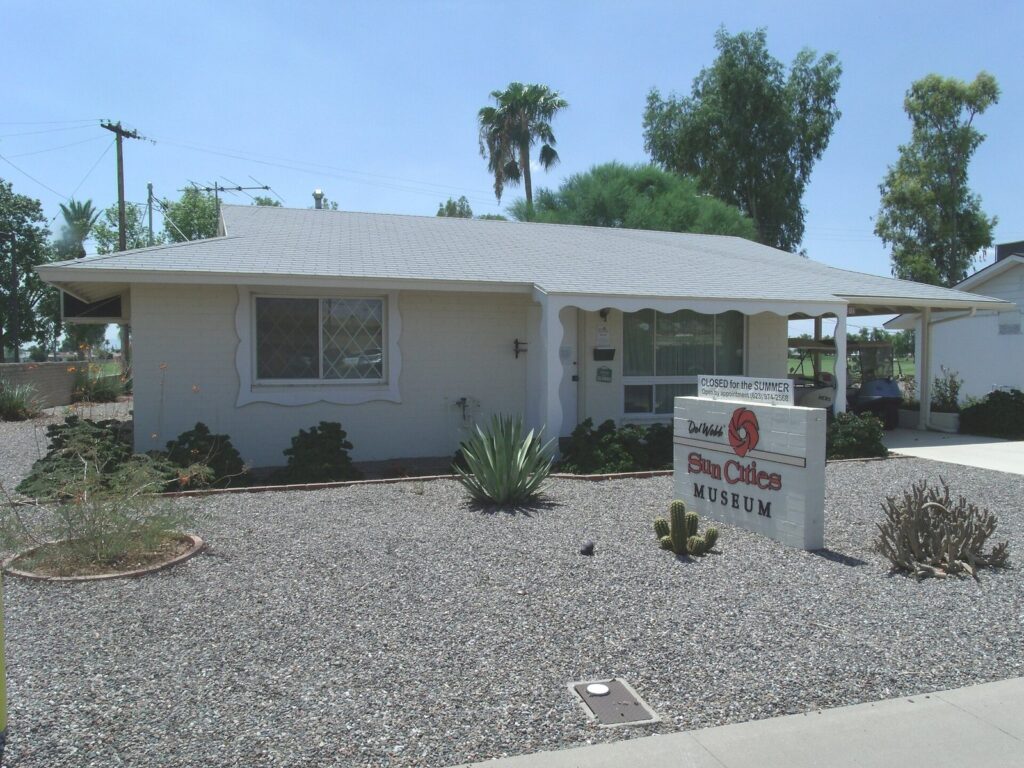
For a snowbird, the draw is the ready-made community: winter rentals put you inside a place built entirely around retirees’ leisure. The practical question is access. The recreation centers are run for residents, and renters usually need a card or a pass, often with a fee, to use the golf courses, pools and clubs, so ask exactly what a rental includes before you sign. Location is the other consideration: Sun City is 34 minutes from Mayo Clinic Hospital but 41 from Sky Harbor, and more than an hour from Mesa Gateway.
Sun Lakes and PebbleCreek
Sun Lakes is in the southeast Valley, 34 minutes from downtown Phoenix; PebbleCreek is in Goodyear, 33 minutes west. Both are age-restricted golf communities with clubhouses and activity calendars, smaller than the Sun Cities and newer in feel. Sun Lakes is unusually well placed for travel, at 31 minutes from Sky Harbor and 32 from Mesa Gateway, while PebbleCreek suits snowbirds who want the West Valley, its spring-training parks and its lakes.
Fountain Hills
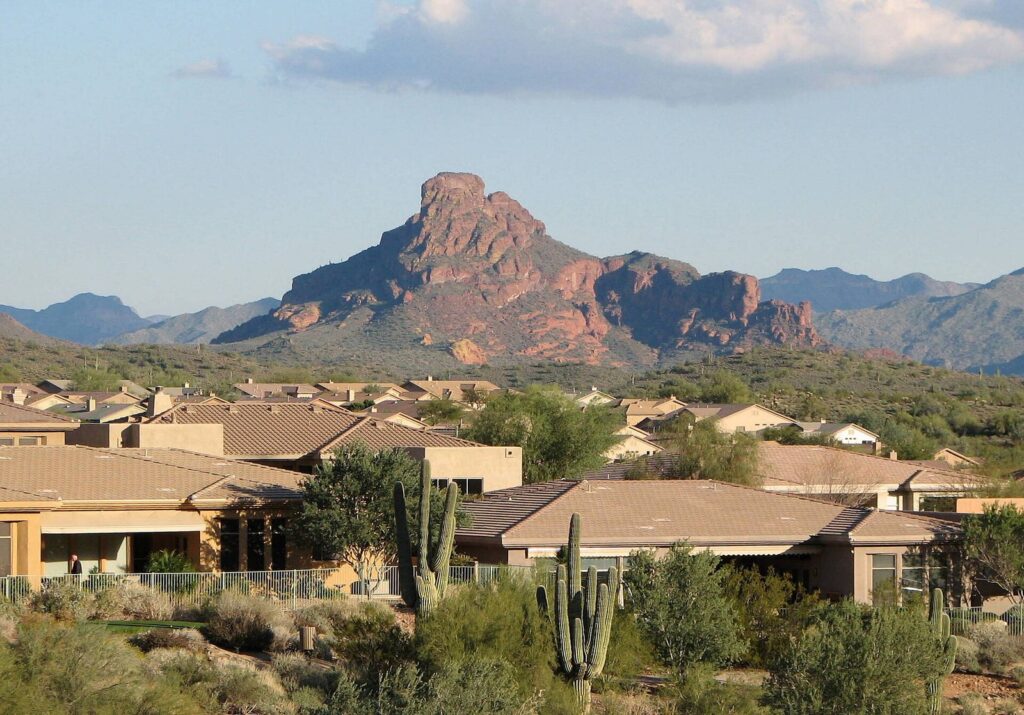
Northeast of Scottsdale, 43 minutes from downtown Phoenix and 32 from Old Town Scottsdale. Built around a park with one of the world’s tallest fountains, Fountain Hills is a hillside town of homes and condos with long views of the McDowell Mountains and Four Peaks. It’s quieter than Scottsdale, closer to the Verde and Salt rivers, and 34 minutes from Mayo Clinic, which makes it a good compromise for snowbirds who want scenery without isolation.
Scottsdale and central Phoenix
Old Town Scottsdale is 21 minutes from downtown Phoenix and 15 from Sky Harbor. Snowbirds who want restaurants, galleries, concerts and walkable streets rent condos and apartments in Scottsdale, in the Camelback corridor or in central Phoenix and Tempe. It’s the most expensive way to winter here, and you give up the ready-made community of an RV resort or a 55-plus town. In exchange, you’re 26 minutes from Mayo Clinic, near the light rail in central Phoenix and Tempe, and close to everything the Valley offers in its cultural season.
A central base also changes how much you drive. In central Phoenix and Tempe, the light rail links the Heard Museum, the Phoenix Art Museum, downtown’s arena and ballpark, Arizona State’s campus and Sky Harbor’s Sky Train for $2 a ride, capped at $4 a day with tap-to-pay (2026 fares), and Waymo’s driverless cars cover much of central Phoenix and Scottsdale. For a snowbird who’d rather not drive every day for five months, that’s worth a lot.
What does a winter in Arizona cost?
It depends almost entirely on where you sleep. RV sites are the one category with published, comparable prices, and they give a useful floor.
| Example (checked Sept 2026) | Rate | Notes |
|---|---|---|
| Citrus Gardens, Mesa (55+), monthly | $900 plus tax | Electricity extra; water, sewer and amenities included |
| Citrus Gardens, 4-month stay, Jan. 1-May 1, 2027 | From $1,899 plus tax | Seasonal special; limited sites |
| Citrus Gardens, weekly | $400 plus tax | For scouting trips |
| Citrus Gardens, annual | $830 a month | If booked by Dec. 31, 2026 |
| Sunrise RV Resort, Apache Junction (55+), fall special | $999 a month | October, November or December 2026; $500 deposit |
Read the fine print on every rate. Citrus Gardens’ prices exclude electricity and tax and require RVs 10 years old or newer, or pre-approval for older ones. Sunrise RV Resort’s fall rate is for a standard site, on a limited number of sites, and at least one guest per RV must be 55 or older. Specials change quickly; the pattern that matters is that fall is the shoulder season and January to March is the peak.
Furnished homes, condos and apartments cost far more and vary enormously by area, size and month, so it isn’t useful to quote a single figure. Get quotes for the same dates in two or three areas, ask what’s included (utilities, internet, community amenities, cleaning), and check the lease length and cancellation terms. A few rules help keep the total honest:
- Taxes on long hotel stays drop sharply. In Phoenix, a hotel stay of 29 nights or less is taxed at 13.07% in 2026, but a stay of more than 29 consecutive nights pays only the city’s 2.8% rate. Scottsdale’s 5% bed tax likewise applies only to stays of 29 days or less.
- Golf’s resident rates may not apply to you. We-Ko-Pa’s Arizona-ID rate, $219 against a $309 resort-guest rate in spring 2026, requires a valid Arizona ID and seven days’ advance booking. The City of Phoenix’s cheapest rates are for its own discount-card holders; the public winter rate to walk Aguila was $69 on weekdays and $74 on weekends, plus $16 for a cart (checked September 2026).
- Budget for the car. Almost every snowbird area needs one, and several are 45 minutes or more from the places you’ll go every week.
How do you build a winter budget?
Snowbirds who come back happy tend to budget by category rather than by a single monthly number. The categories are predictable: lodging, utilities (RV electricity is usually metered and billed on top of the site rate), groceries, the car and fuel, health and travel insurance, activities, memberships and eating out. Lodging is the one you can pin down in advance; the rest depends on how you like to live.
Activities add up faster than people expect, so it helps to price a typical month. Using 2026 prices, four weekday rounds walking the City of Phoenix’s Aguila course at the winter-spring public rate of $69 come to $276, or $340 with a cart at $16 a round. Add a Musical Instrument Museum visit at $20, a Desert Botanical Garden visit from $32.95 in late 2026 and a Renaissance Festival day at $39, and one active month of golf and outings runs to more than $400 a person before meals out (prices checked September 2026). Multiply by five months, and the case for memberships, city discount cards and free days becomes obvious.
Do memberships pay for themselves?
Often, over a full season. The rule of thumb is simple: if you’ll visit a place three or more times between November and April, or bring guests, compare its annual membership with the price of those admissions. Museums and gardens usually include free guest passes, member hours and shop discounts, and a season is long enough for visiting friends and family to use them. Before you buy, check the free routes too. The Heard Museum is free on First Friday evenings, the Phoenix Art Museum is pay what you wish on Wednesday afternoons, and the Phoenix Public Library’s Culture Pass lends library cardholders free admission for two to several museums.
When should snowbirds book?
Earlier than you’d think, especially for January to March. The best-located RV sites, rentals and 55-plus community homes are often rebooked by the same families year after year, and the spring months overlap with spring training, the WM Phoenix Open and, in 2027, NBA All-Star Weekend. A sensible calendar looks like this:
| When | What to do |
|---|---|
| The previous winter | Visit for a week or two, stay in two areas and scout parks and neighborhoods |
| Spring and summer | Book January-March; pay deposits; check age rules, RV age limits and what amenities are included |
| Early fall | Watch for fall specials if you can arrive in October or November |
| October-November | Arrive; set up mail forwarding, doctors and memberships |
| April | Rebook next winter’s site before you leave, if you liked it |
| Early May | Leave before the heat; the average first 100-degree day is May 2 |
Deposits are normal; Sunrise RV Resort, for example, takes $500 to hold a fall 2026 reservation. Ask about cancellation rules before you pay, and get the rate, the dates, the site and what’s included in writing.
What should you ask before you book a winter site or home?
The questions below save more money and grief than any discount. Ask them by email so the answers are in writing.
- Who can stay? Age requirements, how many guests, and whether visiting family can stay and for how long.
- What’s included? Utilities, electricity metering, internet, laundry, pools, fitness rooms, courts, golf and the social calendar.
- What are the rules? Pets, RV age and condition, parking for a tow car, quiet hours and any restrictions on working on vehicles.
- What does it really cost? Tax, fees, deposits and whether the rate changes if you extend or leave early.
- What happens if plans change? The cancellation policy, the refund timeline and what happens to your deposit.
- How far is everything? The drive to the airport, your doctors, a grocery store and the activities you’ll do weekly.
Should you try one month before committing to a season?
If it’s your first winter, yes. A single month, ideally in the shoulder season, tells you more than any amount of browsing: whether you like the East Valley’s resort life or the west side’s golf towns, how long the drives to the airport and the doctor really feel, and whether the community’s calendar suits you. Fall is the cheapest time to test, as the October-to-December specials on offer in 2026 show, and a month’s rate at a 55-plus RV park, such as $900 plus tax at one Mesa resort, is a modest price for the information. Spend a few days in a second area while you’re here, then book the following January to March with confidence, or try somewhere else next time.
RV resort, 55-plus community or furnished rental?
| Option | What you get | Watch for |
|---|---|---|
| RV resort | The lowest published costs, a big social calendar, pools and clubhouses | Age rules, RV-age rules, electricity and tax on top of the rate |
| Park model or manufactured home | A small house in an RV-style community, no RV needed | Community rules and fees; availability in peak months |
| 55-plus community rental | Golf, recreation centers and clubs built around retirees | Whether renters get access to the centers, and at what cost |
| Furnished condo or home | Space, privacy and the neighborhood of your choice | The highest cost; lease terms; utilities and cleaning fees |
| Extended-stay hotel | Flexibility and no lease | Tax drops to 2.8% in Phoenix after 29 nights; still costly |
A note on rules for rentals. Phoenix runs a registry for short-term rentals, the vacation rentals of fewer than 30 days that most cities now regulate, and since April 2026 it requires owner-occupancy attestations for some new backyard units. Month-long and seasonal leases are a different arrangement, usually governed by a written rental agreement rather than a vacation-rental listing, so read the lease rather than the listing.
How do you avoid rental scams?
Seasonal rentals attract scammers because the renters are far away and the money is paid in advance. The warning signs are consistent: a price well below comparable listings, an owner who is “out of the country” and can’t show the property, pressure to pay quickly, and requests for wire transfers, gift cards or payment apps rather than a traceable method. Protect yourself by seeing the property, or having someone you trust see it, before paying; confirming the owner or manager independently; paying by a method that offers protection; and getting a written lease. For stays shorter than 30 days in Phoenix, you can also ask for the rental’s city registration, since the city runs a short-term rental registry.
What do snowbirds do all winter?
Five months is long enough to build a routine and still run out of ideas, so plan the rhythm as well as the highlights.
Golf, pickleball and the outdoors
Winter is peak golf season, with green overseeded courses and highs in the 60s and 70s. Walk nine holes at a city course, play the resort courses on a special occasion and learn which of your community’s courses you can use. Pickleball is the social sport of the Valley’s retirement communities, and most RV resorts and 55-plus towns have courts and leagues. The hiking is at its best from November to March, when you can be on the trail at any hour: Camelback, Piestewa Peak, South Mountain, the Superstitions and the county parks, with the first two best tackled early to beat the parking crush.
Spring training and the sports calendar
The Cactus League’s 2027 season runs from February 19 to March 23, with 15 teams at 10 ballparks, and it’s the event many snowbirds plan their year around. Buy a few games early, pick parks near where you’re staying, and remember that the East Valley has the Cubs and Athletics while the West Valley has the Dodgers, White Sox, Mariners and Padres. The Suns play downtown all winter, the WM Phoenix Open takes over TPC Scottsdale on February 8-14, 2027, and NBA All-Star Weekend arrives February 19-21, 2027.
Culture and events
The Valley’s arts season lines up with snowbird season. The Phoenix Symphony, Ballet Arizona and Arizona Opera all run their 2026-27 seasons through the winter, with Ballet Arizona’s Nutcracker on December 11-27, 2026, and ASU Gammage in Tempe brings touring Broadway shows, including runs in late January and late February 2027. The Heard Museum’s World Championship Hoop Dance Contest is on February 6-7, 2027, and its Guild Indian Fair and Market on March 6-7. The Arizona Renaissance Festival runs on weekends from February 6 to April 4, 2027, with adult tickets at $39 (checked September 2026). A museum membership pays for itself quickly over a season, and the Phoenix Public Library’s Culture Pass, for library cardholders, lends free admission for two to many museums.
Day trips
With five months, you have time for the trips short-stay visitors can’t fit in: Sedona, Tucson, Jerome, Prescott, the Grand Canyon, even southeastern Arizona. Winter is the right season for the desert destinations and the wrong one for Flagstaff and the Rim, which get snow; save those for a warm spell or for spring.
How do you make friends in a winter home?
Faster than you’d think, if you join things. RV resorts and 55-plus communities are built for it: most have an activities office or a resident committee, a weekly calendar and a welcome event for newcomers, and the people who come back year after year are usually the ones who signed up for something in their first week. Pickleball, golf leagues, walking groups, card clubs and craft rooms are the easy entry points. Outside the communities, volunteering at a museum, a garden, a food bank or a spring-training ballpark connects you with locals as well as other visitors, and congregations, clubs and classes do the same. The winter goes quickly once the week has fixed points in it.
A snowbird’s calendar for 2026-27
Here’s how the season lays out month by month, with the dates published in September 2026.
| Month | What’s on (checked Sept 2026) |
|---|---|
| October | Early arrivals; RV fall specials; the Arizona State Fair; the average last 100-degree day is October 5 |
| November | Taliesin West open daily from Nov. 1; sunset balloon flights resume; Luminarias at the Desert Botanical Garden from Nov. 27 |
| December | Ballet Arizona’s Nutcracker, Dec. 11-27; holiday lights; the Fiesta Bowl at the end of the month |
| January | Peak season; Barrett-Jackson’s collector-car auction late in the month; prime golf weather |
| February | Heard Hoop Dance Contest, Feb. 6-7; Renaissance Festival from Feb. 6; WM Phoenix Open, Feb. 8-14; spring training and NBA All-Star Weekend from Feb. 19 |
| March | Heard Indian Fair and Market, March 6-7; spring training through March 23; wildflowers |
| April | Renaissance Festival’s last weekend, April 3-4; the Diamondbacks’ season begins; warming fast |
| May | Time to go: the average first 100-degree day is May 2 |
Give the week a shape
Most long-stay visitors settle into a pattern: a couple of golf or pickleball mornings, a standing club or class, a museum or event each week and a bigger outing or day trip every week or two. Volunteering is common too, and it’s a fast way to make friends; hospitals, museums, libraries, food banks and spring-training ballparks all rely on seasonal volunteers.
What practical things should snowbirds sort out?
Healthcare. Check before you leave home how your insurance works in Arizona, especially whether your plan covers care out of its home area and what counts as an emergency. The Valley’s big hospital systems are spread across the metro area, and our drive-time table shows how far each snowbird area is from Mayo Clinic Hospital in north Phoenix, from 26 minutes in Old Town Scottsdale to 68 in Gold Canyon. Bring enough of your prescriptions, or arrange refills, and keep a list of your medications. Canadian visitors should confirm their provincial coverage limits and buy travel medical insurance for the full stay.
Time limits for Canadians. Canadian snowbirds should check both the U.S. rules on how long they can stay and their province’s rules on how long they can be away without losing health coverage. Both depend on the number of days, and the rules differ, so plan the dates before you book.
Mail, bills and home. Set up mail forwarding or a mail service, move bills to online payment, and arrange for someone to check your home while you’re away.
Driving. Winter traffic in the Valley is heavier than the rest of the year, especially on the East Valley’s freeways and around spring-training parks. Allow extra time, and avoid I-10 and Loop 202 at rush hour when you can.
Packing. Days are mild, but nights drop into the 40s from December to February, so bring layers, a warm jacket and, if you’re in an RV, a plan for chilly nights. Sun protection matters all year here, even in January.
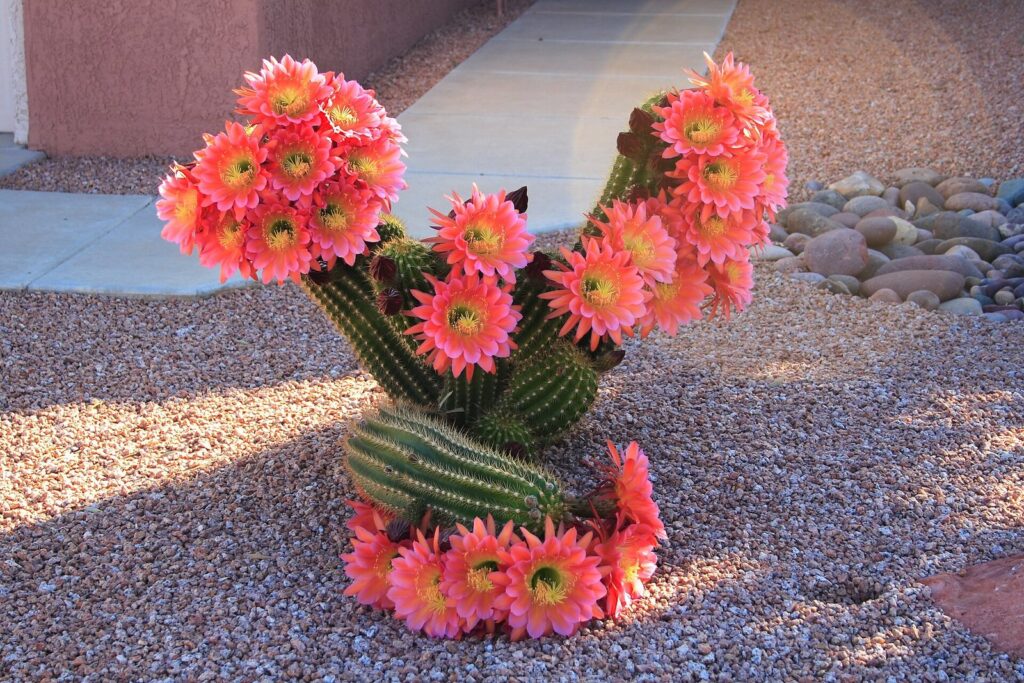
Living with the desert. Winter in the Valley is dry, sunny and mild, and that takes a little adjusting. The air is far drier than most visitors are used to, so keep water with you, use moisturizer and lip balm, and expect to drink more than at home. Rain is infrequent, about two days a month from December to February, and mornings are cool enough for a jacket even when the afternoon reaches the 70s. The desert itself is at its best: winter birds, green hillsides after a wet season and, from February onward, the first wildflowers and cactus blooms.
Pets. Winter is the easy season for dogs here, but the desert has hazards of its own: cactus spines, loose ground and wildlife on the trails. City of Phoenix rules ban dogs from all Camelback trails and the Piestewa Peak Summit Trail year-round, and from every city trail once it’s above 100°F, which starts to matter again by late April. Check each RV resort’s or community’s pet rules before you book; limits on number, size and breed are common.
Getting here and getting around. Most snowbirds either drive down with their car or RV or fly and rent. Driving from the north, watch the weather over northern Arizona’s plateau, where Flagstaff averages about 90 inches of snow a year, and time the trip around storms. Flying is easy: Phoenix Sky Harbor handled 51.6 million passengers in 2025 and has nonstop flights to more than 130 U.S. and 25 international destinations, and Mesa Gateway, on the East Valley’s edge, is 21 minutes from the east Mesa RV corridor. For a stay of several months, compare long-term car rental rates with shipping or driving your own car.
Leaving the RV or home in summer. If you leave an RV or a seasonal home in the Valley through the summer, prepare it for months of 100-degree days: shade, ventilation, sealed food, and a local contact to check on it after monsoon storms.
What about Tucson and Arizona’s other snowbird towns?
The Phoenix Valley isn’t the only winter destination in Arizona, and for some snowbirds it isn’t the best fit.
Tucson. About two hours south of Phoenix, Tucson is smaller, quieter and a little higher, at 2,365 feet downtown against Phoenix’s 1,087. Its normal January high of 66.5°F is almost the same as Phoenix’s, but its nights are cooler, with a January low of 40.8°F against 46.0°F. It has its own RV resorts and 55-plus communities, the Sonoran Desert at its most beautiful in Saguaro National Park, and a slower pace that some winter visitors prefer.
The Colorado River towns. Lake Havasu City, about 223 minutes from downtown Phoenix, and the towns along the Colorado River attract snowbirds who want water, boating and a small-town feel. They’re far from the Valley’s culture and airports, which is part of the appeal.
The far southwest and the open desert. Yuma, in Arizona’s southwest corner, is one of the warmest places in the country in winter and a longtime snowbird favorite. The open desert around Quartzsite draws RVers who prefer boondocking and swap meets to resort calendars. Both are a different, more rugged kind of winter than a Phoenix-area resort.
The Phoenix Valley’s advantages are its size and variety: more golf, more culture, more medical choice, pro sports and spring training, and two airports. If you want all of that within a short drive, it’s the obvious choice; if you want quiet above all, look at Tucson or the river.
What to skip
- Skip booking a winter rental sight unseen. Visit for a week the winter before, stay in two areas, and walk the park or neighborhood you’re considering.
- Skip signing without checking the rules. Ask about age requirements, RV-age limits, pets, what amenities renters can use and what isn’t included in the rate.
- Skip waiting until January to book for February and March. The best sites and homes go first, often to repeat visitors, and spring training fills the calendar.
- Skip assuming you’ll get Arizona-resident golf rates. The best local rates need an Arizona ID or a local discount card; price the public rates.
- Skip staying into late May. The average first 100-degree day is May 2, and May averages nine of them. Plan to leave by early May.
- Skip choosing an area only on price. A cheap site 60 minutes from your doctors and the airport can cost you in time every week.
Frequently Asked Questions
When do snowbirds come to Arizona?
Most arrive between late October and mid-November and stay until April, with the busiest months in January and February. Early arrivals come in October, when RV resorts are still offering fall specials, and most leave by early May, because the average first 100-degree day at Sky Harbor is May 2. Normal winter highs run from 66°F to 71°F.
How many snowbirds come to Arizona each year?
Metro Phoenix’s winter visitors are commonly estimated at 300,000 to 400,000 a year. An Arizona State University study of the 2003-04 season, one of the few direct counts, found the Valley grew by about 300,000 people staying five to six months, about 84,000 of them in mobile-home and RV parks. The figures are old and approximate, because snowbirds don’t register anywhere.
Where do snowbirds stay in Arizona?
In the Phoenix Valley, RVers and budget-minded visitors cluster in east Mesa and Apache Junction; active retirees look at 55-plus communities such as Sun City, Sun City West, Sun Lakes and PebbleCreek; and visitors who want dining and culture rent in Scottsdale, Fountain Hills or central Phoenix. Tucson, Yuma and the Colorado River towns draw many snowbirds too.
How much does it cost to spend the winter in Arizona?
It depends on where you sleep. Published 55-plus RV rates for 2026-27 include $900 a month plus tax in Mesa and a $999-a-month fall special in Apache Junction, before electricity (checked September 2026). Furnished homes and condos cost far more and vary widely by area and month, so compare quotes for the same dates in two or three areas.
What is there for snowbirds to do in Phoenix?
Golf and pickleball, hiking at its best from November to March, spring training from February 19 to March 23, 2027, the Suns, the WM Phoenix Open and NBA All-Star Weekend, and a full arts season from the Phoenix Symphony, Ballet Arizona, Arizona Opera and ASU Gammage. Add the Heard Museum’s Hoop Dance Contest and Indian Fair, the Renaissance Festival and day trips to Sedona and Tucson.
When should snowbirds book for the winter?
Book January to March the previous spring or summer, because the best sites and homes are often rebooked by repeat visitors and spring training fills the calendar. Watch for fall specials if you can arrive in October or November. Pay the deposit only after you have the rate, dates, site and inclusions in writing, and ask about the cancellation policy first.
Can snowbirds golf cheaply in Phoenix?
Yes, with some planning. The City of Phoenix’s courses charged $69 on weekdays and $74 on weekends to walk Aguila in winter and spring 2026, with a $16 cart, and less at its other courses (checked September 2026). Resort courses cost more, and their best local rates usually need an Arizona ID. Many 55-plus communities have their own courses, so ask what renters pay.
Is Phoenix or Tucson better for snowbirds?
Both work. Phoenix is the bigger metro area, with more golf, pro sports, spring training and flights, and slightly warmer nights: its normal January low is 46.0°F against Tucson’s 40.8°F. Tucson, about two hours south, is smaller and quieter, with its own RV and 55-plus communities, and similar daytime highs of about 66°F in January.
Related Phoenix Guides
- Phoenix Weather and Seasons: month-by-month normals, sunrise times, prices and what closes in the heat.
- Best Areas to Stay in Phoenix: the Valley’s hotel areas for shorter stays, with drive times and taxes.
Sources and verification
This guide is built from research, not hosted stays. Rates, taxes, schedules and drive times were checked on September 24, 2026, against the operators and agencies below. Drive times are off-peak estimates from OSRM routing on OpenStreetMap data; climate figures are NOAA’s 1991-2020 normals.
- RV resorts: Citrus Gardens RV stays; Sunrise RV Resort rates
- Taxes: City of Phoenix combined tax rate chart, January 2026; City of Scottsdale taxes; Phoenix short-term rental registry
- Golf: We-Ko-Pa rates; City of Phoenix golf rates
- Events and culture: Cactus League; WM Phoenix Open; NBA All-Star 2027; Heard Museum Hoop Dance Contest; Arizona Renaissance Festival; Ballet Arizona; ASU Gammage; Culture Pass
- Climate: NOAA normals for Phoenix and Tucson; National Weather Service Phoenix records
- Research: Arizona State University on snowbirds
Photo Credits
- Usery Mountain Regional Park at sunset: photo by Z Glyph, Wikimedia Commons (CC BY 3.0)
- Sun Cities Museum model home: photo by Marine 69-71, Wikimedia Commons (CC BY-SA 4.0)
- Sun City aerial: photo by Ken Lund from Reno, Nevada, USA, Wikimedia Commons (CC BY-SA 2.0)
- Fountain Hills: photo by Bernard Gagnon, Wikimedia Commons (CC BY-SA 3.0)
- Cactus in bloom, Sun City West: photo by John Menard from Phoenix, USA, Wikimedia Commons (CC BY-SA 2.0)
- Superstition Mountains near Apache Junction (featured image): photo by rob Stoeltje from loenen, netherlands, Wikimedia Commons (CC BY 2.0)