Two of the Phoenix museums are worth planning a trip around, and they could hardly be more different. The Heard Museum, on Central Avenue since 1929, is where you go to understand the art and cultures of the Southwest’s Native peoples. The Musical Instrument Museum, half an hour north off Loop 101, hands you a headset that plays each exhibit’s music as you walk up to it, and then lets you wander the world’s instruments for an afternoon. After those two, the Valley’s cultural lineup runs from very good to pleasant to closed, and most guides won’t tell you which is which. This one does.
Short answer: If you see two museums in Phoenix, make them the Heard Museum ($25 at the door or $22.50 online) and the Musical Instrument Museum ($20). Add the Phoenix Art Museum ($23, or pay what you wish on Wednesday afternoons) if you have a third slot (prices checked September 2026). Most of the big museums have a free or cheap evening, and the Phoenix Public Library’s Culture Pass gets two people into several of them for nothing.
Prices, hours and free-entry rules in this guide were last checked on September 24, 2026. Drive times are off-peak estimates from downtown Phoenix; allow a third longer at rush hour.
Phoenix museums at a glance
The table sorts the Valley’s museums by how much of your time they deserve. The “our tier” column is the verdict; the sections below explain it.
| Museum | Where; drive from downtown | Adult price (checked Sept 2026) | Free or cheap route | Our tier |
|---|---|---|---|---|
| Heard Museum | Central Avenue, midtown; 6 min | $25 at the door, $22.50 online | First Friday 4-8 p.m.; Culture Pass | Worth a trip |
| Musical Instrument Museum | Far north Phoenix; 27-29 min | $20; teens $15; ages 4-12 $10 | None; not on the Culture Pass | Worth a trip |
| Phoenix Art Museum | Central Avenue, midtown; 3-5 min | $23 | Pay what you wish Wed 3-8 p.m.; First Friday 5-8 p.m.; Culture Pass | Very good; one wing closed fall 2026 |
| S’edav Va’aki Museum | East Phoenix, by the airport; 13 min | $13 | Discount Thursdays 4-8 p.m.; Culture Pass | Good, short |
| Arizona Capitol Museum | West of downtown; 3-5 min | Free | Always free | Good for an hour |
| Japanese Friendship Garden | Downtown Phoenix | $14 | None | Pleasant |
| Arizona Museum of Natural History | Downtown Mesa; 27 min | $16 | $4 with an EBT card | Good with kids |
| Deer Valley Petroglyph Preserve | North Phoenix; 29 min | $14 | Culture Pass (Aug-May) | Niche; closed June and July |
| ASU Art Museum | Tempe; about 18 min | Free | Always free | Pleasant |
| Tovrea Castle | East Phoenix; 13 min | $22 tour, by lottery | None | Niche; fall 2026 sold out |
| Mystery Castle (closed) | South Phoenix | Closed | None | Skip: tours suspended |
Two famous names are missing from that table on purpose. Taliesin West, Frank Lloyd Wright’s desert home, and Western Spirit: Scottsdale’s Museum of the West both sit in Scottsdale and belong on a Scottsdale day; they are covered briefly below. The Arizona Science Center and the Children’s Museum of Phoenix are family attractions first, and a museum-focused trip can skip them.
Which Phoenix museums are worth your time?
Rankings built on popularity don’t tell you whether a museum justifies a 30-minute drive or a $25 ticket in 2026, so here is a plainer sort. Two museums in the Valley are world-class and worth building a day around. One more is very good and worth a half day. Half a dozen are good in the right context: nearby, free, on the right day or with the right companions. A few are niche, and one famous name is simply closed.
The world-class pair are the Heard Museum and the Musical Instrument Museum. The Heard is the one you can’t replicate anywhere else, and the MIM is the one that surprises people who don’t think of themselves as music fans. The Phoenix Art Museum is very good, with a broad collection and generous free hours, but it is a strong regional art museum rather than a reason to fly to Phoenix. Everything else depends on where you’re staying and what else you’re doing. For the rest of the city’s highlights beyond museums, see our guide to Phoenix attractions.
If you’d rather choose by interest, the sort is simple. For Native art and the Southwest’s deep history, go to the Heard, then S’edav Va’aki. For music, or for a family with mixed tastes, the MIM. For European, Asian and American painting and fashion, the Phoenix Art Museum. For architecture, Taliesin West and a drive past ASU Gammage. For the Old West, Western Spirit in Scottsdale. And for dinosaurs, the Arizona Museum of Natural History in Mesa.
The Heard Museum: the one you can’t see anywhere else
2301 N. Central Ave., midtown Phoenix. Six minutes from downtown, or a short light-rail ride. The Heard opened in 1929 and has spent nearly a century collecting and showing the art of the Southwest’s Native peoples. Its galleries hold pottery, basketry, jewelry, textiles and a large collection of katsina dolls, alongside contemporary work by Native artists that shows the traditions are alive rather than behind glass. The buildings themselves, white arcades and courtyards around a lawn and a dance circle, are part of the pleasure.
Hours are 10 a.m. to 4 p.m. daily from September through May, and Tuesday through Sunday from June through August, when the museum closes on Mondays. It also closes on Easter Sunday, Independence Day, Thanksgiving and Christmas. The museum’s published adult price is $25 at the door and $22.50 online, with seniors $20 and $18, students and ages 6 to 17 $10 and $9, and children 5 and under free; its ticket system prices by date, so confirm on the Heard’s visit page when you book (checked September 2026).
The Heard is generous with free and reduced entry. First Friday evenings, from 4 to 8 p.m., are free (the next was October 2, 2026, and some add-ons still cost extra). American Indian visitors with a tribal ID or Certificate of Indian Blood get in free. Bank of America cardholders are free on the first full weekend of each month, visitors with a SNAP EBT card pay $5 each for up to four people, and AAA members get $1 off. The Phoenix Public Library’s Culture Pass covers it too.
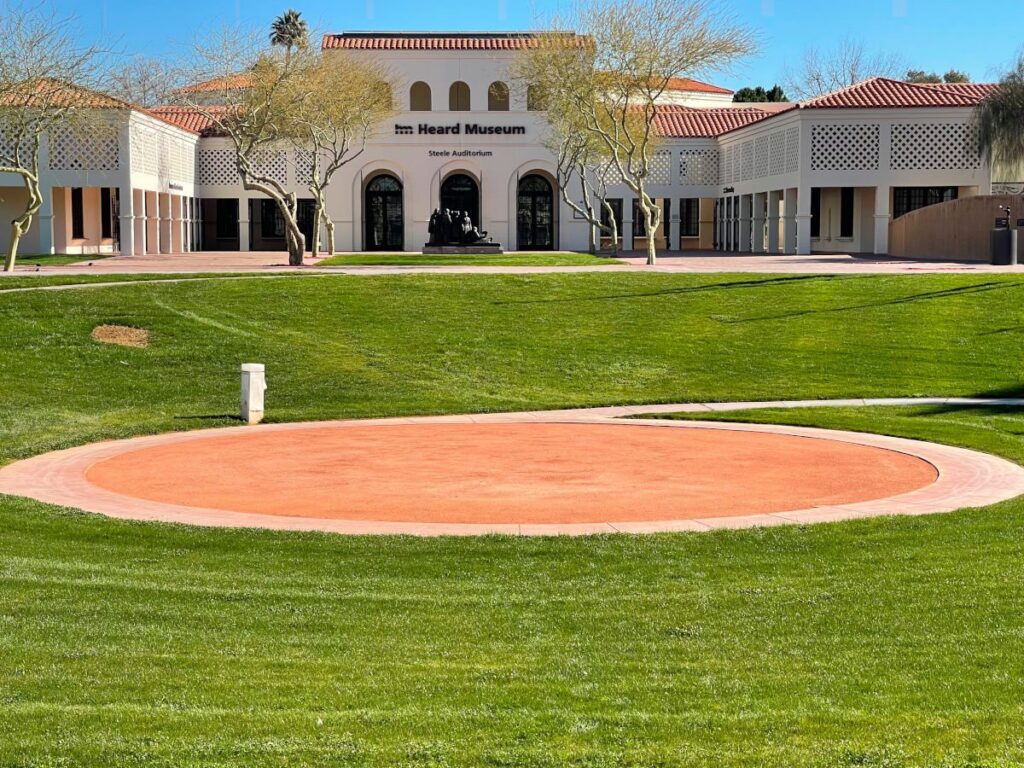
Two annual events are worth planning around. The World Championship Hoop Dance Contest, the 37th, runs February 6-7, 2027, and the 69th Heard Museum Guild Indian Fair and Market, a major Native art market, runs March 6-7, 2027. Both draw crowds, so buy tickets early and arrive when the gates open.
Allow two to three hours. If you plan to buy Native art, here or anywhere, buy from sellers who name the artist and the tribe. The federal Indian Arts and Crafts Act makes it illegal to sell work in a way that falsely suggests it was made by a Native artist, and a reputable seller will be happy to tell you exactly who made what you’re holding. Verdict: the single best cultural stop in Arizona, and it’s six minutes from downtown.
The Musical Instrument Museum: the one that surprises people
4725 E. Mayo Blvd., far north Phoenix, off Loop 101 near Tatum Boulevard. About 27-29 minutes from downtown. The MIM opened in 2010 and bills its collection as the largest of its kind in the world, with galleries organized by region that walk you through the instruments of nearly every country on earth. What makes it work is the headset included with admission: as you step up to each display, it plays video of the instruments being performed where they come from. It’s a museum you listen to as much as look at, and hours disappear.
The museum is open daily from 9 a.m. to 5 p.m., closes on Thanksgiving and opens 10 to 5 on Christmas Day. Admission is $20 for adults, $15 for teens 13 to 19, $10 for ages 4 to 12, and free for children 3 and under; special exhibitions cost extra, such as The Magical Flute at $7, or $4 for ages 4 to 19, and Guest Services sells two-day passes. Parking is free (checked September 2026 on the MIM’s site).
There is no free night, and the MIM isn’t on the Culture Pass. It doesn’t need to be. At $20 it is the best-value museum ticket in the Valley for the time most people spend inside, which is three hours or more. It’s also the most reliable indoor stop in summer, because it is open every day of the week.
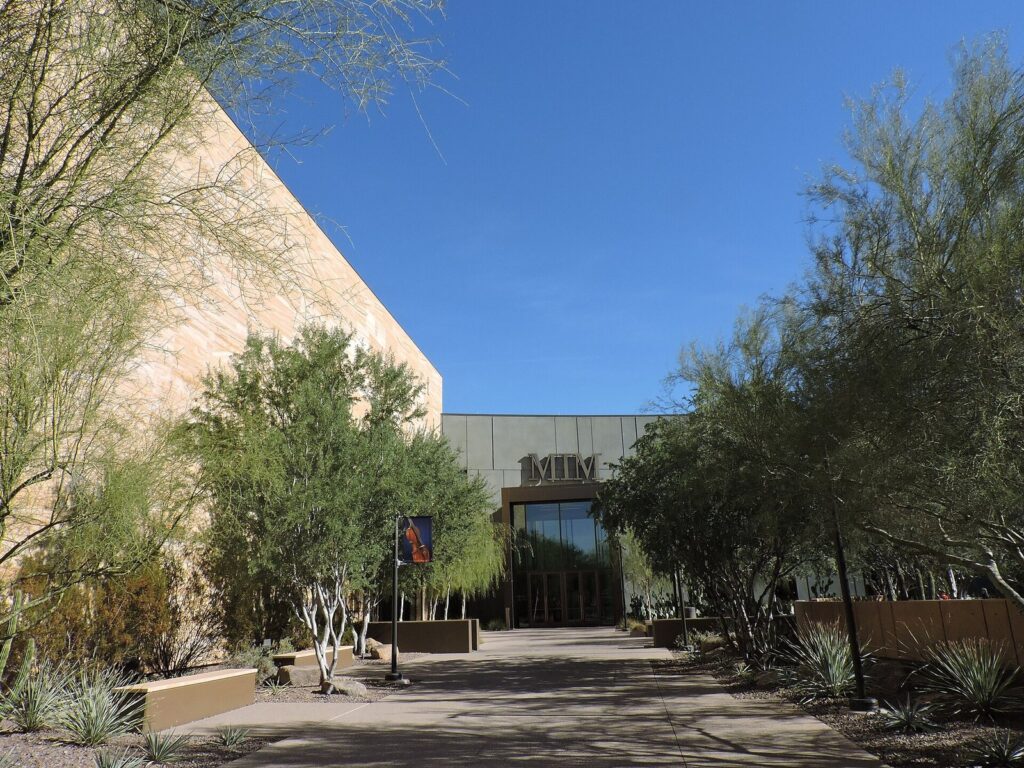
Location decides how to fit it in. The MIM is 3 minutes from Desert Ridge and 12 from Kierland, and Taliesin West is roughly 20 minutes away, which makes a natural north-side day. From downtown Phoenix or Tempe it’s a half-hour drive each way, so don’t try to squeeze it between the Heard and a dinner reservation. Verdict: worth a trip even if you don’t care much about music, and worth a whole morning if you do.
The Phoenix Art Museum: very good, with the Valley’s best free hours
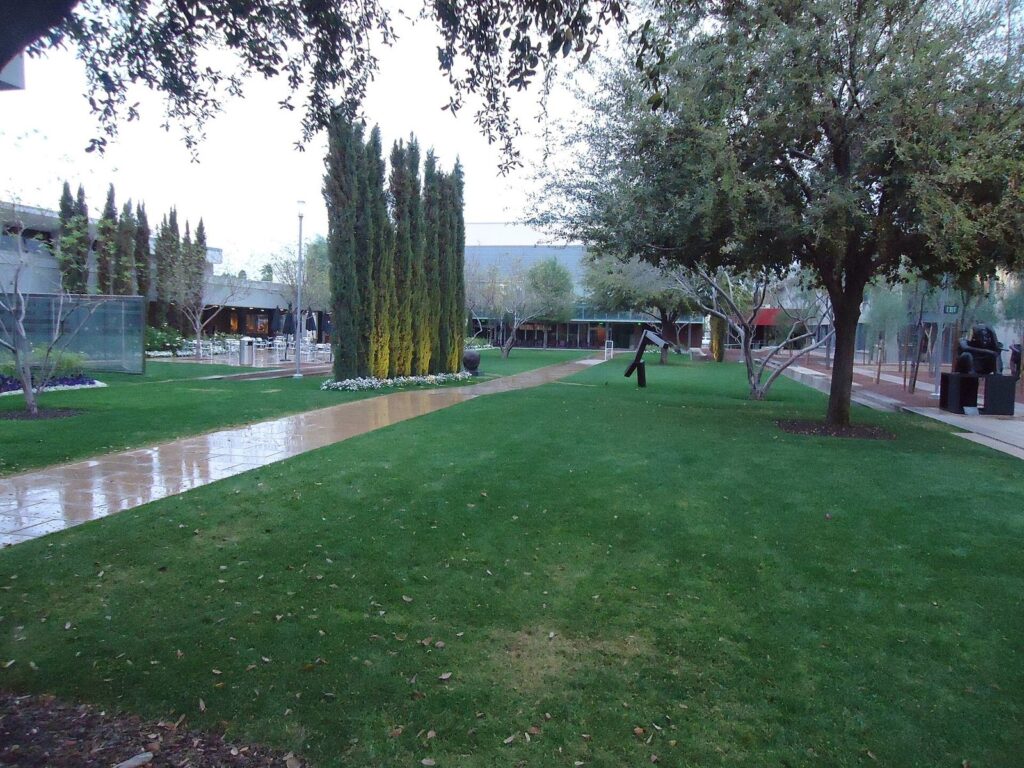
1625 N. Central Ave., midtown Phoenix. Three to five minutes from downtown, less than a mile south of the Heard. The Phoenix Art Museum is the Southwest’s big general art museum, with American, Asian, European, Latin American and Western art, modern and contemporary galleries and a notable fashion design collection. It is closed Monday and Tuesday and open Wednesday 10 a.m. to 8 p.m., Thursday 10 to 5, Friday 10 to 8, Saturday 10 to 5 and Sunday noon to 5. Admission is $23 for adults, $20 for seniors 65 and older, $18 for students and $13 for ages 6 to 17, with 5 and under free; some special exhibitions need a separate ticket (checked September 2026).
Its free hours are the best in the Valley. Wednesdays from 3 to 8 p.m. are pay what you wish, and First Friday evenings from 5 to 8 p.m. are free. The museum also holds two free Family Funday Sundays a year; the next is November 15, 2026. It is on the Culture Pass as well.
One caution for fall 2026: the museum’s James K. Ballinger Wing is temporarily closed for infrastructure work, so part of the collection is off view. Check what’s open before you pay full price, or go on a Wednesday afternoon when you can pay what you like. Verdict: very good, and at pay-what-you-wish prices an easy yes. Pair it with the Heard, less than a mile up Central Avenue, for a museum day that needs no car.
Which other Phoenix museums are good for an hour or two?
These are the good-in-context museums: worth it if they’re near where you are, if they’re free that day or if they match an interest.
S’edav Va’aki Museum
4619 E. Washington St., east Phoenix, near Sky Harbor. 13 minutes from downtown. The city’s archaeological museum, renamed from Pueblo Grande Museum in 2023, sits on a Hohokam village site with a platform mound you can walk around. It’s the best place in the city to understand the people who built the Valley’s first canals more than a thousand years ago. Adults pay $13, seniors $10, students and ages 6 to 17 $6, and under-6s are free, with a discount on Thursdays from 4 to 8 p.m. It’s open Monday, Friday and Saturday 9 to 4, Thursday 9 to 8 and Sunday noon to 4 from September to June, and closed Tuesdays and Wednesdays; in July and August it opens only Monday and Thursday through Saturday, 9 a.m. to 2 p.m. (checked September 2026). Because it is next to the airport, it makes a good first or last stop of a trip.
Arizona Capitol Museum
1700 W. Washington St., west of downtown. Three to five minutes away. Housed in the old territorial capitol, with its copper dome, the Capitol Museum is always free. It’s open Monday to Friday 9 a.m. to 4 p.m. and Saturdays 10 to 2 from September 12 through May, with walk-in tours on Monday, Wednesday and Friday at 2 p.m. (checked September 2026). An hour is plenty, and it pairs well with the Wesley Bolin Memorial Plaza’s monuments outside.
Japanese Friendship Garden
1125 N. 3rd Ave., downtown Phoenix. Ro Ho En, a Japanese stroll garden with a koi pond and waterfalls, is a surprising pocket of calm between the freeway and downtown. Adults pay $14, seniors $12, students, military and ages 7 to 17 $11, and children 6 and under are free. It opens Tuesday through Sunday, from 9 a.m. to 6 p.m. September through January and 9 to 7 February through May; in summer it keeps split hours, 8 a.m. to 12:30 p.m. and 4 to 7:30 p.m., rather than closing (checked September 2026). It’s a garden more than a museum, and a lovely hour.
Arizona Museum of Natural History
53 N. MacDonald, downtown Mesa. 27 minutes from downtown Phoenix. Dinosaurs, meteorites, gems and minerals, and Sonoran Desert archaeology, in a museum that is especially good with children. Adults pay $16, seniors 65 and older and students 13 and up $13, children 3 to 12 $9, and EBT cardholders $4; it’s open Tuesday to Saturday 10 to 5 and Sunday noon to 5, and closed Mondays (checked September 2026). Worth it if you’re in the East Valley anyway, especially with kids.
ASU Art Museum
51 E. 10th St., Tempe, on the Arizona State University campus. A lively university museum with contemporary exhibitions, always free, and open Thursday to Sunday from 11 a.m. to 5 p.m. (checked September 2026). If you’re in Tempe for a game or a show at ASU Gammage, it’s an easy hour.
Deer Valley Petroglyph Preserve
3711 W. Deer Valley Rd., north Phoenix. 29 minutes from downtown. A quarter-mile trail past a hillside of rock art, run by Arizona State University. General admission is $14, and the preserve closes in June and July; from January to April it’s open Tuesday to Saturday, 8 a.m. to 2 p.m., and in May and August to December Wednesday to Saturday, same hours (checked September 2026). It’s on the Culture Pass from August through May. Go early in the day, because the trail is exposed.
Cosanti
6433 E. Doubletree Ranch Rd., Paradise Valley. About 27 minutes from downtown. Architect Paolo Soleri’s studio and gallery, where the famous bronze and ceramic wind bells are made. It’s open Monday to Saturday 9 to 5 and Sunday 11 to 5, with guided tours on weekday mornings at $30 for adults (checked September 2026). It’s on the Culture Pass. A short, odd, memorable stop on the way to or from Scottsdale.
Tovrea Castle, Rosson House and other niche stops
Tovrea Castle, the wedding-cake-shaped 1930s building on a hill in east Phoenix, can only be seen on docent-led tours sold by lottery at $22 a person. The fall 2026 tours sold out when the lottery closed on June 15, the lottery for January to May 2027 runs October 1-15, 2026, and there are no tours in July and August. Rosson House, the restored Victorian at The Square PHX (long known as Heritage Square), is shown on guided tours Thursday through Sunday. The Hall of Flame, a large firefighting museum near Papago Park, suits families and fire-engine fans; check its current hours and prices before you go. And if you’re flying, the Phoenix Airport Museum’s collection of more than 1,000 works is on display around Sky Harbor, from the 44th Street Sky Train station to the Rental Car Center, free to anyone passing through.
How much time do you need at each museum?
Time is the budget that matters most in a spread-out city, so here is what each visit realistically takes, not counting the drive. Plan two big museums a day at most, or one big museum and two short stops.
| Museum | Time to allow | Pairs well with |
|---|---|---|
| Musical Instrument Museum | 3 hours or more | Taliesin West or Desert Ridge |
| Heard Museum | 2-3 hours | Phoenix Art Museum, less than a mile away |
| Phoenix Art Museum | 2 hours | The Heard, or First Friday on Roosevelt Row |
| Taliesin West | 60-75 minutes on the audio tour | The MIM or Old Town Scottsdale |
| Arizona Museum of Natural History | About 2 hours | Downtown Mesa, Mesa Arts Center |
| S’edav Va’aki Museum | 1-1.5 hours | A flight at Sky Harbor, Tovrea Castle |
| Arizona Capitol Museum | About 1 hour | Downtown Phoenix |
| Japanese Friendship Garden | About 1 hour | Burton Barr Central Library, the Heard |
| Deer Valley Petroglyph Preserve | About 1 hour | An early start in the north Valley |
The mistake to avoid is treating the MIM as a quick stop. People plan an hour and stay four, because the headset keeps pulling you to the next room. Give it a morning.
Where can you see Native American art and history beyond the Heard?
The Heard is the center of it, but the Valley and its surroundings tell a longer story, from the Hohokam who farmed here for a thousand years to the living artists whose work fills the Heard’s contemporary galleries.
Start with the Hohokam. The S’edav Va’aki Museum in east Phoenix protects a village site and platform mound near the canals its people built, and the Deer Valley Petroglyph Preserve in north Phoenix shows the rock art left on a single hillside. Farther out, Casa Grande Ruins National Monument, 67 minutes south of downtown, protects a four-story Hohokam “Great House” and is free to enter, while Montezuma Castle, 104 minutes north, preserves a five-story Sinagua cliff dwelling for $10 per adult (both checked September 2026). Together they make a clear, if spread-out, timeline.
For living culture, time your trip to the Heard’s two big events: the World Championship Hoop Dance Contest in early February and the Guild Indian Fair and Market in early March. The market is also the best place in the Valley to buy directly from Native artists. Wherever you shop, look for work that names the artist and the tribe, ask questions, and remember that federal law makes it illegal to misrepresent work as Native-made.
Which Phoenix museums work best with kids?
Children tend to love the museums adults think of as serious, as long as there is something to touch or hear. The MIM is the standout: the headset turns every room into a video, and its Experience Gallery lets kids try instruments for themselves. The Arizona Museum of Natural History in Mesa has the dinosaurs and a lot of room to roam, and children 3 to 12 pay $9 there (checked September 2026). The Heard’s outdoor courtyards and dance circle give kids space to move between galleries, and the Hoop Dance Contest in February is a spectacle at any age.
For younger children, Phoenix also has dedicated family museums: the Arizona Science Center and the Children’s Museum of Phoenix downtown, and the i.d.e.a. Museum, a children’s art and creativity museum in downtown Mesa designed for ages 12 and under. Those belong in a family trip plan rather than a museum crawl, but they are the ones to pick on a hot afternoon with small kids. Keep each museum visit to two hours with children under 10, and plan the day so the drive between stops is short.
What architecture is worth seeing in Phoenix?
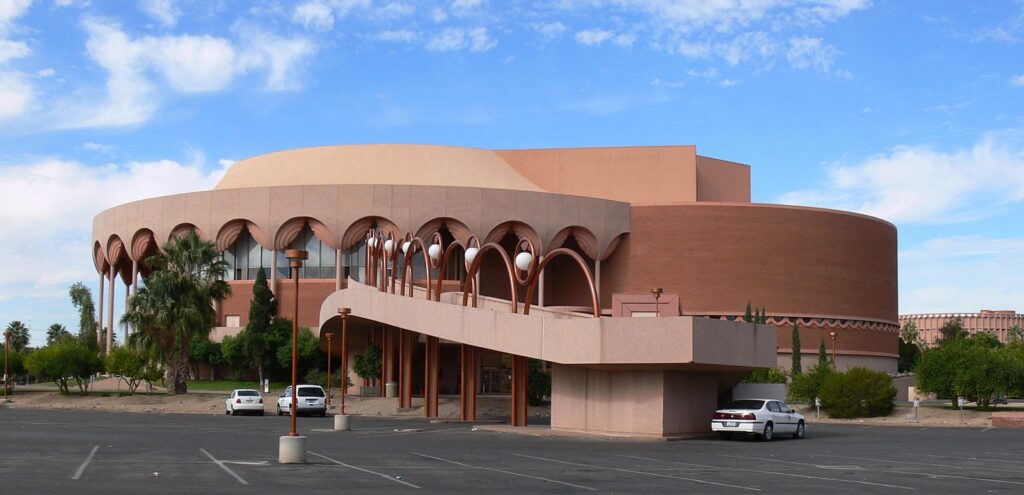
Some of the Valley’s best culture isn’t in a gallery at all. Frank Lloyd Wright left two major buildings here: Taliesin West, his winter home and school in north Scottsdale, and ASU Gammage, the round, arched auditorium in Tempe that was one of his last designs. His one-time apprentice Paolo Soleri built Cosanti, his studio in Paradise Valley, and later Arcosanti, the experimental town off I-17 north of the Valley, 74 minutes from downtown.
Downtown and midtown have their own landmarks. The Burton Barr Central Library on Central Avenue is a bold modern building whose fifth-floor Great Reading Room is worth the elevator ride, even during 2026’s fire-sprinkler work, when the library has stayed open with its first floor closed. The Orpheum is a 1929 movie palace, the Capitol Museum sits in the copper-domed territorial capitol, and Rosson House at The Square PHX is a restored 1890s Victorian house. On the east side, Tovrea Castle looks like a wedding cake on a hill. None of these needs more than an hour, and several cost nothing to see from outside.
What about Taliesin West and Western Spirit?
Both are excellent and both belong to a Scottsdale day rather than a Phoenix one. Taliesin West, the winter home and studio Frank Lloyd Wright began building in 1937, is in north Scottsdale, 42 minutes from downtown Phoenix; its self-guided audio tour costs $44 for adults from October to May and $39 from June to September, and reservations are strongly recommended (checked September 2026). Western Spirit, in Old Town Scottsdale, is a first-rate museum of the American West at $28 for adults, and it’s on the Culture Pass. If you’re staying in Scottsdale, add either to a museum trip; if you’re staying downtown, weigh them against the drive.
How can you visit Phoenix museums for free?
More easily than in most cities. Every big museum except the MIM has a free or pay-what-you-wish window, and one library program covers most of them at once.
| Route (checked Sept 2026) | What it gets you | The catch |
|---|---|---|
| Phoenix Public Library Culture Pass | Free general admission for two, one visit within 7 days | Borrowed in person, first come first served, no holds; one per family at a time, two a month |
| Heard Museum First Friday | Free entry 4-8 p.m. on the first Friday of the month | Busy; some add-ons cost extra |
| Phoenix Art Museum Wednesdays | Pay what you wish 3-8 p.m. | Special exhibitions may still be ticketed |
| Phoenix Art Museum First Friday | Free 5-8 p.m. | Crowded |
| Arizona Capitol Museum | Always free | Weekdays and some Saturdays only |
| ASU Art Museum | Always free | Thursday to Sunday only |
| Phoenix Airport Museum | Art throughout Sky Harbor | You have to be at the airport |
| Heard Museum on the first full weekend | Free for Bank of America cardholders | Card required |
| Museums for All at the Heard | $5 each for up to four with a SNAP EBT card | EBT card required |
The Culture Pass is the best deal in the city if you can plan around it. It’s borrowed in person from Phoenix Public Library branches, first come first served, and covers general admission for two at the Heard, the Phoenix Art Museum, the Desert Botanical Garden, the S’edav Va’aki Museum, the Deer Valley Petroglyph Preserve from August through May, SMoCA, Western Spirit, Cosanti, the Cave Creek Museum from October through May and the Superstition Mountain Museum. It doesn’t cover the MIM, Taliesin West, the Japanese Friendship Garden or the Arizona Science Center (checked September 2026). Visitors need a library card to borrow it, so it works best for friends and family who live here, and for long stays.
In Scottsdale, SMoCA, the city’s contemporary art museum, is pay what you wish on Thursdays and on the second Saturday of each month, and the Scottsdale ArtWalk opens Old Town’s galleries free on Thursday evenings from 7 to 9 p.m.
What is First Friday in Phoenix?
First Friday is a monthly downtown art walk that has run since 1994, organized by the nonprofit Artlink. On the first Friday of every month, galleries, studios and venues across downtown Phoenix and Roosevelt Row open free to the public, and Roosevelt Row hosts its A.R.T.S. Market of local makers. There are no official art-walk hours; each venue sets its own, and the street scene builds after dark. In September 2026 the city approved a one-year pilot allowing art and food vendors on private property along Roosevelt Row between 7th Street and 7th Avenue, which should make the market side busier still.
It’s also the best museum night of the month. The Heard is free from 4 to 8 p.m. and the Phoenix Art Museum from 5 to 8, and the light rail runs up Central Avenue between them and downtown. A First Friday plan that starts at the Heard, moves to the art museum and ends on Roosevelt Row costs nothing but dinner. In summer, start later: the street part of the evening doesn’t get pleasant until the sun is down.
Where can you see performing arts in Phoenix?
The Valley’s performing arts season runs roughly from September to May, and the main stages are within a few blocks of each other downtown, plus a Broadway house in Tempe and a big arts center in Mesa.
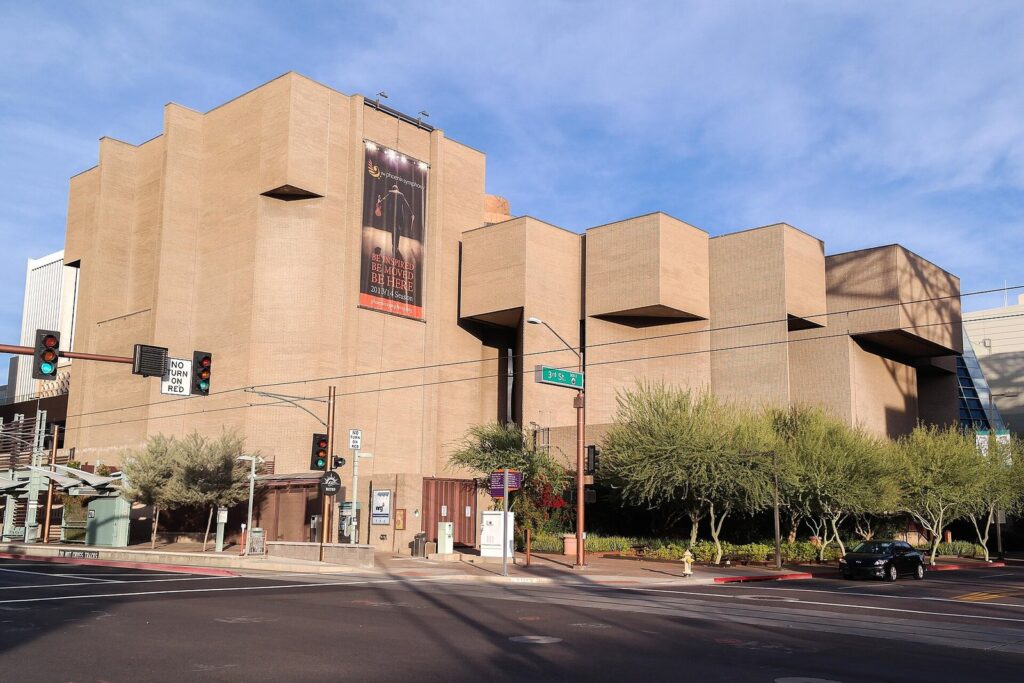
Symphony Hall, downtown. Home stage of the Phoenix Symphony, whose 2026/27 season was on sale in September 2026 with concerts from early October, and of Ballet Arizona and Arizona Opera. Ballet Arizona’s Nutcracker runs December 11-27, 2026, and its fall program plays Symphony Hall October 22-25. The symphony sells rush tickets and tickets for veterans, which are worth asking about.
Herberger Theater Center, downtown. A multi-stage theater center beside the convention center, home to several resident companies, with its own art gallery and tours. Its fall 2026 gallery exhibit runs September 4 to November 1.
The Orpheum, downtown. A restored 1929 movie palace owned by the city, with an ornate Spanish Baroque interior, used for touring shows, concerts and dance. If anything is on while you’re in town, it’s worth going just to sit inside.
ASU Gammage, Tempe. Frank Lloyd Wright’s round, arched auditorium on the Arizona State University campus is the Valley’s Broadway house, with a 2026/27 season of touring musicals that includes runs in late January and late February 2027. It’s about 18 minutes from downtown Phoenix, and it’s worth a look even from the outside.
Mesa Arts Center, downtown Mesa. A large campus of theaters, galleries and studios with a 2026-27 season of touring acts and a classical series, and performances most weeks from late September. The Musical Instrument Museum also runs a busy concert program in its own music theater, which is an easy way to pair a museum visit with an evening show.
Where can you see public art in Phoenix?
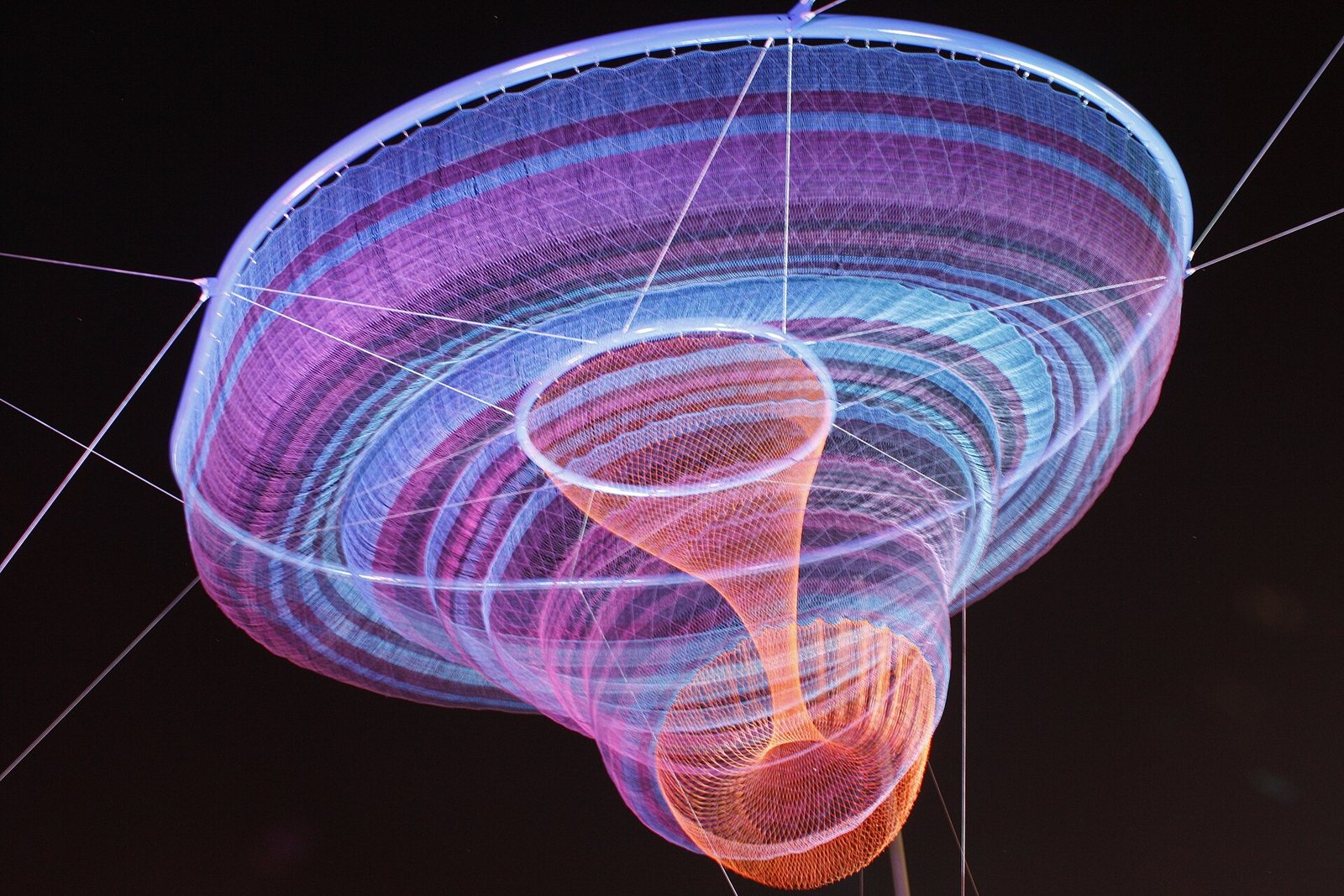
Phoenix has one of the country’s most active municipal public art programs, and the city’s online Public Art Archive maps its collection, including outdoor sculptures you can visit on your own. The best-known piece is Her Secret Is Patience, Janet Echelman’s huge suspended net sculpture over Civic Space Park downtown, which moves in the wind by day and glows in changing colors after dark. It’s free, it’s next to the light rail, and it’s at its best on a warm evening.
Roosevelt Row’s walls are covered in murals that change often, so a slow walk between 7th Avenue and 7th Street is a free gallery in itself. The Phoenix Airport Museum’s collection is spread through Sky Harbor’s terminals and Sky Train stations. And in November, Scottsdale’s Canal Convergence turns the Scottsdale Waterfront into an outdoor festival of light art.
How do you plan an indoor museum day in summer?
Museums are the Valley’s summer strategy, but hours shift and a few places close one day a week, so the order matters. The one rule to remember: in summer, Monday is MIM day. From June through August the Heard closes on Mondays, the Phoenix Art Museum is always closed Mondays and Tuesdays, and the Japanese Friendship Garden is closed Mondays, but the MIM is open every day.
| Time | Stop (summer 2026 hours) | Why then |
|---|---|---|
| 8:00 a.m. | Japanese Friendship Garden | Summer morning session runs 8 a.m.-12:30 p.m. |
| 10:00 a.m. | Heard Museum | Opens at 10; closed Mondays June-August |
| 1:00 p.m. | Lunch on Central Avenue | The hottest hours, spent indoors |
| 3:00 p.m. | Phoenix Art Museum (Wednesday) | Pay what you wish from 3 to 8 p.m. |
| Evening | A show downtown, or Her Secret Is Patience after dark | Cooler, and the sculpture is lit |
On a Monday or Tuesday, swap in the MIM, which opens at 9 a.m. daily, and spend the whole middle of the day there. The S’edav Va’aki Museum keeps short summer hours, 9 a.m. to 2 p.m., four days a week in July and August, so go in the morning. Leave the Deer Valley Petroglyph Preserve for another season: it closes in June and July.
How should you group museums by area?
The Valley is spread out, so group museum visits by side of town.
Central Avenue. The Heard, the Phoenix Art Museum, the Burton Barr Central Library (worth a look for its architecture and fifth-floor Great Reading Room), the Japanese Friendship Garden and, a few minutes west, the Capitol Museum. All of it is within a short drive or light-rail ride, and it is the one museum day that needs no car.
East Phoenix. The S’edav Va’aki Museum, Tovrea Castle and the Hall of Flame, all a few minutes from the airport and from Papago Park, which puts them on the same side of town as the Desert Botanical Garden.
North Valley. The MIM, Taliesin West, Cosanti and the Deer Valley Petroglyph Preserve. Pair the MIM with Taliesin West, which are roughly 20 minutes apart.
Tempe and Mesa. The ASU Art Museum and ASU Gammage in Tempe, and the Arizona Museum of Natural History and Mesa Arts Center in downtown Mesa, about 27 minutes from downtown Phoenix.
What to skip
- Skip Mystery Castle. The quirky south Phoenix landmark still appears on many lists, but tours have been suspended and the castle is closed to visitors during preservation work.
- Skip cramming the MIM, the Heard and Taliesin West into one day. They sit on opposite sides of the Valley, and each deserves two to three hours. Two big museums a day is plenty.
- Skip paying full price at the Phoenix Art Museum if you can go on a Wednesday afternoon. Pay what you wish from 3 to 8 p.m. is a straight saving on a $23 ticket.
- Skip Tovrea Castle unless you’ve won the lottery. Tours are by lottery only, and fall 2026 sold out in June. Enter the January-May 2027 lottery from October 1 to 15, 2026.
- Skip the Heard on a summer Monday. It’s closed Mondays from June through August. Go to the MIM instead.
- Skip the Deer Valley Petroglyph Preserve in June and July. It’s closed, and the trail is too hot for most of the summer anyway.
Frequently Asked Questions
What is the best museum in Phoenix?
The Heard Museum, on Central Avenue since 1929, is the best and the most distinctive, with world-class collections of Native art from the Southwest; allow two to three hours. The Musical Instrument Museum in far north Phoenix is a close second and often the bigger surprise. The Phoenix Art Museum is very good, especially at pay-what-you-wish prices on Wednesday afternoons.
How much does the Heard Museum cost?
The Heard’s published adult price is $25 at the door and $22.50 online, with seniors $20 and $18, students and ages 6 to 17 $10 and $9, and children 5 and under free (checked September 2026). It is free on First Friday evenings from 4 to 8 p.m., free for American Indian visitors with tribal ID, and on the Phoenix Public Library’s Culture Pass.
Is the Musical Instrument Museum worth it?
Yes. At $20 for adults, $15 for teens and $10 for ages 4 to 12 (checked September 2026), it’s one of the best-value tickets in the Valley, and most visitors stay three hours or more. A headset included with admission plays performance video as you reach each display. It’s open daily from 9 a.m. to 5 p.m., about half an hour north of downtown.
Are there free museums in Phoenix?
Yes. The Arizona Capitol Museum and the ASU Art Museum in Tempe are always free, and the Phoenix Airport Museum’s art is free to see around Sky Harbor. The Heard is free on First Friday evenings from 4 to 8 p.m., and the Phoenix Art Museum is free on First Fridays from 5 to 8 p.m. and pay what you wish on Wednesdays from 3 to 8 p.m.
What is the Phoenix Culture Pass?
A Phoenix Public Library program that lends free general admission for two to museums including the Heard, the Phoenix Art Museum, the Desert Botanical Garden, S’edav Va’aki, Western Spirit and Cosanti. Passes are borrowed in person, first come first served, with no holds, and must be used within 7 days. It doesn’t cover the MIM or Taliesin West (checked September 2026).
Which Phoenix museums are open on Mondays?
The Musical Instrument Museum is open every day, 9 a.m. to 5 p.m. The Heard is open Mondays from September through May but closes on Mondays from June through August. The S’edav Va’aki Museum and the Arizona Capitol Museum open on Mondays, while the Phoenix Art Museum and the Japanese Friendship Garden are closed (checked September 2026).
Is the Phoenix Art Museum free on Wednesdays?
Not free, but close: Wednesdays from 3 to 8 p.m. are pay what you wish, so you choose the price instead of paying the $23 adult rate (checked September 2026). The museum is free on First Friday evenings from 5 to 8 p.m. and on two Family Funday Sundays a year, the next on November 15, 2026. Some special exhibitions may still need a separate ticket.
When is First Friday in Phoenix?
On the first Friday of every month. Galleries and venues across downtown Phoenix and Roosevelt Row open free to the public, with each venue setting its own hours, and Roosevelt Row holds its A.R.T.S. Market. The Heard Museum is free from 4 to 8 p.m. and the Phoenix Art Museum from 5 to 8 p.m. the same evening.
Related Phoenix Guides
- Things to Do in Phoenix: the Valley’s best attractions by season and side of town, with prices, drive times and what to skip.
Sources and verification
This guide is built from research, not hosted visits. Prices, hours, free-entry programs and event dates were checked on September 24, 2026, against the museums and agencies below. Drive times are off-peak estimates from OSRM routing on OpenStreetMap data.
- Heard Museum: hours and admission; First Friday; Hoop Dance Contest; Indian Fair and Market
- Musical Instrument Museum: mim.org
- Phoenix Art Museum: visit and admission; free-to-see hours
- City of Phoenix: S’edav Va’aki Museum; Office of Arts and Culture public art; Phoenix Public Library Culture Pass
- Other museums: Japanese Friendship Garden; Western Spirit; Taliesin West; Tovrea Castle; The Square PHX; ASU Art Museum; Phoenix Airport Museum at Sky Harbor
- First Friday: Artlink
- Performing arts: Phoenix Symphony; Ballet Arizona; Arizona Opera; Herberger Theater Center; ASU Gammage; Mesa Arts Center
Photo Credits
- Heard Museum lawn and amphitheater: photo by Peterwchen, Wikimedia Commons (CC BY-SA 4.0)
- Musical Instrument Museum: photo by PamMcP, Wikimedia Commons (CC BY-SA 4.0)
- Phoenix Art Museum garden: photo by Tomwsulcer, Wikimedia Commons (CC0)
- Symphony Hall, Phoenix: photo by Visitor7, Wikimedia Commons (CC BY-SA 3.0)
- ASU Gammage: photo by Wars, Wikimedia Commons (CC BY 2.5)
- Her Secret Is Patience at night (featured image): photo by Michael Ruiz from Phoenix, Arizona, U.S.A., Wikimedia Commons (CC BY 2.0)