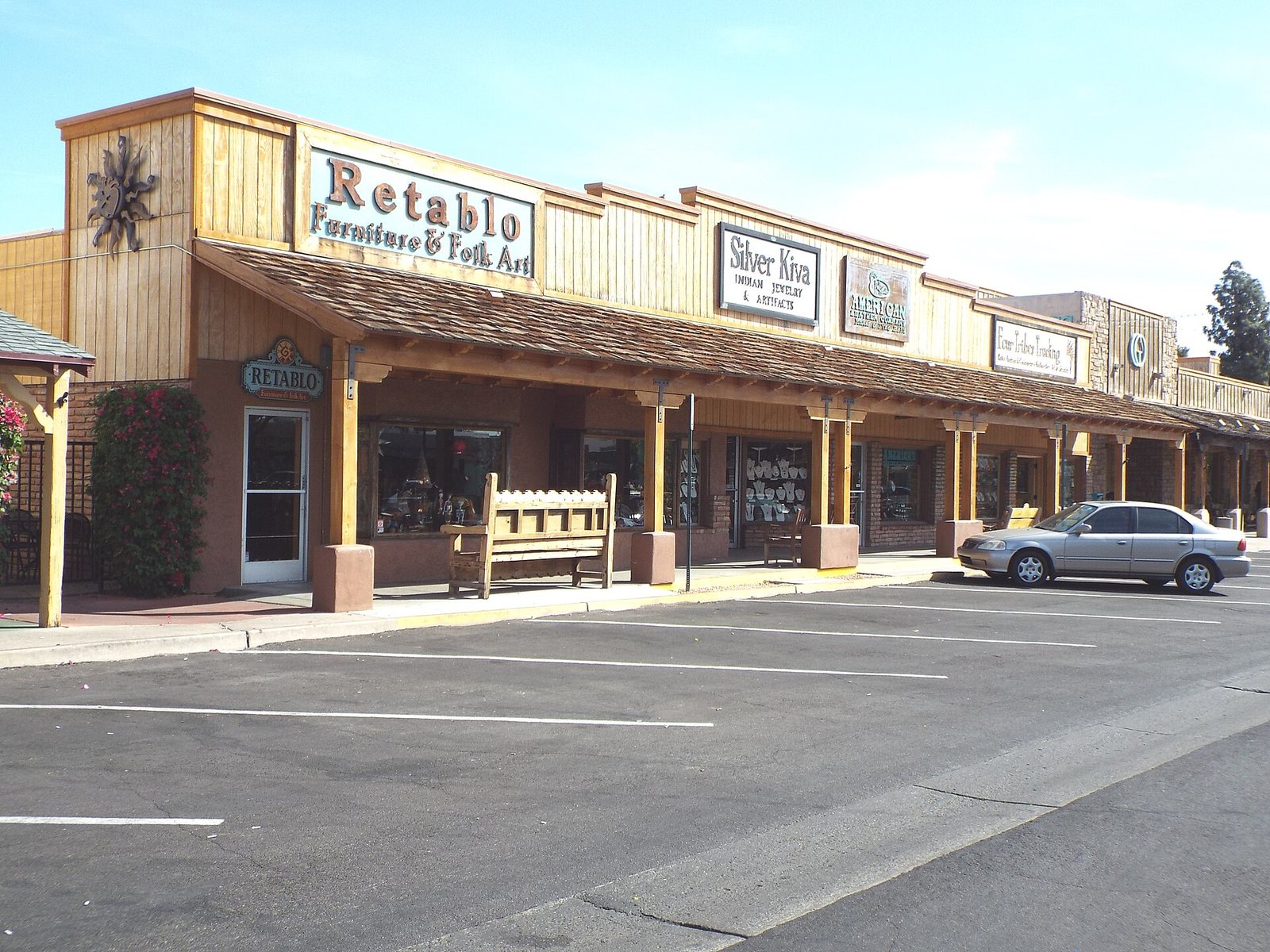
Buy a $1,000 turquoise cuff in downtown Phoenix and the sales tax is $91. Buy the same cuff in Old Town Scottsdale, 20 minutes east, and it’s $80, because Phoenix’s combined rate is 9.1% and Scottsdale’s is 8.0% (2026 rates). That $11 won’t decide your trip, but it’s a fair introduction to shopping in Phoenix, where the city line you cross, the time of day you go out in the heat and the difference between genuine Native-made work and a factory copy all matter more than they do in most places. This guide sorts the Valley’s shopping into what’s worth a visitor’s time and what’s just another suburban mall.
Short answer: For the biggest and most walkable shopping, go to Scottsdale: Scottsdale Fashion Square for department stores and luxury brands, and Old Town’s galleries and western shops next door. In Phoenix, Biltmore Fashion Park is the upscale open-air center, and the Melrose District and Roosevelt Row are where to look for vintage and local makers. For bargains, Arizona Mills has 155-plus outlet stores under one roof. For something you can’t buy at home, buy Native American art from sources that name the artist and tribe. And from June to September, shop indoors or at opening time.
Hours, store counts, tax rates and closures in this guide were last checked on September 24, 2026. Drive times are off-peak estimates.
Shopping in Phoenix at a glance
The Valley has more shopping centers than any visitor needs, and most are ordinary suburban malls. These are the ones worth knowing about, with how they cope with the heat and how far they are from the three most common bases.
| Where | Type | Drive from downtown / Old Town / Tempe (min) | Best for | Verdict (checked Sept 2026) |
|---|---|---|---|---|
| Scottsdale Fashion Square | Enclosed mall | 22 / 3 / 13 | Department stores, luxury brands | Arizona’s big mall; covered in our Scottsdale guide |
| Old Town Scottsdale | Street shopping | 20 / 0 / 11 | Galleries, western wear, Native art | Best walkable shopping in the Valley |
| Biltmore Fashion Park | Open-air center | 14 / 13 / 19 | Upscale stores, restaurants | Phoenix’s best; go early in summer |
| Kierland Commons and Scottsdale Quarter | Open-air centers | 32 / 18 / about 30 | Lifestyle brands, dining | Pleasant if you’re staying north |
| Desert Ridge Marketplace | Open-air center | 28 / 26 / 34 | Families, 100+ brands | Fine if you’re staying north |
| Tempe Marketplace | Open-air center | 19 / 12 / 7 | Chain stores, dining | Useful in Tempe, not a destination |
| Arizona Mills | Enclosed outlet mall | 19 / 20 / 10 | 155+ outlet stores; LEGOLAND and SEA LIFE | Best summer bargain hunt |
| Phoenix Premium Outlets | Open-air outlets | 30 / 34 / 26 | 80+ outlet stores | Worth it with a shopping list |
| Tanger Outlets at Westgate | Open-air outlets | 23 / 37 / 34 | West Valley outlets | Pair with a Glendale game |
| Chandler Fashion Center | Enclosed mall | 29 / 23 / 19 | East Valley department stores | Only if you’re nearby |
| Arrowhead Towne Center | Enclosed mall | 32 / 46 / 44 | West Valley department stores | Only if you’re nearby |
| Melrose District | Street shopping | 8 / 19 / 20 | Vintage, antiques | For browsers |
| Roosevelt Row | Street shopping | About 3 / 18 / 14 | Local makers, galleries, First Friday | Best on the first Friday of the month |
Which Phoenix shopping centers are worth a visitor’s time?
Be honest about what you’re after. If it’s a specific brand or a department store, the nearest good mall to your hotel is the right answer, and the Valley has plenty. If it’s shopping as an outing, a place to spend a few hours walking, eating and browsing, the list gets much shorter.
Three places are genuinely worth a trip. Old Town Scottsdale is the Valley’s best walkable shopping district, with galleries, western-wear and jewelry shops, boutiques and restaurants on a grid of shaded streets. Scottsdale Fashion Square, a few minutes’ walk from Old Town, is the state’s biggest and most upscale mall, and it’s enclosed and air-conditioned, which makes it the obvious midday refuge in summer. Biltmore Fashion Park, on Camelback Road in Phoenix, is the city’s own upscale center, open-air and landscaped, with a Macy’s and a string of restaurants. Together they cover most of what a visitor wants.
After that, the Valley’s malls are useful rather than special. Kierland Commons, Scottsdale Quarter and Desert Ridge Marketplace are pleasant open-air centers in the north Valley, worth an evening if you’re staying nearby. Tempe Marketplace, Chandler Fashion Center and Arrowhead Towne Center serve their suburbs well and aren’t worth a cross-Valley drive. The outlet centers are worth it if you arrive with a list and not otherwise. And two big names that still show up in older guides, Paradise Valley Mall and Metrocenter, are gone.
Where should you shop near your hotel?
In a metro area this spread out, the best shopping for you is often the closest good option, so start from your base.
Downtown Phoenix. Downtown is short on conventional retail, but Roosevelt Row’s galleries and makers are a few minutes away, the Melrose District’s vintage shops are 8 minutes north on Seventh Avenue, and Biltmore Fashion Park is 14 minutes up the road. Desert Sky Mall, the west side’s bilingual mall, is 13 minutes west.
The Camelback corridor and Uptown. Biltmore Fashion Park is on your doorstep, and the small centers around Central Avenue and Camelback Road, on the light rail, have restaurants and a handful of shops. Old Town Scottsdale is about 13 to 14 minutes east.
Old Town Scottsdale. You’re already in the Valley’s best shopping district. Scottsdale Fashion Square is a few minutes’ walk or a 3-minute drive; Kierland Commons and Scottsdale Quarter are 18 minutes north; Tempe Marketplace is 12 minutes south.
North Scottsdale and Desert Ridge. Kierland Commons, Scottsdale Quarter and Desert Ridge Marketplace are the local choices, and all three work best in the evening.
Tempe. Mill Avenue’s own shops are walkable, Tempe Marketplace is 7 minutes away and Arizona Mills is 10, which makes Tempe the most convenient base for outlet shopping.
The East Valley. Chandler Fashion Center and Phoenix Premium Outlets are your nearby malls; downtown Chandler and Gilbert’s Heritage District have small independent shops.
The West Valley. Tanger Outlets and the Westgate district sit together beside State Farm Stadium, Arrowhead Towne Center is north in Glendale, and downtown Glendale’s antiques are 17 minutes from downtown Phoenix.
How do you shop in the Phoenix heat?
This is the question that separates Phoenix from most shopping cities. From June through August the normal high at Sky Harbor is above 104°F, and an open-air center with a hot parking lot is a very different outing at 3 p.m. than it is at 10 a.m. The Valley’s shopping splits cleanly into enclosed malls, which are air-conditioned end to end, and open-air centers, where you walk outside between stores.
| Enclosed and air-conditioned | Open-air (walk outdoors between stores) |
|---|---|
| Scottsdale Fashion Square | Biltmore Fashion Park |
| Arizona Mills | Kierland Commons and Scottsdale Quarter |
| Chandler Fashion Center | Desert Ridge Marketplace |
| Arrowhead Towne Center | Tempe Marketplace |
| Desert Sky Mall | Phoenix Premium Outlets and Tanger Outlets |
In summer, the plan is simple. Visit the open-air centers when they open, at around 10 a.m., or in the evening after the sun drops; Kierland Commons, for example, is open until 8 p.m. Monday to Saturday and until 6 on Sunday, and Scottsdale Quarter and the Simon outlet centers keep 10 a.m. to 8 p.m. hours (checked September 2026). Spend the middle of the day in an enclosed mall. Park in a garage or in shade where you can, because a car parked in the sun for two hours in July turns into an oven, and anything you leave in it, from chocolate to electronics, suffers.
From October to April the logic flips. The open-air centers, with their fountains, lawns and patio restaurants, are the pleasant ones, and the enclosed malls feel like what they are. A winter afternoon at Biltmore Fashion Park or an evening stroll at Kierland Commons is one of the small pleasures of a Phoenix trip.
Old Town Scottsdale: the best walkable shopping
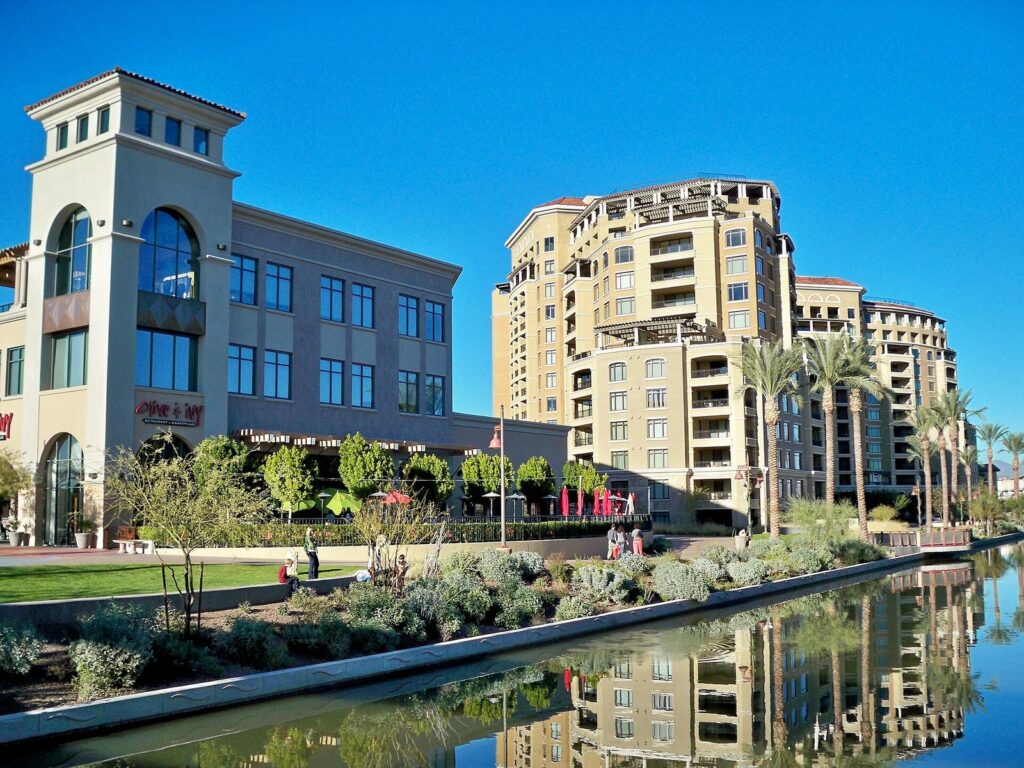
Scottsdale, 20 minutes from downtown Phoenix. Old Town is the one place in the Valley where you can park once and shop on foot for an afternoon. Its streets divide roughly into districts: Fifth Avenue’s shops and boutiques near the Scottsdale Waterfront, the Main Street and Marshall Way arts district with dozens of galleries, and the western-flavored blocks around the old town center with souvenir, jewelry and western-wear shops. Scottsdale Fashion Square, the state’s biggest mall, is on the district’s northern edge, a few minutes’ walk from the galleries.
The galleries are the draw. Old Town has a deep bench of galleries selling Southwestern, Western and Native American art, contemporary work and jewelry, and on Thursday evenings the Scottsdale ArtWalk opens many of them to the public from 7 to 9 p.m. (checked September 2026). It’s free, it’s the best way to see a lot of art quickly, and it’s also the best time to talk to gallery owners about what you’re looking at.
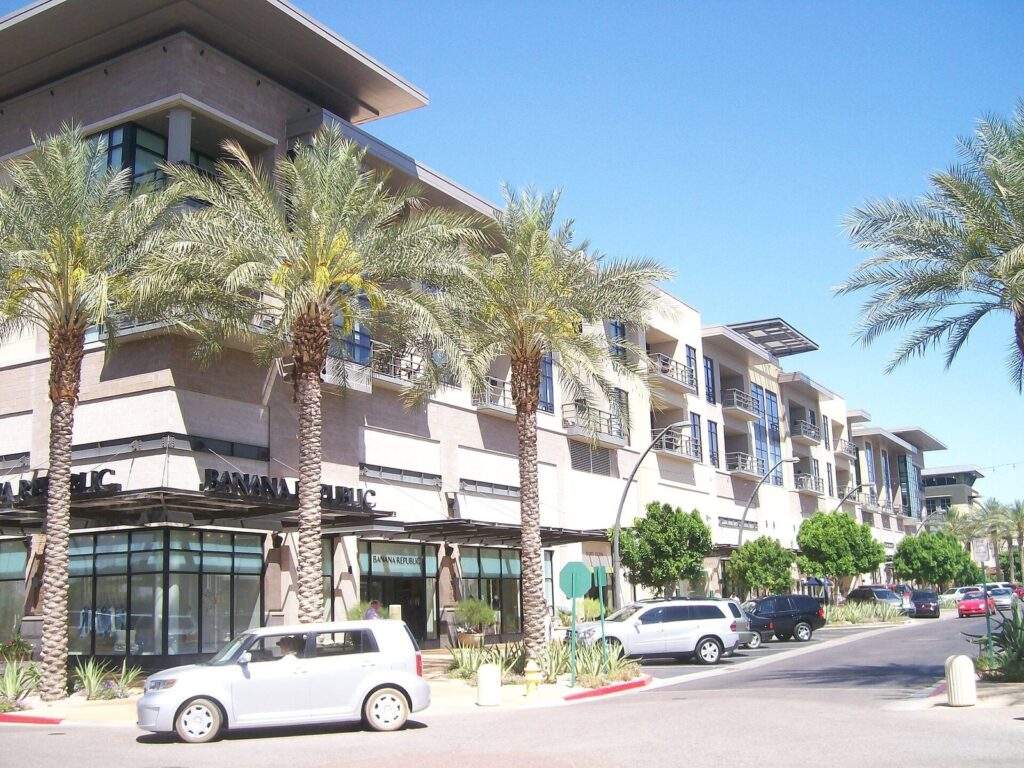
Parking is easy by Valley standards. Old Town has more than 20 public lots and garages, including the Scottsdale Fashion Square lots and garage, and much of the city’s public parking is free with time limits, so a garage is the better choice for a long afternoon. Scottsdale’s 8.0% combined sales tax is also slightly lower than Phoenix’s.
One currency warning. For decades Saba’s was the name every guide gave for western wear in Old Town, but the family-owned store closed its Old Town Scottsdale shops in 2019. Guides that still send you there are out of date; Old Town still has western and boot shops, so browse the district rather than hunting for one name. For everything else Scottsdale offers beyond shopping, see our guide to the best things to do in Scottsdale.
What are Phoenix’s own shopping districts?
Biltmore Fashion Park
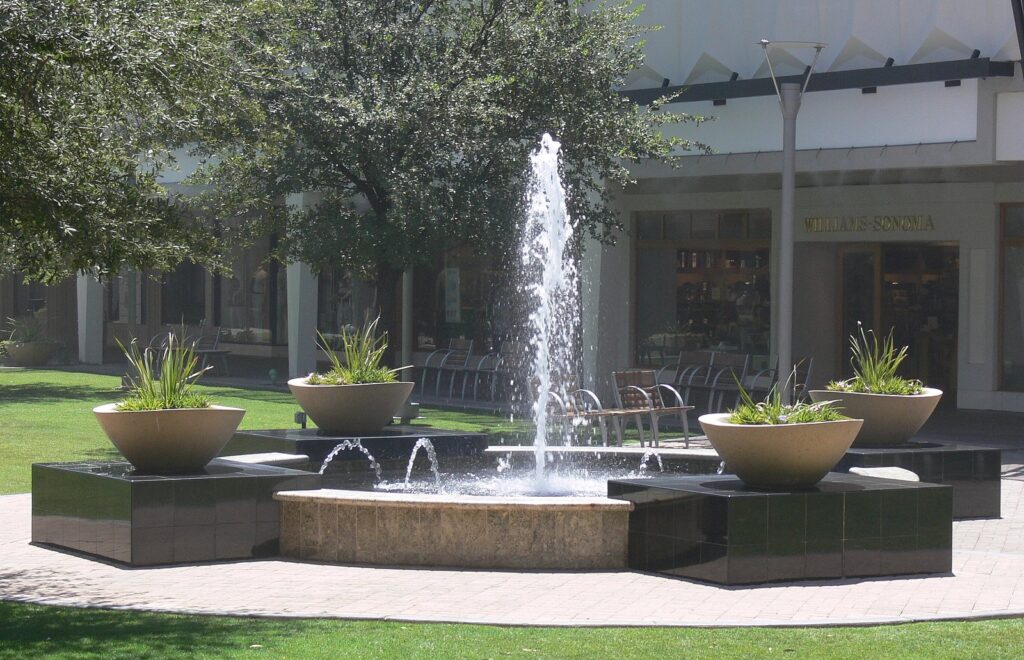
Camelback Road at 24th Street, 14 minutes from downtown Phoenix and 13 from Old Town Scottsdale. Phoenix’s upscale shopping center is an open-air collection of stores and restaurants around landscaped courtyards and fountains, with a Macy’s and a Life Time athletic club. It’s quieter and more relaxed than Fashion Square, and in the cool months its patios are some of the nicest places in Phoenix for a long lunch. In summer, go at opening or in the evening. It’s also a short drive from the Arizona Biltmore and the Camelback corridor hotels.
The Melrose District and midtown vintage
Seventh Avenue north of Indian School Road, 8 minutes from downtown. Phoenix’s vintage and antique shopping clusters along Seventh Avenue in the Melrose District, where a run of vintage clothing, mid-century furniture and antique shops sits among neighborhood bars and restaurants. It rewards slow browsing rather than a quick visit, and it’s best on a cool-season weekend morning.
Roosevelt Row and downtown
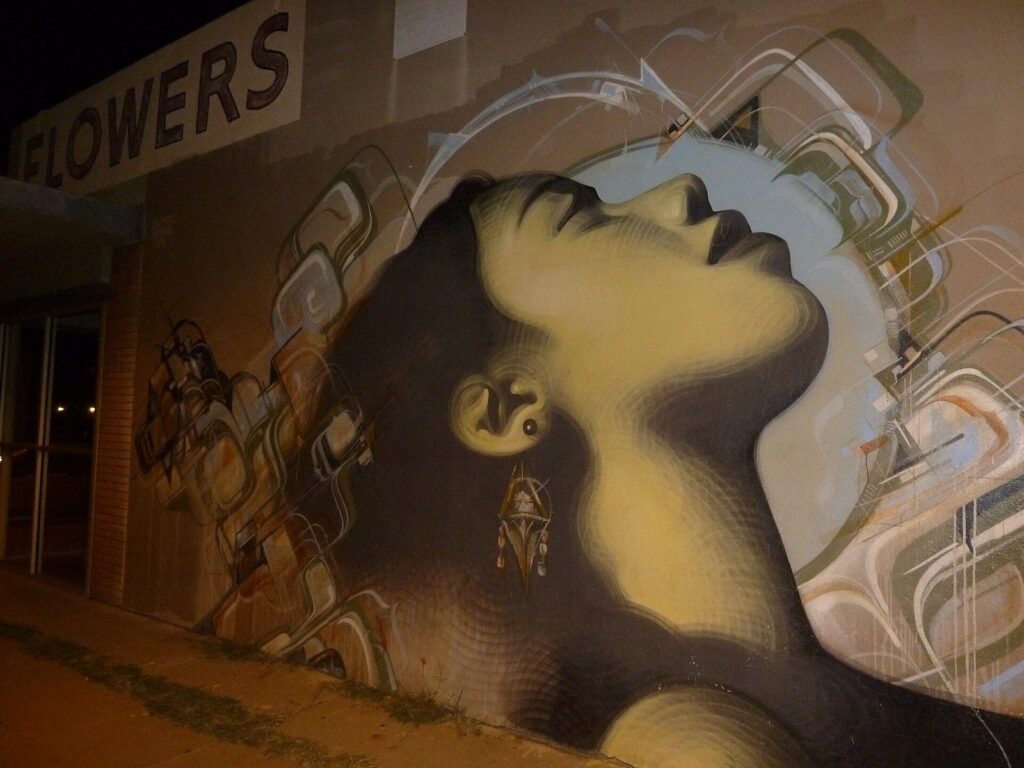
Downtown Phoenix, about 3 minutes from the center. Roosevelt Row is the city’s arts district, with galleries, murals and small shops selling work by local artists and makers. It comes alive on the first Friday of each month, when the First Friday art walk opens venues free to the public and Roosevelt Row hosts its A.R.T.S. Market of local makers. In September 2026 the city approved a one-year pilot allowing art and food vendors on private property along Roosevelt Row between 7th Street and 7th Avenue, which should widen the market. Downtown Phoenix itself has less conventional retail than you might expect for a city center; it’s a place for galleries and gifts rather than a shopping spree.
Downtown Glendale’s antiques
Downtown Glendale, 17 minutes from downtown Phoenix. Glendale’s historic downtown, around the Catlin Court area of old bungalows turned into shops, is the Valley’s best-known antiques district. It’s a pleasant morning if you’re heading to the West Valley anyway, perhaps before a game at State Farm Stadium, but it’s a 33-minute drive from Old Town Scottsdale.
The north Valley centers
Kierland Commons and Scottsdale Quarter, across the street from each other near the Phoenix-Scottsdale line, and Desert Ridge Marketplace farther north, are open-air lifestyle centers built around walkable streets, patios and restaurants. Desert Ridge lists more than 100 brands and runs a district where guests 21 and over can carry a cocktail from participating restaurants in designated outdoor areas (checked September 2026). All three are good evening outings if you’re staying in north Scottsdale or Desert Ridge, and none is worth crossing the Valley for.
Are the Phoenix outlet malls worth it?
They are if you have a list. The Valley has three outlet centers, and each works best for a different kind of trip.
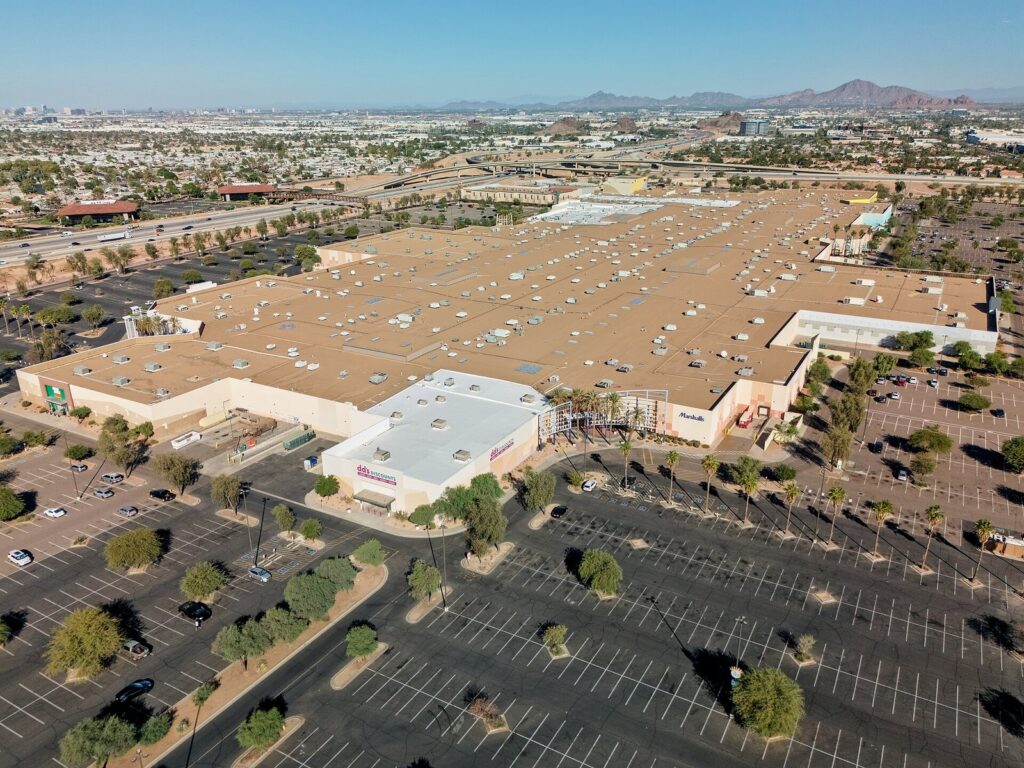
Arizona Mills, Tempe. Simon’s enclosed outlet mall calls itself Arizona’s only outlet destination, with more than 155 stores and hours of 10 a.m. to 8 p.m. (checked September 2026). It’s 19 minutes from downtown Phoenix and 10 from Tempe’s Mill Avenue, and because it’s indoors, it’s the best bargain hunt in the Valley in summer. It also houses LEGOLAND Discovery Center and SEA LIFE Arizona, which makes it the one outlet mall where the kids can be entertained while the adults shop.
Phoenix Premium Outlets, Chandler. Simon’s open-air outlet center south of the city, off I-10 near Wild Horse Pass, lists more than 80 stores and keeps 10 a.m. to 8 p.m. hours (checked September 2026). It’s 30 minutes from downtown Phoenix and 26 from Tempe. The open-air layout is pleasant in winter and hard work on a summer afternoon.
Tanger Outlets at Westgate, Glendale. The West Valley’s outlet center is 23 minutes from downtown Phoenix, beside the Westgate entertainment district and State Farm Stadium. It pairs naturally with a Cardinals game or a concert, and it’s a long way from Scottsdale.
The honest verdict: outlet prices are good on the brands you already buy, and not much else. If you arrive without a list, you’ll spend an afternoon walking past stores you have at home.
What should you buy in Phoenix that you can’t get at home?
The best souvenirs from the Valley are things made here, or made by the people whose land this is. Four categories are worth your money.
Native American art and jewelry
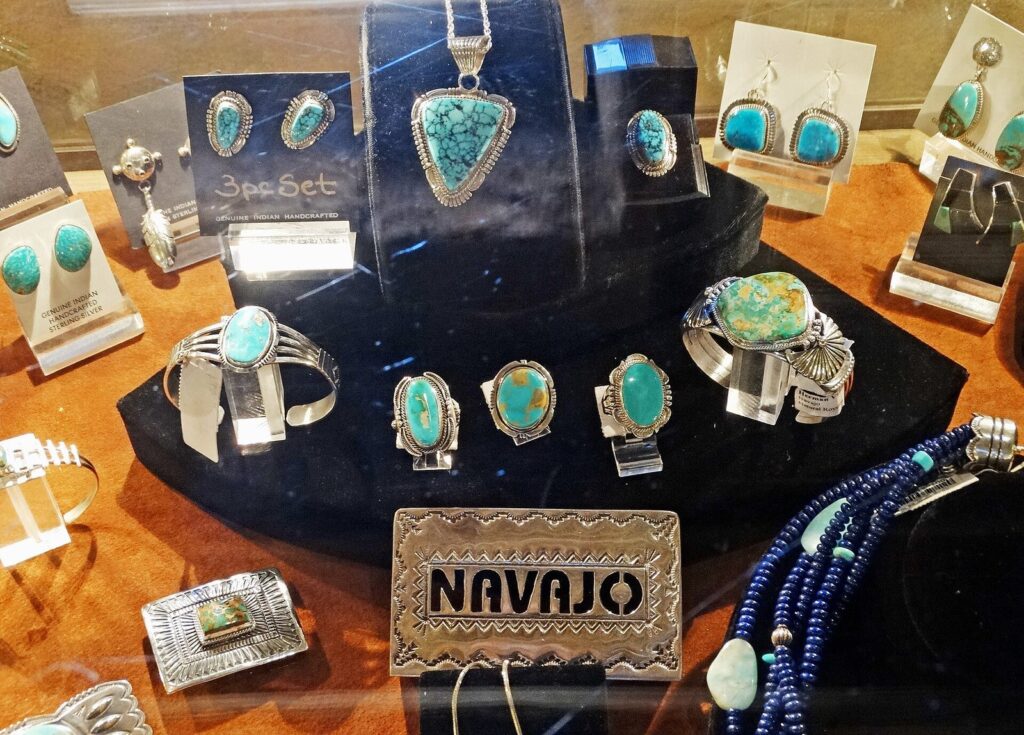
Arizona is home to 22 federally recognized tribes, and the Valley is one of the best places in the country to buy Native American art: Navajo and Zuni silver and turquoise jewelry, Hopi katsina dolls and overlay silver, pottery from the Southwest’s pueblos, Tohono O’odham baskets and a great deal of contemporary work. It’s also a market full of imitations. Federal law, the Indian Arts and Crafts Act, makes it illegal to sell work in a way that falsely suggests it was made by a Native artist or a member of a particular tribe, but the protection only helps if you ask the right questions.
Buy from sellers who name the artist and the tribe, give you that information in writing and are happy to talk about the materials. Ask whether the turquoise is natural, stabilized or reconstituted, and whether the silver is sterling. The Heard Museum’s shop, with work sourced from Native artists, is the safest place to start, and the museum’s annual Guild Indian Fair and Market, on March 6-7, 2027, is the best chance all year to buy directly from hundreds of artists. Old Town Scottsdale’s established Native art galleries are the other reliable source. Be wary of tourist-shop jewelry sold only as “Southwest style”, which usually means it wasn’t made by a Native artist at all.
How do you judge turquoise and silver?
You don’t need to become an expert, but a few questions separate an informed buyer from an easy mark. Turquoise comes in several forms. Natural turquoise is the stone as mined, cut and polished, and it’s the most valuable. Stabilized turquoise has been treated with resin to harden a softer stone; it’s common, legitimate and cheaper, as long as it’s described that way. Reconstituted turquoise is ground stone mixed with binders and pressed into shape, and “block” turquoise is often dyed material or plastic. A reputable seller will tell you which you’re buying without being asked twice.
For the metal, look for “sterling” or “.925” stamped on the piece, and for the artist’s hallmark, a maker’s mark stamped on the back, which many Native silversmiths use. Ask for a written receipt that lists the artist, the tribe, the stone and whether it’s natural or stabilized. Prices tell you something too: a heavy sterling cuff with natural stones, made by a named artist, costs real money, and one that doesn’t probably isn’t what it claims to be.
Western wear
Boots, hats and belts are the other classic Arizona purchase, and they’re practical as well as fun: a good straw hat is genuinely useful in the Phoenix sun. Straw hats are the warm-weather choice, lighter and ventilated; felt hats are for cooler months and dressier occasions. A shop that sells western hats seriously will fit and shape one for you, which is half the point of buying one here rather than online. Old Town Scottsdale has the most western-wear shops within walking distance of each other, and the Valley’s boot stores carry far bigger selections than most visitors see at home. Try boots on in the afternoon, when your feet are at their largest, and don’t buy the first pair; western boots vary a lot in fit from brand to brand.
Desert plants
A small cactus or agave is the most Arizona souvenir there is, and the Desert Botanical Garden’s Garden Shop, open daily with the garden, sells plants along with books and gifts that tell you how to keep them alive (checked September 2026). Two rules matter. First, never take a plant, a rock or a cactus skeleton from the desert: Arizona protects its native plants, saguaros above all, and digging them up without a permit is illegal. Second, check your destination’s rules before you pack a plant; some states inspect or restrict plants coming in, and airline and agricultural rules vary. Seeds, cuttings bought from a licensed nursery, and plant-themed books and art travel far more easily.
Museum shops
The Valley’s museum shops are underrated souvenir stops, because what they sell is chosen to match what’s on the walls. The Heard Museum’s shop is the standout for Native art and jewelry. The Desert Botanical Garden’s shop covers plants, desert cookbooks and field guides. The Musical Instrument Museum’s store stocks instruments and music from around the world, and the Phoenix Art Museum’s shop carries art books and design objects. Prices are rarely the cheapest in town, but the provenance is clear and the money supports the institutions, and on a hot afternoon you can shop in the same air-conditioned building as the galleries.
Tastes of the Sonoran Desert
Prickly pear syrup and candy, chiltepin chiles, mesquite flour and Sonoran-style salsas make light, local gifts, and they’re sold in museum shops, gift stores and markets around the Valley. The Valley’s food markets and restaurants have their own guide; for shopping, the point is that these are flavors you won’t find in most places at home.
How do you buy and ship art?
Scottsdale’s galleries and Roosevelt Row’s studios are used to visitors who fall for something too big for the suitcase. Most established galleries will pack and ship a painting, sculpture or pot for you, and they’ll quote the cost before you commit, so ask at the counter before you decide it can’t come home. Get a written description and a receipt with the artist’s name, the title, the medium and the date, which matters for insurance and, for Native art, for authenticity. International visitors should ask how customs duties at home will apply, since the U.S. sales tax isn’t refunded and duty may be due on arrival. And if you’re buying on a Thursday evening during the Scottsdale ArtWalk, it’s fine to look, leave and come back the next day in daylight; good galleries don’t pressure you to decide on the spot.
Where are the Valley’s markets and art walks?
The Valley’s best shopping for local work happens at its markets and art walks rather than its malls.
First Friday and the A.R.T.S. Market, Roosevelt Row. On the first Friday of every month, downtown Phoenix’s galleries and venues open free to the public for an art walk run by Artlink since 1994, and Roosevelt Row hosts its A.R.T.S. Market of local makers. There are no official hours; venues set their own, and the street scene builds after dark.
Scottsdale ArtWalk. Every Thursday evening except Thanksgiving, from 7 to 9 p.m., Old Town Scottsdale’s galleries along Main Street and Marshall Way open their doors (checked September 2026).
Arts festivals. The Tempe Festival of the Arts fills Mill Avenue with hundreds of artist booths twice a year, including its fall edition on December 4-6, 2026, and it’s one of the best places in the Valley to buy directly from artists.
The Heard Museum Guild Indian Fair and Market. On March 6-7, 2027, the Heard’s grounds fill with Native artists selling jewelry, pottery, textiles, paintings and more. If you’re buying Native art, this is the weekend to be in Phoenix.
Where do you shop with kids?
Arizona Mills is the Valley’s easy answer, because it puts outlet shopping and two attractions under one air-conditioned roof. SEA LIFE Arizona, the aquarium, costs from $18 online or from $22 on the day, LEGOLAND Discovery Center from $22.99 online or $24.99 on the day, and a combined ticket from $25.99 online (checked September 2026). One adult can take the kids while the other shops, and nobody has to cross a hot parking lot in between. Desert Ridge Marketplace, in the north Valley, is the other family-friendly center, with restaurants and entertainment spread around open-air streets that work best in the cool months or in the evening. For small children in summer, the rule is simple: enclosed malls in the afternoon, open-air centers only after dark.
Where is the luxury shopping, and where are the bargains?
Luxury. Scottsdale Fashion Square is the Valley’s luxury destination, with designer boutiques and upscale restaurants alongside its department stores; our Scottsdale guide covers it in detail. Biltmore Fashion Park is Phoenix’s more relaxed upscale center, and Kierland Commons and Scottsdale Quarter carry a mix of premium brands. The best jewelry and art, as opposed to designer labels, is in Old Town Scottsdale’s galleries.
Bargains. The outlet centers are the obvious start, with Arizona Mills the easiest in summer because it’s indoors. Desert Sky Mall, on the west side, describes itself as fully bilingual and lists more than 130 stores, including a Dillard’s clearance center, which makes it a useful stop for discount department-store shopping if you’re nearby. The Melrose District’s vintage shops are good hunting for secondhand clothing and mid-century furniture, and the markets and art walks are the place to find local work at the maker’s price.
What are typical shopping hours?
Most Valley malls and centers open around 10 a.m. and close around 8 p.m., with shorter hours on Sundays. Kierland Commons, for example, is open 10 a.m. to 8 p.m. Monday to Saturday and 11 a.m. to 6 p.m. on Sunday, and Scottsdale Quarter, Arizona Mills and Phoenix Premium Outlets list 10 a.m. to 8 p.m. (checked September 2026). Restaurants inside the centers usually stay open later. Hours stretch in the weeks before Christmas and shrink on some holidays, so check a center’s own site before a special trip. Independent shops and galleries keep their own hours, often closing earlier and opening later on weekday mornings, and many galleries in Old Town stay open late on Thursday for the ArtWalk.
Can you get to Phoenix shopping without a car?
For some of it. The light rail runs up Central Avenue past the Uptown shops near Camelback Road, through downtown past Roosevelt Row and into Tempe along Mill Avenue, so you can reach those areas by train for $2 a ride (2026 fare). Waymo’s driverless cars cover downtown Phoenix, Scottsdale and parts of Tempe, Mesa and Chandler, which puts Old Town Scottsdale, Scottsdale Fashion Square and Biltmore Fashion Park within reach of a phone. The outlet centers, the north Valley centers and the West Valley malls need a car or a rideshare, and after a big shopping day you’ll be glad of the trunk.
What does a good shopping day look like?
A Scottsdale day
Start in Old Town’s gallery district in the morning, when it’s cool enough to walk from the Main Street galleries to the Marshall Way shops and the western stores around the old center. Have lunch in Old Town, then spend the hottest part of the afternoon in Scottsdale Fashion Square, a few minutes’ walk or a 3-minute drive away, where it’s air-conditioned from one end to the other. Walk the Scottsdale Waterfront’s canal path as the light softens, and if it’s a Thursday, finish at the Scottsdale ArtWalk, when the galleries reopen from 7 to 9 p.m. Park once in a garage and you won’t need the car again until you leave.
A Phoenix day
Be at Biltmore Fashion Park when it opens and browse its open-air courtyards before the heat builds. Drive 12 minutes to the Heard Museum, open 10 a.m. to 4 p.m. most of the year, for the galleries and the museum shop’s Native art. In the cool season, spend the late afternoon in the Melrose District’s vintage and antique shops on Seventh Avenue. On the first Friday of the month, finish the day on Roosevelt Row for the art walk and the A.R.T.S. Market; on any other day, have dinner downtown instead.
What happened to Paradise Valley Mall and Metrocenter?
They closed, and older guides and maps haven’t caught up. Paradise Valley Mall, in northeast Phoenix, closed on March 31, 2021, and its indoor mall was demolished between mid-2021 and early 2022. The site is being rebuilt as PV, a roughly $2 billion mixed-use district with a Whole Foods-anchored retail core, apartments, offices and a Life Time athletic club, and new shops and restaurants have been opening there through 2026. It’s a neighborhood center now, not a destination mall.
Metrocenter, the big north-central Phoenix mall that was once one of the largest in the Southwest, began demolition in November 2024 for a redevelopment of shops, offices, housing and public space. If a guide, a rideshare pin or an old map sends you to either one expecting a classic enclosed mall, go to Scottsdale Fashion Square, Chandler Fashion Center or Arrowhead Towne Center instead.
What’s the etiquette at markets and galleries?
Galleries price their work, and haggling isn’t expected, though a polite question about a discount for buying more than one piece is fair. At markets and art fairs, artists usually set their own prices too; you may find room on a larger purchase, but lowballing a maker in front of their work doesn’t go down well anywhere. Most sellers take cards, but carry some cash for small purchases at markets. Ask before photographing someone’s work, especially Native art and jewelry, and take the chance to talk to the artist about how and where it was made, which is often the best part of buying it.
How much is sales tax in Phoenix and Scottsdale?
It depends on the city, because each city in the Valley adds its own rate to the state’s and the county’s. In 2026, according to the city’s combined tax rate chart, a retail purchase in Phoenix carries 9.1% in total: 5.6% for the state, 0.7% for Maricopa County and 2.8% for the city, which raised its rate from 2.3% in July 2025. In Scottsdale the total is 8.0%, with a 1.7% city rate. Tempe, Mesa, Glendale and the other cities set their own rates, so check the receipt if you’re comparing.
| Purchase (2026 rates) | Tax in Phoenix (9.1%) | Tax in Scottsdale (8.0%) | Difference |
|---|---|---|---|
| $100 | $9.10 | $8.00 | $1.10 |
| $500 | $45.50 | $40.00 | $5.50 |
| $1,000 | $91.00 | $80.00 | $11.00 |
Two more points for visitors. The United States has no national sales-tax refund for tourists, so international visitors don’t get the tax back when they leave, as they might in Europe. And Arizona doesn’t hold a sales-tax holiday, so there’s no tax-free weekend to time a big purchase around. If you’re buying something large and shipping it home, ask the store whether it ships and how that affects the tax on the sale.
What about shopping at Sky Harbor?
If you’ve left it until the last minute, Phoenix Sky Harbor has a good range of shops and local food outlets, especially in Terminal 4, where recent openings include a Popshop and Coca-Cola Lounge and Garrett Popcorn. Terminal 3 is getting a second north concourse, under construction since April 2025, with about 173,000 square feet including shops and restaurants. Airport shops are fine for a forgotten gift but not for Native art; buy that in town, where you can ask the questions that matter.
What to skip
- Skip Paradise Valley Mall and Metrocenter. Both are gone. Paradise Valley Mall closed in 2021 and is being redeveloped as PV, a mixed-use district, and Metrocenter began demolition in November 2024. Older guides still list them.
- Skip looking for Saba’s in Old Town. The family’s Old Town Scottsdale stores closed in 2019. Browse Old Town’s other western shops instead.
- Skip open-air centers at 3 p.m. in July. Go at 10 a.m. or after dark, or spend the afternoon in an enclosed mall.
- Skip “Southwest-style” jewelry that doesn’t name an artist or tribe. If a seller can’t tell you who made it, assume it wasn’t a Native artist.
- Skip taking plants or rocks from the desert. Arizona protects its native plants, and a nursery sells legal, healthier ones.
- Skip crossing the Valley for a chain store you have at home. Arrowhead, Chandler Fashion Center and Tempe Marketplace are useful locally and not worth a long drive.
- Skip the outlets without a list. Outlet savings are real on brands you already buy, and a waste of an afternoon otherwise.
Frequently Asked Questions
What is the best mall in Phoenix?
Scottsdale Fashion Square, in Scottsdale about 22 minutes from downtown Phoenix, is the biggest and most upscale, and it’s enclosed and air-conditioned. Within Phoenix, Biltmore Fashion Park on Camelback Road is the best, an open-air center with a Macy’s and good restaurants, 14 minutes from downtown. For outlet shopping indoors, Arizona Mills in Tempe has 155-plus stores.
Where is the best shopping in Scottsdale?
Old Town Scottsdale, where you can park once and walk between galleries, western-wear and jewelry shops, boutiques and Scottsdale Fashion Square on the district’s northern edge. Go on a Thursday evening for the free Scottsdale ArtWalk, from 7 to 9 p.m. In the north, Kierland Commons and Scottsdale Quarter are pleasant open-air centers for an evening.
What is the sales tax in Phoenix?
9.1% in total on most retail purchases in the City of Phoenix in 2026: 5.6% for the state, 0.7% for Maricopa County and 2.8% for the city, which raised its rate from 2.3% in July 2025. Scottsdale’s total is 8.0%. International visitors can’t claim the tax back when they leave, and Arizona has no sales-tax holiday.
Where can I buy authentic Native American jewelry in Phoenix?
Start with the Heard Museum’s shop, which sources work from Native artists, and the museum’s Guild Indian Fair and Market on March 6-7, 2027, where you can buy directly from hundreds of artists. Established Native art galleries in Old Town Scottsdale are the other reliable source. Always ask for the artist’s name and tribe in writing.
Are there outlet malls in Phoenix?
Three. Arizona Mills in Tempe is an enclosed outlet mall with more than 155 stores, 19 minutes from downtown Phoenix. Phoenix Premium Outlets, south of the city off I-10, is open-air with more than 80 stores. Tanger Outlets sits at Westgate in Glendale. Arizona Mills and Phoenix Premium Outlets keep 10 a.m. to 8 p.m. hours (checked September 2026).
Which Phoenix-area malls are indoors?
Scottsdale Fashion Square, Arizona Mills, Chandler Fashion Center, Arrowhead Towne Center and Desert Sky Mall are enclosed and air-conditioned, the best choices for a summer afternoon. Biltmore Fashion Park, Kierland Commons, Scottsdale Quarter, Desert Ridge Marketplace, Tempe Marketplace and the Phoenix Premium and Tanger outlets are open-air, so visit them early or in the evening from June to September.
Is shopping in Scottsdale cheaper than in Phoenix?
On sales tax, slightly. Scottsdale’s combined rate is 8.0% and Phoenix’s is 9.1% in 2026, so a $500 purchase costs $5.50 less in tax in Scottsdale. On prices, not necessarily: Scottsdale’s shops and galleries lean upscale, while Phoenix has the vintage shops of the Melrose District and, nearby, the outlet malls. Choose by what you want to buy, not by the tax line.
What souvenirs is Phoenix known for?
Native American jewelry, pottery and other art bought from sources that name the artist; western wear such as boots and hats; desert plants from a licensed nursery or the Desert Botanical Garden’s shop; and Sonoran Desert flavors such as prickly pear candy and syrup, chiltepin chiles and mesquite flour. Skip anything taken from the wild: Arizona protects its native plants.
Related Phoenix Guides
- Scottsdale Sightseeing Guide: Old Town, Taliesin West and the rest of Scottsdale beyond the shops, with prices and drive times.
Sources and verification
This guide is built from research, not hosted shopping trips. Hours, store counts, tax rates and closures were checked on September 24, 2026, against the centers, agencies and organizations below. Drive times are off-peak estimates from OSRM routing on OpenStreetMap data.
- Tax rates: City of Phoenix combined tax rate chart, January 2026; City of Scottsdale taxes
- Shopping centers: Biltmore Fashion Park; Kierland Commons; Scottsdale Quarter; Desert Ridge Marketplace; Tempe Marketplace; Arizona Mills; Phoenix Premium Outlets; Macerich (Scottsdale Fashion Square, Chandler Fashion Center, Arrowhead Towne Center); Desert Sky Mall
- Museums and markets: Heard Museum Guild Indian Fair and Market; Desert Botanical Garden Garden Shop; Artlink First Friday
- Old Town Scottsdale: Experience Scottsdale; City of Scottsdale parking information
- Phoenix Sky Harbor: airport media kit
Photo Credits
- Kierland Commons: photo by Cygnusloop99, Wikimedia Commons (CC BY-SA 3.0)
- Scottsdale Waterfront: photo by Joseph Plotz, Wikimedia Commons (CC BY 3.0)
- Biltmore Fashion Park fountain: photo by Wars, Wikimedia Commons (CC BY 2.5)
- Roosevelt Row mural: photo by Chris English, Wikimedia Commons (CC BY-SA 3.0)
- Arizona Mills: photo by Hunter Trick (TrickHunter), Wikimedia Commons (CC BY-SA 4.0)
- Turquoise jewelry at Cameron Trading Post: photo by Don Graham from Redlands, CA, USA – God bless it!, Wikimedia Commons (CC BY-SA 2.0)
- Old Town Scottsdale storefronts (featured image): photo by Marine 69-71, Wikimedia Commons (CC BY-SA 4.0)